From the category archives:
Business
Microblogging, Location and Emergencies
I’ve been using Twitter for a while now, and have thought quite a bit about it in Africa. More, I’ve thought about what the ramifications of Twitter pulling out of the global market means, and then thought quite a bit about Jaiku, Laconica and Mxit and various other chat/microblogging applications. There is, without a doubt, a move towards short-form updating via mobile and web, and it needs to be federated.
There’s something missing in this new mobile + web microblogging movement, and I think it’s location.
Why Location Matters
Most of us use these services for updating, and being updated, by our friends and interesting people. That’s the main use, and it will remain so. The truth is, you and I don’t really care to hear what any random stranger is doing, even if they are nearby. However, we do care what is happening on a very hyper-local level in the case of emergency or “big event”.
It’s somewhat like the “pothole theory” that I talked about earlier: you wouldn’t normally care about the pothole on a steet, unless it’s yours. It helps explain why we care about certain things.
If you use Twitter and have an iPhone, you’ll probably be aware of Twinkle - it’s an application that enriches your Twitter experience. In Twinkle, you can set your location and then a certain radius from which to receive twitter updates, even if they’re from perfect strangers. I think that’s the beginning of what we’re talking about.
However, again… I don’t want to just get updates from random strangers in my locale. I want to only receive the ones that are “important” to me. I want to be notified when there is an emergency, major traffic jam or something else pertinent to me.
The “What if…”
What if we created a way that a greater federated system of microblogging applications could also use location as an alert point?
Of course, my current world is colored by Ushahidi, crisis and emergency news coverage. I think of the ability to anonymously send in reports to a system like Ushahidi running in any country, and those who are part of this greater, extended and federated network would be updated - even if that person was unknown and anonymous.
Here’s a use case:
John is a Twitter user in Accra, Ghana. Anne has setup a local Laconica server with 5000 users in the greater Accra area. Eddie is not part of any of these networks, just an average guy with a mobile phone. Ushahidi is running in Ghana.
Users from the Laconica group can setup an “alert” for a specific radius from their location using Ushahidi, linked to their Laconica account.
An earthquake happens and Twitter and the Laconica server are ablaze with dialogue about what is happening. Eddie (our normal guy), sends an alert into the Ushahidi number, along with hundreds of other Ghanians who are not part of Laconica or Twitter. Anne, and the other Laconica users are receiving alerts (web and mobile) from within their set alert radius automatically, from completely anonymous people. Alerts on where people are trapped, who is missing, who is found, where not to go, and where help is needed most.
John, our Twitter user is updating Twitter, but it has no little local implications due to not being able to be used in Ghana (except via web). Local mobile users aren’t receiving his updates, and he isn’t receiving theirs.
I recognize that there are a lot of things going on in this scenario, and it’s imperfect, but it serves as a good setting to discuss some of the shortcomings of the current situation and the possible growth areas for them. It also talks to even bigger ideas and the greater impact in Africa of a real social mobile network that can connect people using only mobile phones and do it as needed.
There are some interesting things to learn and apply from location-specific alternatives to global SMS gateways (like FrontlineSMS), and I wonder where tools such as InSTEDD’s SMS GeoChat can be used here too.
More to come on “getting updates that matter” later, this is just some initial thinking on it. I’d love to hear your thoughts too.
{ 13 comments }
Aiming at an African Classifieds Marketplace
There have been a number of plays on the free classifieds space in Africa over the years. Most seem to fizzle out, either due to not having enough revenue to continue, or their owners losing interest before the site grows. It seems like a play in the same space as Craigslist and Kijiji (Gumtree in SA) should work well. After all, you don’t need to digitally handle the transaction, that takes place offline.
I’ve been keeping my eye on one that might have some potential though: Kerawa. They explain it as, “an online tool promoting offline transactions.”
Kerawa started just this year, from a small team of guys in Cameroun. They report having listings in 42 countries, but some are limited to just a couple. What’s more impressive is seeing how lively it is in Cameroun, Morocco, Ghana and South Africa, their top 4 countries. What a spread! That means they’re doing decently well in all but East Africa.
Some thoughts on Kerawa
Mobile Phones
I remain convinced that services like Kerawa will not become mainstream in Africa until they build the application in such a way as to allow mobile users to really take part. This seems obvious to me, so I’m not sure why they haven’t created a downloadable J2ME application for this at the least. Maybe they could create a way for people to access it via SMS, or at least pay for alerts on certain items (like jobs).
Growth
Kerawa posted their analytics for the year thus far. It is trending up, which is a good sign. What’s more important is numbers on classified listings, as once you get a decent amount of both buyers and sellers, then you’ve achieved critical mass and become “the” place to go. No one wants to go to the 2nd best market in town (just ask eBay’s and Craigslist’s competitors).
{ 11 comments }
ZuQka: Social Networking and News in Kenya
My first day back in Nairobi after a couple months, and I see some new website being heavily promoted in my Daily Nation newspaper. In fact, it’s got a full 16-page mini newspaper all about it. It’s called zuQka, and it tells me that I’ll “be famous” if only I register. I pop over to the site, but I’ve got 1hr 15min 11sec before it goes live.
Wondering what this is all about, I start to dig around trying to find out who is behind it. Low and behold, after a quick Whois search, I find out it’s none other than Kahenya Kamunyu. A local tech VC and entrepreneur, head of Virn.net and who I interviewed at Barcamp Nairobi this summer. He’s an outspoken advocate for African-born and built technology developments, and it looks like he’s putting his money where his mouth is. Now I know what he’s been hinting at on Twitter for the past couple weeks…
So, what is zuQka?
From what I can tell, it’s a portal site for weekend entertainment around Nairobi, but with a social networking component as well (video, audio and blogs). It’s a cross-medium service too, marrying newspaper with the web. Honestly, I learned more in those 16 pages about stars like Angela Angwenyi, Amani and Daniel Ndambuki than I would have thought. Besides entertainment stars, it has coverage of auto, gadgets, pubs and the weekend calendar.
I kind of wonder what I’ll find once the site opens up. I also wonder what Kahenya has to say about it…
[Update: I was able to talk to Kahenya and they've had some server issues, making the launch a little sketchy. Like any new big website, this is understandable, check back in 2 weeks would be my suggestion.]
Site is live
(as you might be able to tell, I’m blogging this in a stream over a couple hours).
I haven’t been able to get in touch with Kahenya yet, likely because he’s busy trying to get this site live and all the kinks worked out. The site is live now though, with a couple minor errors. Like any newly hatched web service, things are a little slow and since it’s a user-generated content site, there’s not much content yet. This should change with time.
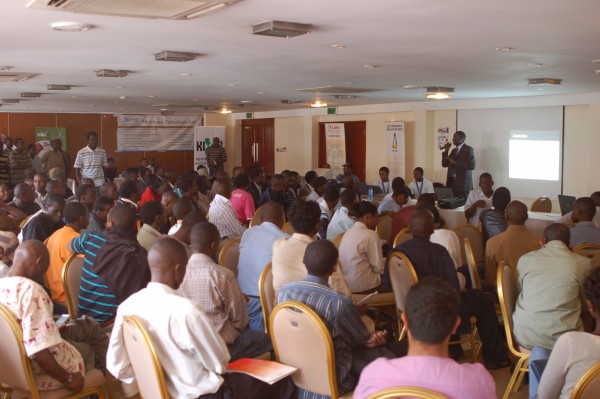
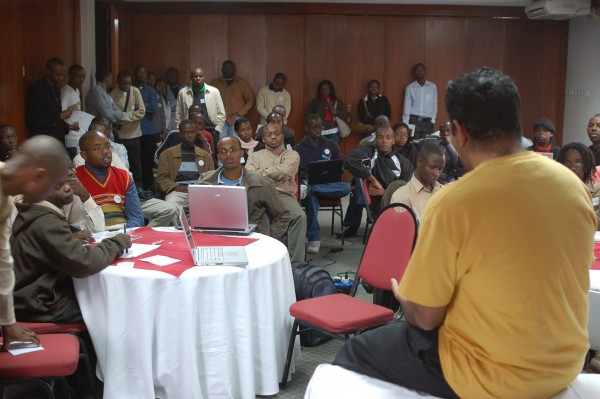
Overall I like the dashboard. The techie in me really likes that they used the Simile timeline for the calendar, makes a lot of sense. The profile page is extensive and there seems to be a lot of options to add content on the site. My plan is to come back later when it loads faster and I can see it with more users.
{ 33 comments }
Tanzanian Farmers and Their SMS-Empowered Market Spy
What happens when a member of your agricultural community spends time investigating the supply chain for your goods? Meet Stanley Mchome, who uses a mobile phone to send back prices and collect information on rice prices and customer satisfaction for his community. His activities have not only helped to empower local farmers but to substantially increase their incomes.

I love these kinds of stories. They showcase so well what can happen when a community is using technology to overcome inefficiencies.
{ 4 comments }
10 Great Reads Around Africa
Nigerian Banking Survey
Jeremy has a quick rundown of some numbers, such as:
“53% of Nigerian adults have access to a mobile phone, yet 74% of the adult population has never been banked”
(Full report: 7.3Mb PDF)
Vodacom South Africa’s Mobikasi
Vincent breaks out with his first new tech release since moving to Vodacom, it’s a location-based mobile phone accessible documentary on Soweto in South Africa.
“The location-based documentary looks at people, music, fashion, social issues and places of interest. Instead of showing the twenty-five minute documentary in a linear fashion from start to finish, Mobikasi splits the content up into twenty-five inserts of one minute each.”
Nominating Peace Heroes in Kenya
The Ushahidi Engine is being used to run a new non-disaster related site called Peace Heroes, which hopes to highlight ordinary Kenyans who did extraordinary things to promote peace during and after the post-election crisis earlier this year.
Thoughts on a web cloud for Africa
“While all the pieces had been floating around in my head for a while I am just now understanding that we really need to drag very little out to Africa for them to have incredibly powerful technology in the palm of their hand (and that such thinking is inherently poisonous) and that we are better off attempting to facilitate the connection of their handsets to The Cloud in order to assist with effecting positive social change.”
O3b’s first internet package
The O3b Network is offering it’s first bundle. “Quick Start Africa” is a, Carrier Managed Service designed for Telcos and ISPs on the African continent who need a high capacity, ultra low latency, carrier class IP trunking solution.
“Life is Hard”
Niti Bhan talked about this at the Better World by Design conference. Breaking down why life is so difficult for the poorest people in the world and what can be done when trying to address these issues.
Facebook Garage in Uganda
Jon Gosier of Appfrica.net is heading up a Facebook Garage in Kampala on December 13. It’s a great chance for programmers to get out and get comfortable with the Facebook platform, and also to meet some of the devs. Get more info at the Facebook event page, and the Appfrica wiki.
Mobile finance - indigenous, ingenious, or both?
A must-read post by Ken Banks. “It’s not that people don’t understand banking concepts, it’s just that for them things go by a different name.”
A GPS in every SIM card
Talk about a game changer:
“…a highly accurate GPS receiver and an antenna into the SIM card, enabling network providers to deploy both legally-mandated and commercial applications for all mobile phones, with no need for software or hardware changes.”
Uganda-Congo border images
Glenna Gordon writes a blog out of Uganda called Scarlett Lion, besides great insights, she also has some of the most amazing photography I’ve seen from there in a while. Check out here professional website to see more.
{ 1 comment }
Re-framing Brand Africa (Tech)
I’ve had some recurring thoughts over the last couple weeks, mostly pertaining to how technologists in Africa present ourselves, and how those outside Africa see us. How does “Brand Africa” - from the technology angle - play out, and why? What is unique that we offer to the world, and why should African technology matter in the global context?
It’s about “Brand Africa”
We need to re-frame the way we think about technology in Africa before we can expect others outside of Africa to do the same. Our challenge is to get people to realize that there is a real competitive advantage to developing and testing software in Africa. After all, if it works in Africa, it will work anywhere.
The development conditions are unreliable and the environment is harsh. It isn’t fun to work off slow internet connections or deal with expensive and poor mobile phone networks. All of these things, and more, make just the technological side of developing in Africa a challenge, which is why it’s also a particularly good place to try new things.
If we embrace those handicaps, we might find that there’s a silver-lining inside.
African technology exported to the world
Fring and Ubuntu are two popular products coming out of South Africa that have gone global. There are more though. When Ken Banks built FrontlineSMS, he first tested and developed it within the African context. Ushahidi is being developed in Africa because these are the conditions that will make it work anywhere in the world.
In the enterprise solutions space there are a couple companies that do some good work. Two examples of this are Herman Chinery-Hesse’s Softtribe in Ghana, and Microhouse in Kenya. Some of their solutions are for the local markets, and some are used in bidding on international projects.
Africa as a testing grounds for new applications
There’s a really neat application called Qik, which allows you to stream video live from your phone to a website. It has amazing potential for live video reporting, especially in a war zone. So, that’s just what David Axe did - and it failed miserably. Why? Because Qik designed their application not thinking of the unreliable and poor data connections found in much of the developing world.

David gives a couple suggestions:
First, there should be a “store” function, whereby you can shoot a video in some austere location, save it to your phone’s memory, then stream it later once you’ve got a solid network.
Second, Qik needs some way to buffer videos so that, if the software briefly loses its wireless network connection, it doesn’t also lose the whole video.
Granted, Qik is probably not aiming at a global market, just the US and Europe. However, it’s a good example of how creating or testing software to work in harsh settings can make your product more robust and help you think of simple solutions (like David’s) that can make your product better for everyone.
Final Thoughts
Most people outside of Africa don’t align any type of technological edge to what we do here on the continent. In fact, most are surprised when a developer from Africa pops up on the international stage at all. Though there are fewer software developers in Africa per capita relative to their Western counterparts, what most don’t realize is that those few are really quite talented.
This means the South Africans as well as their counter parts in Ghana, Uganda and Senegal. We’re all in this together, whether we like it or not. Remember, to outsiders we’re one homogeneous landmass. What we each do reflects on everyone, whether we’re creating for local or global markets.
Finally, let’s first realize that the challenges we face also provide excellent opportunities and a competitive advantage. Then, let’s start creating world-class software here, and start exporting it to the world.
(Brand Africa image via Brand Africa Project)
{ 10 comments }
Afridex: an Index of African Tech Startups
Jon Gosier and Paul Engulu of Appfrica has just launched Afridex, an index of African tech startups. Anyone can submit their website or mobile application and be added to the index. What an excellent idea, and really well executed as well!
It’s still brand new, but I think it has a lot of potential - we should see a lot of mobile and web companies adding themselves to the index pretty quickly. As it grows, it becomes more valuable as a resource, thus feeding itself ad infinitum.
Why is it useful?
- Persistent Search queries a search engine in combination with select keywords to track mentions of your company around the web as they occur. When any new information about a group appears online it appears here.
- Blogstream syndicates the ten most recent posts from a company blog. People can also use to follow company blogs by subscribing to the RSS feed.
- Comments allows consumer feedback and comments about a group or organization. Get instant feedback from your customers, crowd source a product review, or offer public customer service.
- Brand Watch is a feature that allows users to monitor mentions of a company across various social networks, blogs and websites. Like persistent search, Brand Watch scans all the popular web portals in africa and abroad for mentions of a company name.
- Embed allows users to export standards compliant code that will allow them to embed information related to a company in their profile. This allows data from the Afridex to be portable. This information can be used as a quick citation tool for blogs, news articles, email and reports.
If you click on any company’s name, you will be taken to the detail page on them. On that page you will find a bunch of publicly available information, including everything from contact information to blog and Twitter posts. It’s really quite impressive.
In the lower-right corner you’ll notice the “embed” code that will allow you to add a widget to the sidebar of any website with basic information about that company. The one for Node Six looks like this:
NodeSix
[Map]
URL - http://www.nodesix.com/
Email - sales@nodesix.com

Node Six began life as a division of Elemental Edge, a leading multi-media and visual communications solutions provider in Kampala, Uganda.
Information Provided by the Afridex
Summary
The only problem that I’ve found so far is that I can’t find a way to either “get listed” (it’s currently a dead link), or create a login so that I can submit a couple companies. I’m sure this is because it’s so brand new, and I’m sure Jon or Paul will leave a note here when that works.
I’m not surprised that this excellent idea came from Jon Gossier, I’m starting to expect this type of top-class work from him. I’m sure we’re going to see even more of this in the future. Brilliant.
Want to help out with this cool project? Get involved on the Afridex wiki
{ 6 comments }
5 Examples of Student Ingenuity in Kenya
My good friend Josiah Mugambi in Nairobi was at the Kenya chapter of the Institute of Electrical and Electronic Engineers (IEEE) exhibition in Nairobi last weekend. This is where students showcase their innovation in engineering, ICT, mobile application and renewable energy. He did me a great favor by sharing some pictures and research that he did on some of the really interesting students he came across.
1. MPESA Online Shopping
By Denis Ndwiga Nyaga

Safaricom CEO Michael Joseph was especially interested in this one for obvious reasons. Denis called it ‘nakupesi‘, Naku for Nakumatt (the local mega-store). nakupesi is an online shopping mall, with payment based on MPESA. One would need to be registered on MPESA to be able to pay for items online via MPESA. One thing that is possibly lacking is delivery to one’s residence or office after purchase. This shouldn’t be too hard to incorporate though.
2. Green Tree Markets - a Business Intelligence tool for farmers
By Andrew Owuor

This looked quite interesting - A business intelligence tool that allows a farmer to choose where to sell his produce based on price, and location. Some of the obstacles that the developer Andrew Owuor mentioned include the need for real time market data from markets round the country, for the system to be of use. This isn’t a completely new idea, but it’ll be interesting to see what local twists are created for East Africa.
3 more…
3. Automatic headlight dimming for two approaching vehicles - By Jemimah Wachenje
Jemimah has developed a system that automatically dips two vehicles head lights when approaching each other at night. Josiah has ranted about headlights before, and I agree, it would be very useful and potential could reduce some accidents on those dark lightless roads around Kenya.
4. Energy harvesting using piezos to charge mobile phones - by Richard Assanga Otolo and Gilbert Barasa
Very interesting, yet practical.
5. Synchronous Solar Heliostat - by Samuel Njoroge
Sammy Njoroge’s demostration of a synchronous solar heliostat used to track the sun, and orient a solar panel accordingly thus improving the efficiency of solar panels. Automatic tracking of the sun to increase the efficiency of solar panels, Makes economic sense. Innovation runs in the family it seems.
{ 10 comments }
Zoopy: From Strength to Strength
If you follow a lot of web startups, you see that many have a hard time reaching critical mass. Even more have a hard time staying in business, so “time alive” becomes an important measuring stick. Zoopy, a web video hosting site, has gone from strength-to-strength ever since they first launched in two years ago. They have done this by working very hard, and by focusing on their niche: South Africa.
Zoopy Upgrades
A recent investment partnership by Vodacom put them in a position to announce some major new upgrades this week.
- Local South Africa hosting - This allows for much faster speeds, particularly important when dealing with video and images.
- Doubled file sizes - Users can now upload 200Mb files, as opposed to the old 100Mb limit.
- A new video player - A spiffed up and much more usable video player.
The Importance of Being Local
I’m particularly impressed with the move to local servers for their content. Besides local goodwill issues, South Africans are very patriotic and like to see stuff succeed in-country. International hosting is cheaper, but the user experience is eroded due to lag. However, as Jason mentions in a comment,
“The biggest question here for us was: how could we afford NOT to move in this direction for the South African online community at Zoopy? Our users deserve more, and we’re happy to deliver.”
Right now, Jason Elk and some of the Zoopy team are in New York at the Web 2.0 Expo, measuring their product against the competition, and learning from their peers.
I’m a big fan of Zoopy, enough so that we’ve moved to Zoopy as AfriGadget’s video hosting site as of this Summer. Congrats guys, and keep up the great work!
{ 1 comment }
Linking the “Other 3 Billion” to the Web
I admit, I’m a little confused.
Yesterday Google, HSBC bank and Liberty Global cable company launched O3b Networks (which stands for “other 3 billion”), a satellite service to bring high-speed low-cost internet connections to the world’s poorest people starting in 2010 - many of them in Africa.
On the Google Africa blog, they state:
O3b plans to deliver fiber-like Internet backhaul service using a constellation of medium-orbit satellites. This means data can be quickly transmitted to and from even the most remote locations such as inland Africa or small Pacific islands. The O3b satellite constellation will provide high-speed, low-latency backhaul services at speeds reaching into the gigabits per second.
The Good
This is the type of technology chess move that makes me sit back and truly laugh out loud. It bypasses inefficient, greedy or corrupt government bureaucracies and gives power to the local people. I’m absolutely thrilled with it and wish them the best of luck - hoping that they can execute on the deployment.
The Confusion…
The founder of O3b is a certain Greg Wyler. You know, the guy behind the big “wiring of Rwanda” initiative with his company Terracom. Well, his record hasn’t been stellar, and so I wonder why he is leading this whole initiative?
It might very well be that they’ve learned their lessons from Rwanda. I’d rather have a guy who has tried and failed and LEARNED from it, than some wide-eyed idealist. Let’s hope that’s the case here.
{ 7 comments }
Pamoja Media: An African Ad Network
I’ve been waiting for someone to create an African ad network for a couple of years, and I’m really happy to see that Pamoja Media has launched. Started by Joshua Wanyama (of AfricanPath) and Benin Mwangi (of Cheetah Index), it’s an ad network created to serve advertisers trying looking for a one-stop-shop for publishers in Africa, or that reach Africans in the diaspora.
Publishers
Pamoja is brand new, and just starting to get going. That hasn’t stopped them from gathering an impressive list of publishers with a total of 10 million impressions dedicated and another 10 million more confirmed impressions if ad inventory is filled. That’s impressive, but more interesting is to see some of the names on their list of publishers, including: Mail & Guardian (South Africa), the Daily Nation (Kenya), Modern Ghana and Stock Market Nigeria.
Other publishers are welcome to apply, as long as they meet the following requirements:
- Be focused on Africa, or the African diaspora
- An Alexa ranking of 250,000 or better
- Have a minimum of 2000 pageviews per day
- Be aesthetically pleasing (or at least not embarassing)
Advertisers
as whoever has been involved in this knows, getting publishers on board is the easy part. Everyone of them is happy to go with the media outfit that will provide them with a solid amount of advertising income. Getting advertisers is the hard part, and that’s where Pamoja Media is focusing their work now that they have the initial 20 million impressions. Current advertisers include Pingo, PoaPay, Accents Telecom and Zain.
Advertisers joining so far have come in because they’ve seen the brand name portals available through the network. Pamoja can get them on board at a better rate for a smaller advertiser than if they go to the Nation or M&G themselves, because they do a bulk buy with multiple advertisers. As the network grows with other large portals giving up excess inventory, Pamoja will become even more attractive than it already is.
(I happened to take this about 1.5 years ago on a chance meet up)
Final Thoughts
Pamoja is onto something here. One of Pamoja’s really big focuses is to get advertisers to start looking and buying advertising on websites built for African readers in Africa. That means they need to continue looking for partners who can extend the value of the African network in Europe and Africa - people and agencies who already have connections. It will be crucial for those relationships to come together in order for more brandname advertisers to come on board and give even greater credibility to the network.
Pamoja is new, so like any other startup they have to prove themselves before the bigger advertisers come to the table. Right now they’re attracting small- to medium-sized advertisers (outside of Zain) through providing value added consulting and design services. With that capability, and time and proof of success, the network should be able to increase their margins and possibly roll out additional business units.
I think a lot about the fact that most Africans aren’t online reading websites in Africa - the penetration just isn’t there yet. That means this is a perfect time to grow a business and grow a name in a space with little to know other competition. As it the market grows, so will Pamoja.
Closely related to that last point is the fact that there’s a wide open space in the mobile market in this space too, and I hope that Joshua and Benin are thinking strategically about how they will incorporate mobile advertising in their network in the near future.
{ 11 comments }
Quick Hits Around Africa - Focus on Nigeria
Jeremy at the NaijaBlog talks about two eCommerce websites in Nigeria: Reloadng and Wishstop. He has another interesting one on a simple power solution for Nigeria.

Ethan Zuckerman is using Google Insight to look at what is most important in some African countries. Including the fact that one of the most searched for term in Nigeria is for email spam software. It’s not just Nigeria, but a strong focus in West Africa.
Oluniyi David Ajao talks about Automated Thieving Machines (ATMs) in Lagos, Nigeria.
The Washington Post writes about Reverse Brain Drain in Nigeria, where opportunity and money are drawing back the young businessmen and entrepreneurs from the West.
{ 0 comments }
Africa’s Internet Exchange Points (Map)
Last week I talked about Google’s Global Cache, and how they will be housing this new project at Internet Exchange Points (IXP). A quote from Wikipedia’s definition explains the importance of IXPs best.
“The primary purpose of an IXP is to allow networks to interconnect directly, via the exchange, rather than through one or more 3rd party networks. The advantages of the direct interconnection are numerous, but the primary reasons are cost, latency, and bandwidth. Traffic passing through an exchange is typically not billed by any party, whereas traffic to an ISP’s upstream provider is.”
There are 18 IXPs in Africa in 15 countries (I stated 17 last week). A map of those countries is below (click on it to be taken to the interactive version):
Most of these are found in the capital of the country, but not always. For instance, iBiX is located in Ibadan, Nigeria not Abuja and Tanzania has two IXPs, one in Arusha and one in Dar es Salaam.
In list form, they are:
- Angola: IXP-ang
- Botswana: BINX
- Cote D’Ivoire: CI-IXP
- Dem. Rep. of Congo: KINIX
- Egypt: CR-IX and GPX
- Ghana: GIX
- Kenya: KIXP
- Nigeria: iBiX
- Mozambique: Moz-ix
- Rwanda: RINEX
- South Africa: JINX and GINX
- Swaziland: SZIXP
- Tanzania: TIX and AIXP
- Uganda: UiXP
- Zimbabwe: ZINX
There seems to be a definite advantage to having an IXP located in your country. Why then do so many African countries not have one? From my understanding, it isn’t cost prohibitive to create an IXP or to maintain it. Why would so many African nations, who all have local ISPs, not have a local IXP?
[Update: Michuki Mwangi, one of the godfather's of Kenyan tech (I believe he's responsible for getting Kenya's TLD: yourdomain.co.ke), responded with the following answers to my question.]
“Most of the reasons that countries dont have IXPs are non-technical and are either policy or politics. For instance in Senegal, Sonatel the Senegalese Telco operates in a monopolistic environment. There are almost no ISPs that exist there and those that do just resell ADSL links for the telco. In such a case, they own no infrastructure or services outside what the telco provides. Therefore, there’s been no need/demand for such. A similar case exists in Ethiopia.
In other countries like Nigeria, its getting the players to agree and look beyond the mistrust and competitive advantages that others have to form one. That takes a while.
In other countries its purely a regulatory policy issue that does not permit the existence of an IXP - its as a way of protecting the incumbent telco’s.”
If you are interested in finding out more about Africa’s IXPs, here are some resources:
AfrISPA - African Internet Server Provider Association
AfNOG - African Network Operators Group
EP.net - Africa - List of African IXPs with links
Packet Clearing House (PCH) - for information, statistics and locations
AfriNIC - African Internet Numbers Registry IP Addresses (IPv6)
{ 6 comments }
Investing in Africa Redesign
Over the last couple of months I have been in the process of moving from my consultant position to working full-time on Ushahidi. One of my favorite projects to be a part of was the redesign of Investing in Africa, by Ryan Shen-Hoover. We’ve rebuilt the site from the ground up using Expression Engine as the core CMS, and have redesigned the look and feel completely.
One of the benefits (most of the time) of working so closely with people is that you tend to get to know them pretty well. Ryan ends up being one of those quiet and unassuming individuals who has a great depth of knowledge pertaining to Africa’s capital markets. As he states:
“…there is another side of Africa that gets a lot less press. It is a place full of hopeful and enterprising people who are confident of a better future. This is the Africa that I believe is home to some of the most attractive potential investments in the world today.”
At Investing in Africa, Ryan profiles companies and gives monthly detailed reports on his insights into local markets. So far his library includes annual reports, announcements, and financial results for more than 350 companies spanning 16 markets.
A few last changes are on the way, and a few bugs to be worked out. However, it’s up and ready to use, so take a look, sign-up for access to company reports, and definitely subscribe to his monthly newsletter ($49 annually). Below is a sample:
{ 9 comments }
Google Kenya and the Google Global Cache
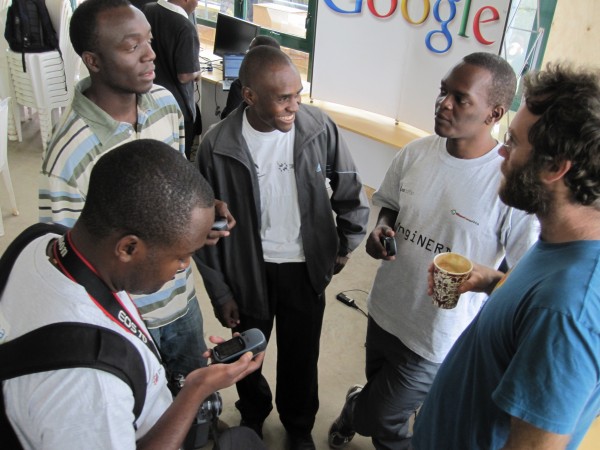
Google is well known for snatching up top-level talent, this holds true in Kenya as well. ICT groundbreaker Joe Mucheru heads up the Kenya office, and he’s surrounded by a team of smart young technologists. I had the chance to meet Isis Nyong’o (Strategic Parter Development Manager) while getting ready for Barcamp Nairobi, and then Chris Kiagiri (Tech Lead) and Mark de Blois (Geographic Supervisor) last week before I left.
Google Kenya is Different
I found out a couple of interesting points that make the Google Kenya office even more interesting than before. It turns out that there are 3 offices in Africa; Kenya, South Africa and Egypt. However, the office in Kenya is neither a sales office nor an engineering office, which makes it unique globally. In fact, it is the only “deployment office” worldwide. This means that the Kenya office can be used as a launch point for new ideas and is the central focal point for Google’s Africa strategy.
It came down to a choice between Senegal and Kenya - one French-speaking and one English-speaking, and both with a fairly well developed technology sector. Senegal had a direct transatlantic cable, but Kenya had the right people available. At Google it seems, finding the right personnel usually trumps about everything else.
Speaking of which, they’re still looking for the right people, not only in Senegal, but also in Nigeria, Ghana, Rwanda, Tanzania and Uganda. Unfortunately, Google HR seems to be geographically challenged, as jobs in Egypt are somehow not in Africa…
Dealing with a Slow Internet in Africa
The Google Global Cache (GGC) was announced in May at the African Network Operators Group (AFNOG) conference in Morocco. In lieu of data centers in Africa, Google has created a strategy that is housed at major exchange points to serve Africa at the edge of Google’s network. Internal tests suggested at least 20% performance increase in high latency links, like East Africa.

[The top cycle (1,2,3 & 4) is how things normally work. The bottom cycle (5,6 &7) is where the changes are.]
It works like this. Once anyone within that exchange point’s sphere visits a webpage, the information is cached and it becomes much faster for anyone else visiting that website to access it. Pre-fetching of data also that improves performance over time, even for dynamic content.
This is an interesting strategy. It’s a win for ISP’s (less international traffic means lower costs), a win for end users (pages load faster), and a win for Google (faster, better usage).
The pilot in Africa was turned on in Kenya just 2 weeks ago. There are 17 international exchange points (IXP) in 15 African nations, so with a positive pilot in Kenya, this could soon be seen continent-wide.
Keep your ears open, there are hints of even more interesting stuff coming out of the Google Kenya office.
{ 35 comments }