IGF 2011, a busy week in Nairobi
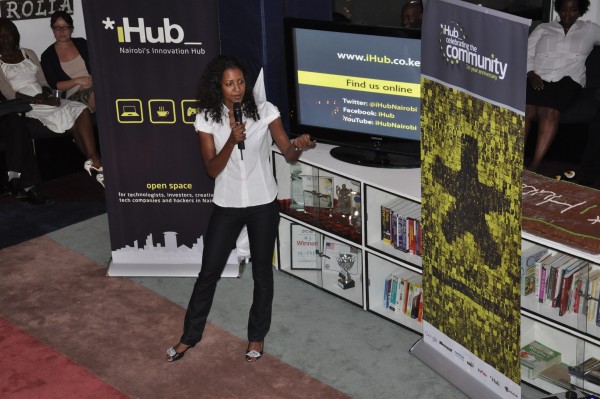
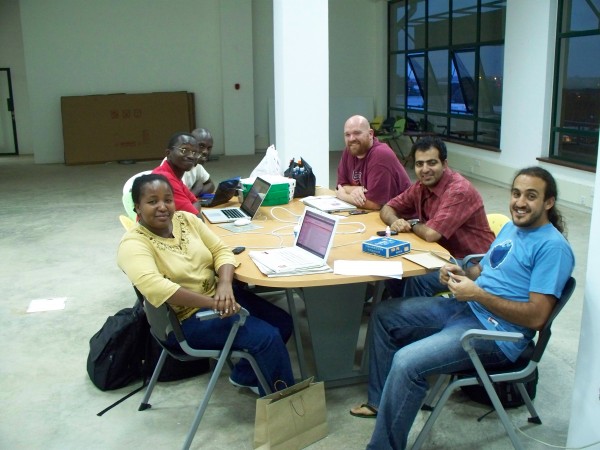
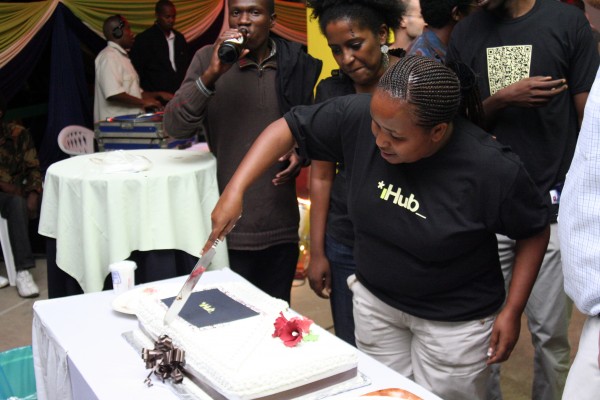
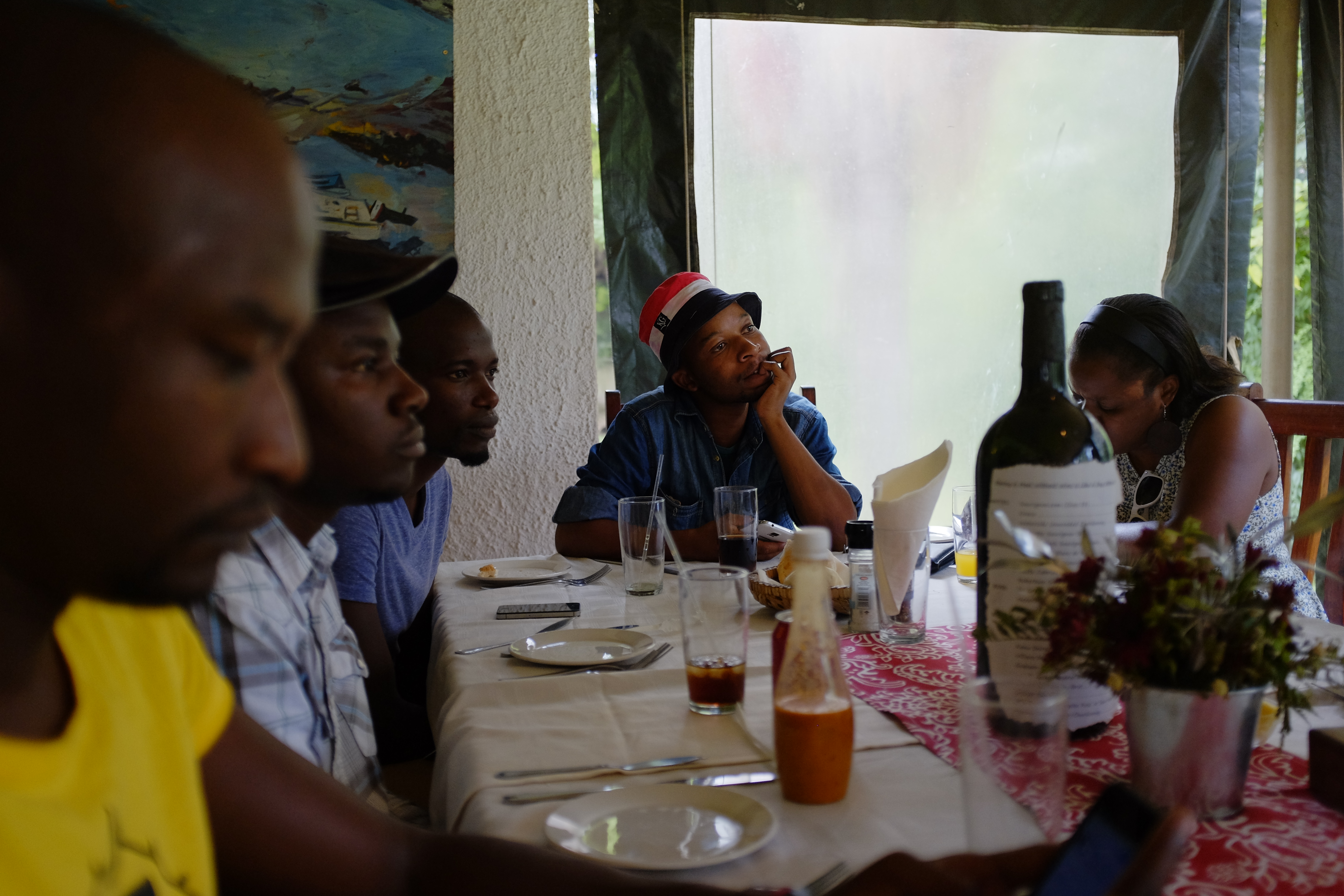
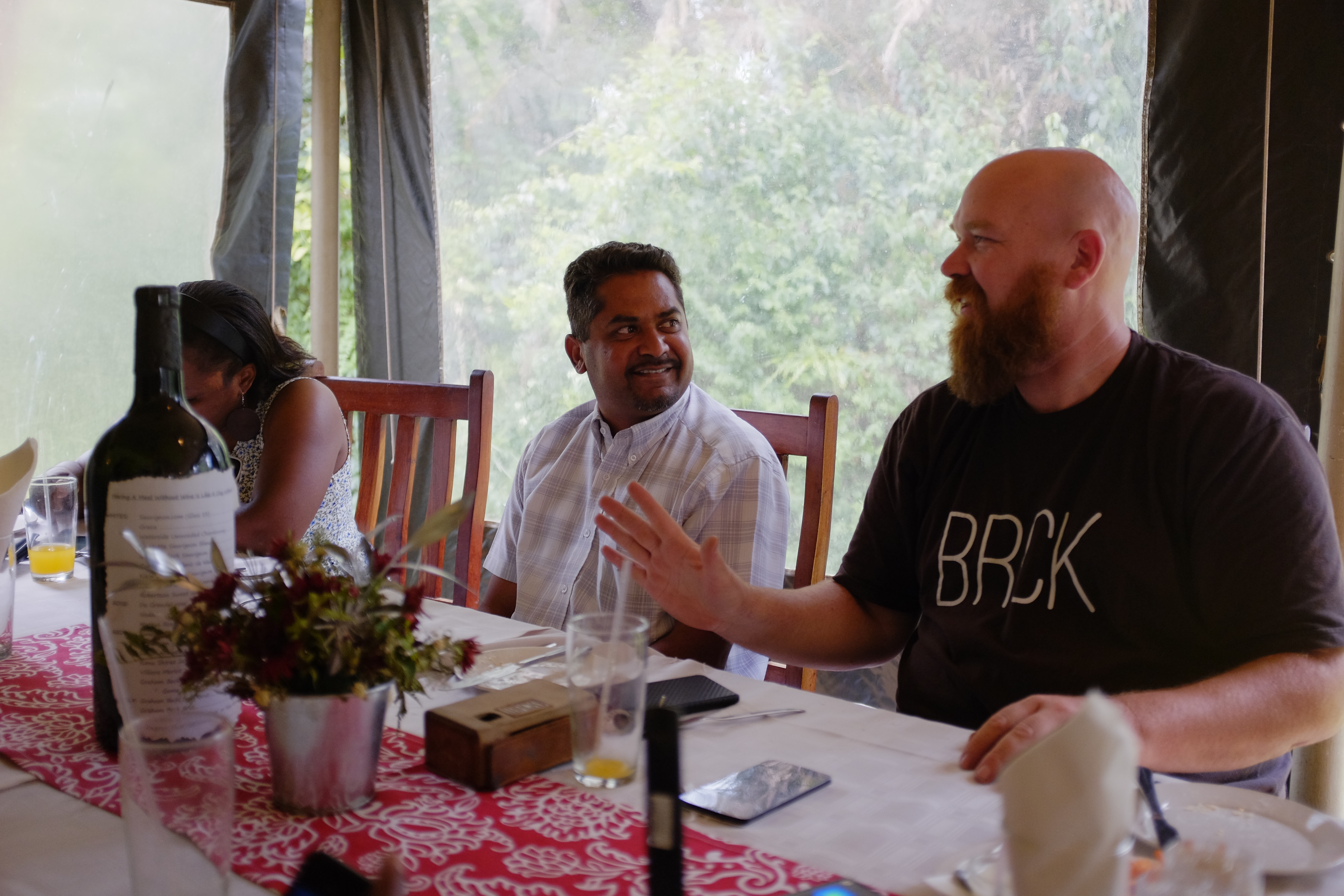
It’s been a busy couple days with the IGF meeting in Nairobi. I sat on 2 panels, one on cloud computing and how it relates to emerging markets, and another on privacy and security in an open data, realtime, networked world. Both extremely interesting, where I had to put my iHub and Ushahidi hats on to answer questions.
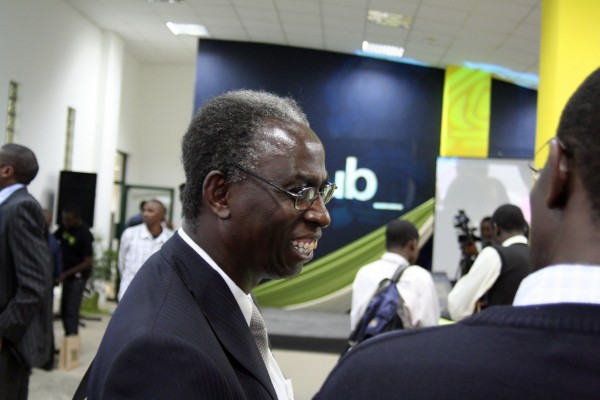
We also had some fascinating guests, including Vint Cerf (Google), Richard Allan (Facebook) and the VP of the EU.
VP of the European Union
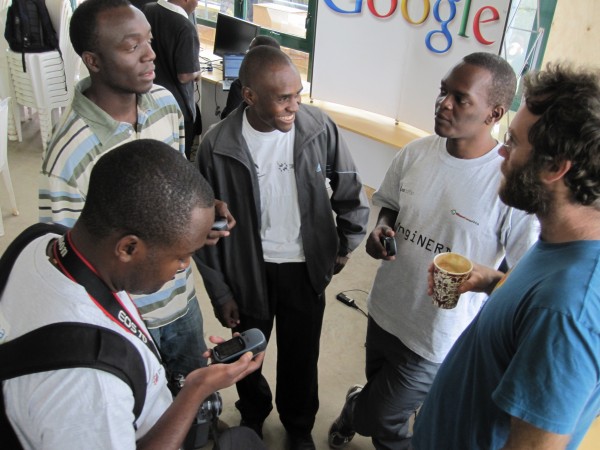
It started off with helicopters and bodyguards as the European Union Vice President, Neelie Kroes, visited, speaking with a number of startups operating out of the iHub and the m:lab. We made the case for the open web and the light touch that the Kenyan government has had in regulation and why that has allowed innovation to flourish here.
Richard Allan is in charge of policy for Facebook in Africa, the Middle East and Europe (I put them in that order on purpose AMEE sounds better than EMEA, after all.). It was especially fascinating to have someone of Richard’s calibre within Facebook visiting so shortly after the big changes that the social network has had in the last week.
There was a healthy discussion around privacy, the new HTML5 “Spartan” push at Facebook, and thoughts around how local devs could take advantage of the Facebook platform to make apps and money. He also mentioned that any dev could go to their jobs area and start testing to see if they’re good enough to make the team.
Vint Cerf (Google)
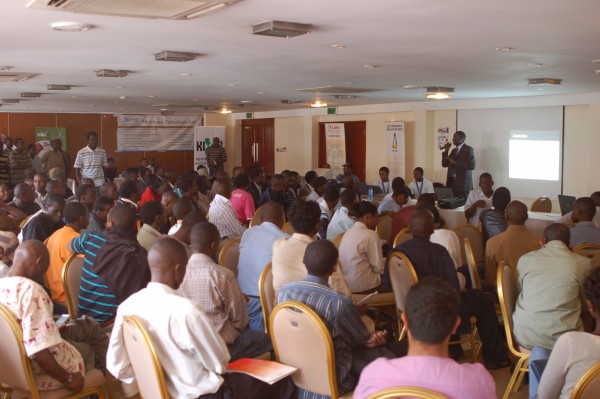
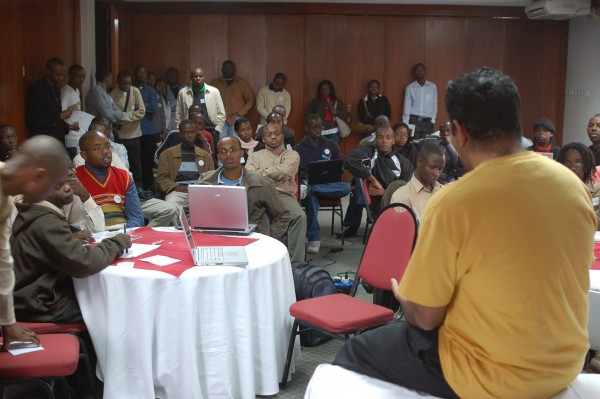
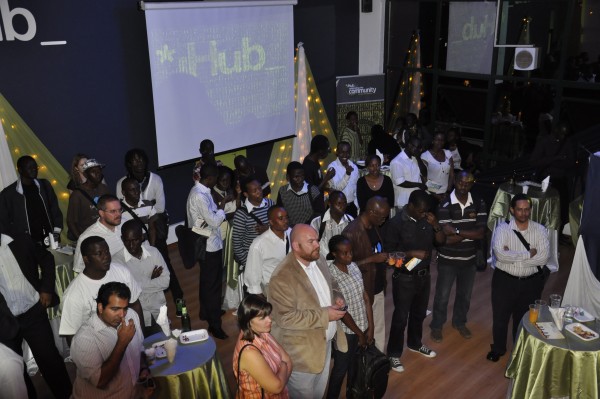
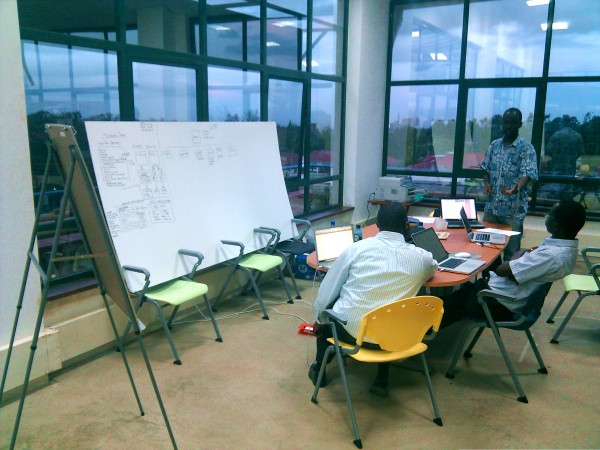
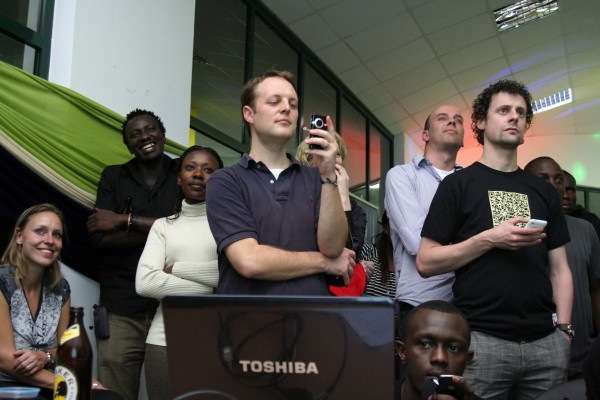
Yesterday Vint Cerf, one of the founding father’s of the internet and a VP at Google, spent the whole afternoon with a room full of us at the iHub. Besides the surreal stories he told of getting the this whole internet thing going, he also provided some much needed context into why things work like they do now and where we might be going with the internet in the future (the answer to that, apparently, is space).
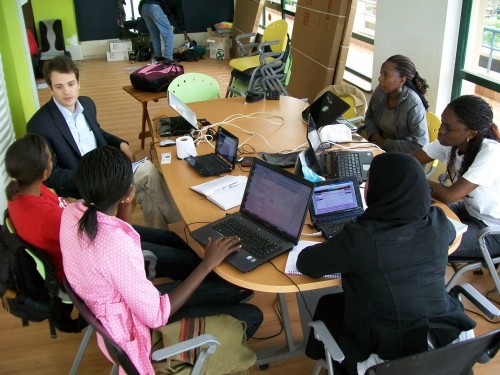
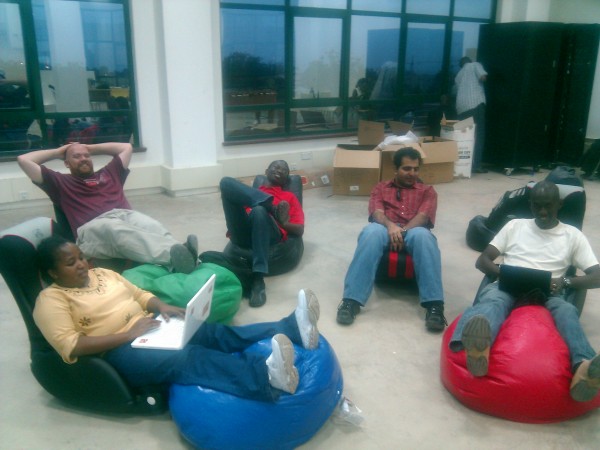
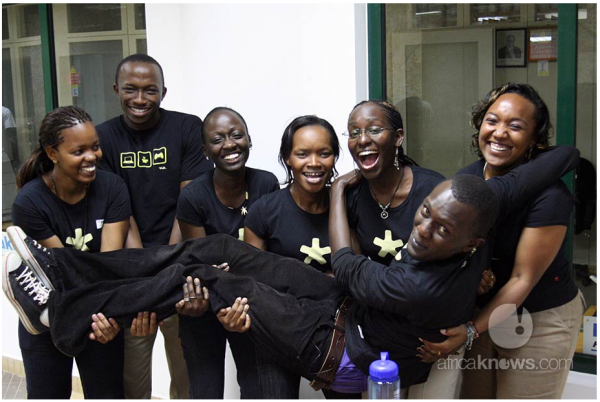
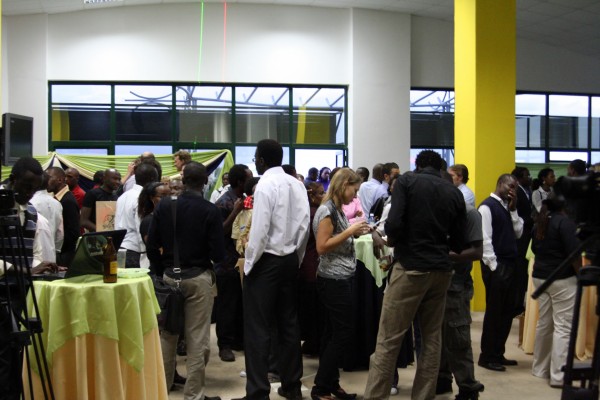
A big thanks to all of the community members who came and spent time with the guests, sharing their insights into the local startup and programming space. A big thank you to the VIPs for coming, and we hope to see them again.
{ 0 comments }
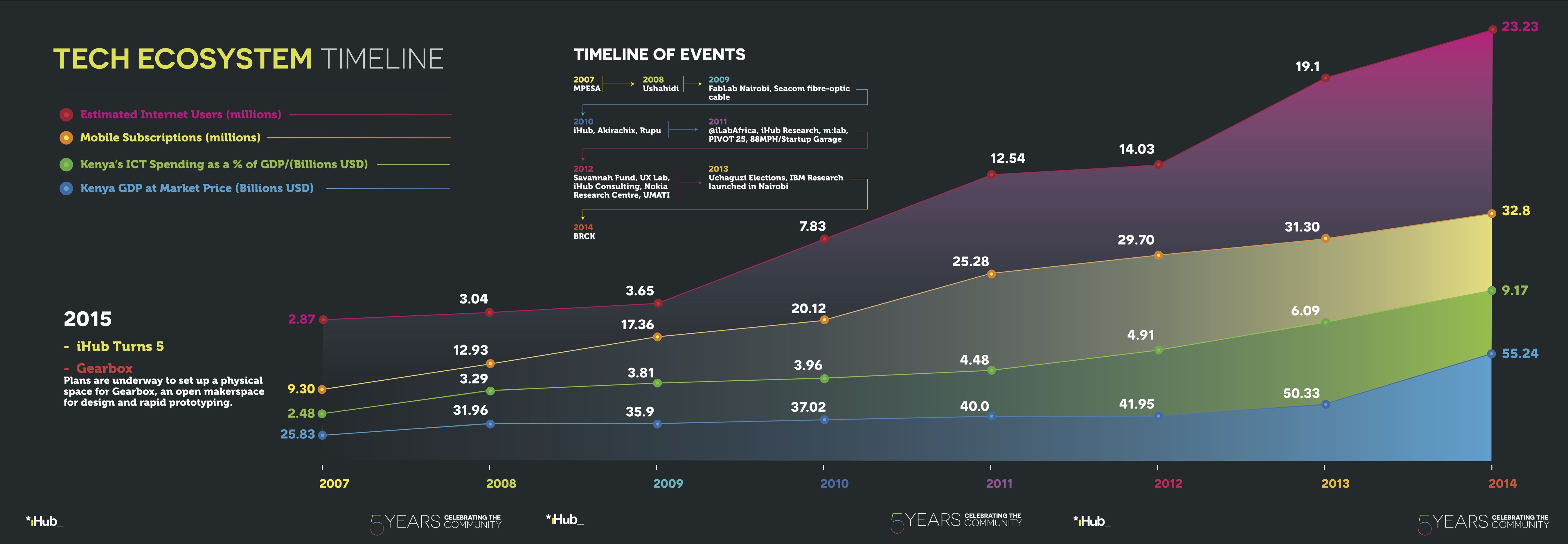
Infographic: Kenya Mobile Subscribers, Penetration & Internet
The research team at the iHub put together some stats on mobile numbers in Kenya. A special nod to Leo Mutuku for gathering it all from so many sources, and to Patrick Munyi for creating this cool visualization of it. Check out the iHub blog post to read the rest.
Look for more infographics on the other East African countries soon.
{ 1 comment }
Mobile Apps in Africa (2011 Report)
I maintain that Russell Southwood and his Balancing Act newsletter and reports are some of the best material on pan-African technology and broadcast information that you can find anywhere. Their recent “Mobile apps for Africa: Strategies to make sense of free and paid apps” report is one of them, and here are some interesting tidbits from it.
The report is broken into three parts: device, developers and distribution.
Device
South Africa, Egypt, Nigeria, Morocco, Ghana, Kenya and Tanzania all are good markets for apps, due to their population, 3g pickup and smartphone penetration. It should be noted that the highest smartphone penetration is in South Africa at 10%, though the high-potential countries are expected to grow by 8-10% per year over the next 3-5 years.
“Interestingly, infotainment activities score high off-line (using the phone’s features) and online (mobile Internet).”
Balancing Act provides a very interesting visual of what the “Handset pyramid shift” looks like in Africa.

Developers
The development of smartphone applications in particular commercial apps will depend on the rate and level of smartphone adoption. Developers in countries like South Africa, Kenya or Egypt with encouraging smartphone penetration rates have more opportunities in terms of apps development and uptake by potential users.
The major international apps stores (Apple, Android, etc) have set a figure of 70% of the revenue generated by apps will be going to the developer. This is very good news for African developers because so far with SMS based content, the revenue sharing model is not in favour of developers since less than 30% of the revenue generated by the content is going to the author. It is African mobile operators that make the most out of them as they take a minimum of 50% of the revenue generated by SMS services. The major international apps stores also offer additional revenue to developers via advertising and in-apps purchases. These revenue streams are becoming more and more significant for developers.
Building into the next section on distribution is the issue that developers have with creating apps for the international app stores. It’s very difficult, and often impossible, to sell apps on them and for African customers to buy them.
Distribution
The major consequence of the “success story” of the apps store is that it
establishes a distribution model for mobile content that breaks away from the monopoly and exclusivity that mobile operators have enjoyed so far on the delivery of services to their mobile subscribers. Today the mobile apps distribution ecosystem can roughly be divided in 4 main groups:
- Operating system app stores
- Handset manufacturer’s app stores
- Mobile operators’ app stores
- Independent app stores
So far, most African mobile operators have been little affected because smartphone penetration rates are very low in most African countries and also because African smartphone users still have access issues to the full portfolio of international apps stores.
The report goes on to express Balancing Act’s thoughts on how mobile operators can get into and take advantage of mobile app stores, “While revenue potentials are promising what else do mobile operators have to consider if they want to roll out their own apps store?” The report establishes the following 8 recommendations:
- Be OS agnostic
- Know the devices on your network
- Use “white label” apps store
- Source international content from third party content providers
- Don’t forget about additional revenue streams
- Build a strong local flavour to your apps store
- Make apps affordable to your subscribers
- Use carrier billing
And there’s More
Unfortunately, I can’t put all of the good stuff in this blog post. There are a lot more interesting points in the report, and you can buy it here. Amongst some of the best are:
- What smartphones do South Africans want?
- Nigerians love their BlackBerry
- Examples of mobile apps start-ups companies in Africa
- Morocco: Mobile internet users and penetration rate
- Mobile Internet subscribers and market share per operator
- Advertising and in-apps purchases potential income for developers
{ 4 comments }
Dragon’s Den: Kenya
This should be a fun one. I was approached a month or so back about the Dragon’s Den coming to Kenya, and it looks like it’s actually going to happen (It’s much like Shark Tank if you’re in the US). If you think you have what it takes to pitch your idea in front of these guys, here’s your chance.
To make it easy, here’s the Dragon’s Den Application Form – Kenya (Word Doc).
“Dragons’ Den is a series of reality television programmes featuring entrepreneurs pitching their business ideas in order to secure investment finance from a panel of venture capitalists.”
Five experienced investors (the ‘Dragons’) are coming to Nairobi in the next few months to hear the pitches of some of Kenya’s brightest business men and women with the intention of investing in the very best. But these Dragons are not easy to please; they will be looking for entrepreneurs who are offering investable money-making opportunities, who can also explain why their proposal has what it takes to be a success and will make a difference to the local community.
The rules are simple: entrepreneurs ask for a reasonable cash investment in return for a negotiated equity in their business. However, they must get at least the amount they ask for or they will walk away with nothing.
The Dragons are prepared to listen to a pitch for any kind of business but they must be convinced that it requires investment and will make money. Ideas, businesses and products that have previously gained financial backing in the UK Den have demonstrated one or more of the following:
- Unique selling point
- Scalability
- Clear route to market
- Planned exit strategy
If you haven’t seen the programme, visit www.bbc.co.uk/dragonsden for more info, or search “Dragons Den Series 9” on YouTube to watch previous entrepreneurs pitching to the Dragons. Email DragonsDenNairobi@bbc.co.uk for an application form.
This isn’t the first time it’s been done in Africa. It ran in Nigeria in 2008. This Dragon’s Den is done by the BBC as a special edition for Comic Relief – a major charity based in the UK.
{ 5 comments }
MedAfrica Pitches at DEMO
Mbugua Njihia and Steve Mutinda were the overall winners at the Pivot 25 event earlier this year with their MedKenya app, which has since turned into MedAfrica. Their prize was a chance to pitch at DEMO, the big startup pitching event in Silicon Valley. Here’s their team last week giving the pitch.
MedAfrica is just the tip of the iceberg, as we see more startup spaces, pitching events and seed capital entering the continent.
{ 1 comment }
Praekelt: SMS at Scale
Here’s a great video put together by the Praekelt Foundation on the state of mobiles in Africa in 2011.
I’ve gotten to know Gustav Praekelt over the last few years after we first met up at PopTech in 2008. He’s one of the most astute businessmen I know on the continent, and his ability to grow out his business into the giant it is in the messaging and communication space is proof of that. The Praekelt Foundation leverages the same infrastructure that he’s built out on the for-profit side of what he’s done, and is making a big impact, at scale. You can watch a video of him talking about his projects here.
{ 2 comments }
Africa’s Android Invasion
Mobile phone manufacturers, operators and of course Google started a big push on Android into Africa this year. Samsung, HTC and Huawei are moving Android phones into the market. Some operators are seeing the signals and starting to subsidize Android handsets to get them to a price point that is palatable by a larger number of buyers. Google continues to push for local content, works with developers, does g-[country] events and puts on contests.
While the primary phones in Africa are still feature phones, Android has made a beachhead on the continent and will continue to roll forward. I believe we’ll look back at the landing of the IDEOS phone earlier this year in Kenya as an inflection point, where in 2 years we’ll define the times up until then as, “before Android”.
Developers as Leading Indicators
I see what the local programmers working on as a leading indicator of what everyone else will be using in the next 2-3 years. In the iHub, on the mobile side, we see a lot of programmers excited about, and working on, Android apps. It’s a balance between that and the SMS/USSD core infrastructure apps that Kenya is well known for.

Today, at the g-Kenya event, Google announced the three winners of their Android Developer Challenge for Sub-Saharan Africa. Each of the winners will receive $25,000.
- Entertainment / Media / Games – Afrinolly (Nigeria)
- Social Networking / Communication – Olalashe (Kenya)
- Productivity / Tools / Local / Geo – Shoppers’ Delight (Kenya)
There were 29 finalists came from the following 10 countries, which is a pretty decent spread. However, you can tell from the number of apps in each country where the real powerhouses are.
7 South Africa
6 Kenya
5 Nigeria
3 Ghana
2 Uganda
2 Malawi
1 Senegal
1 Togo
1 Tanzania
1 Republic of Guinea
The one pain point that developers have right now is that they feel pressure to support multiple operating systems. This is Primarily between Android and Symbian if the app is focused on Africa, if the app is global, then add in iOS and possibly Windows and Blackberry.
It will be interesting to see what happens with feature rich HTML5 and how it plays out into the mobile space. At this point, either we’ll see a lot of mobile web apps (working across PCs and all phones with real browsers) or we’ll see a lot of apps. Even if we do see the client-side Android apps, I’m guessing they’ll be more thin-clients than anything else. Only time will tell though.
The Future of Consumer Mobiles in Africa
The years ahead are hard to predict. However, in Africa I think we’ll see an increase in Android handsets and mobile web usage, and a continued decrease in the cost of low-end smartphones and data connectivity.
If I’m an operator, I see the writing on the wall in regards to SMS and USSD apps, and I’m trying to move my user base to data. This means more subsidized phones, and attractive data packages that are wide-spread across my region. I’m making deals with content providers and offering zero-rated (or reverse-billing) packages on data to large content houses in order to increase usage.
If I’m a manufacturer, I’m providing an array of Android handsets that allow my aspirational users to move up from a feature phone to a (we hope soon) $50 Android, then up to a tablet eventually. I’m doing whatever it takes to decrease costs on the low-end to get mindshare. If I don’t do Android (Nokia, RIM) then I’m doubling down on the mobile web and pushing for better browsers on my phones.
If I’m Google, I keep having dev events and competitions, but I also push for better localized payment options for developers in Africa. On top of that, I’m looking for an operator billing link for consumers with attractive percentages for app publishers, that way I attract them and everyone makes more money.
Of course, there’s more, but that’s where I’d start.
{ 12 comments }
Fundi Bots: Robotics Lab, School Clubs and Camps
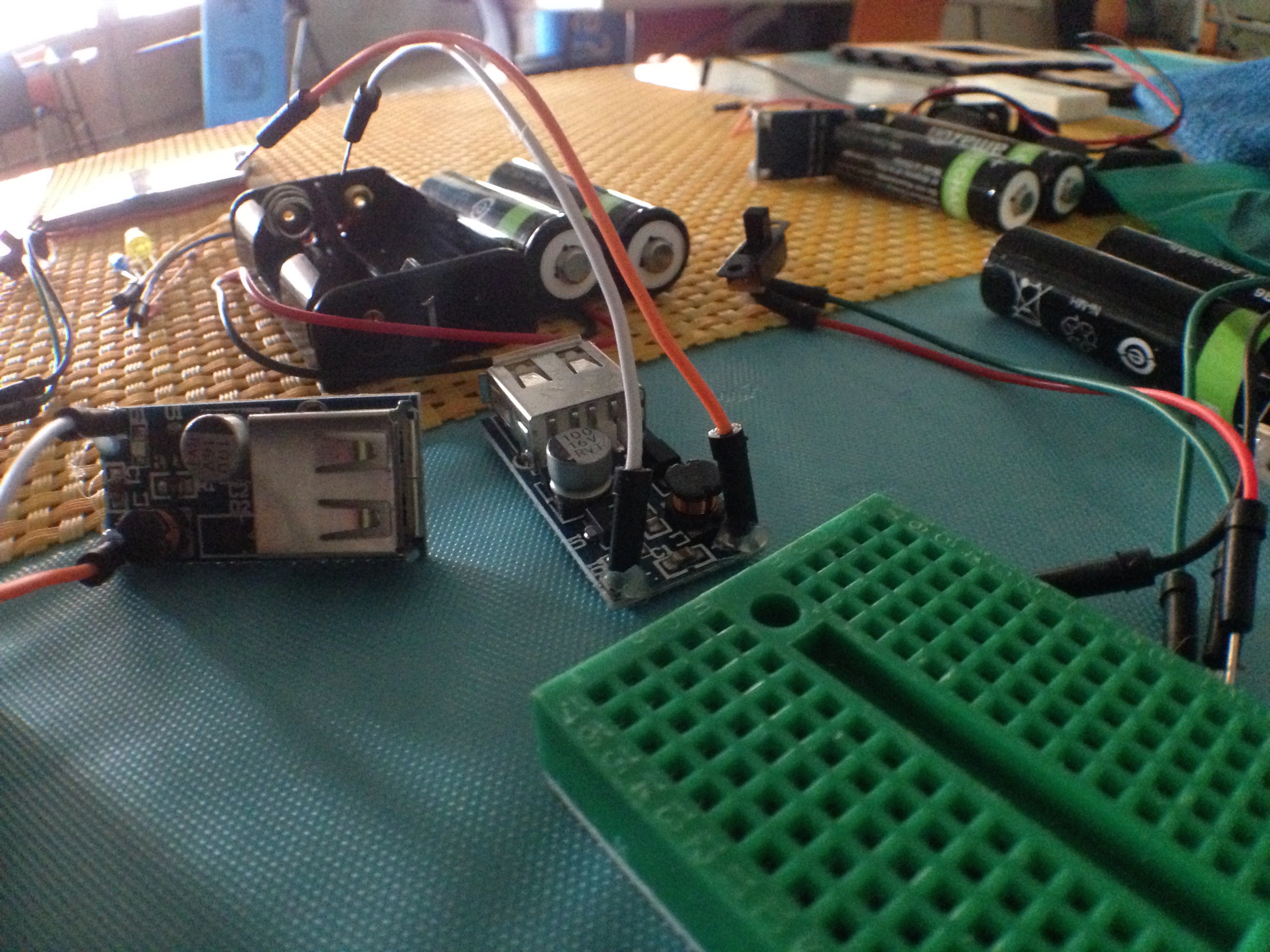
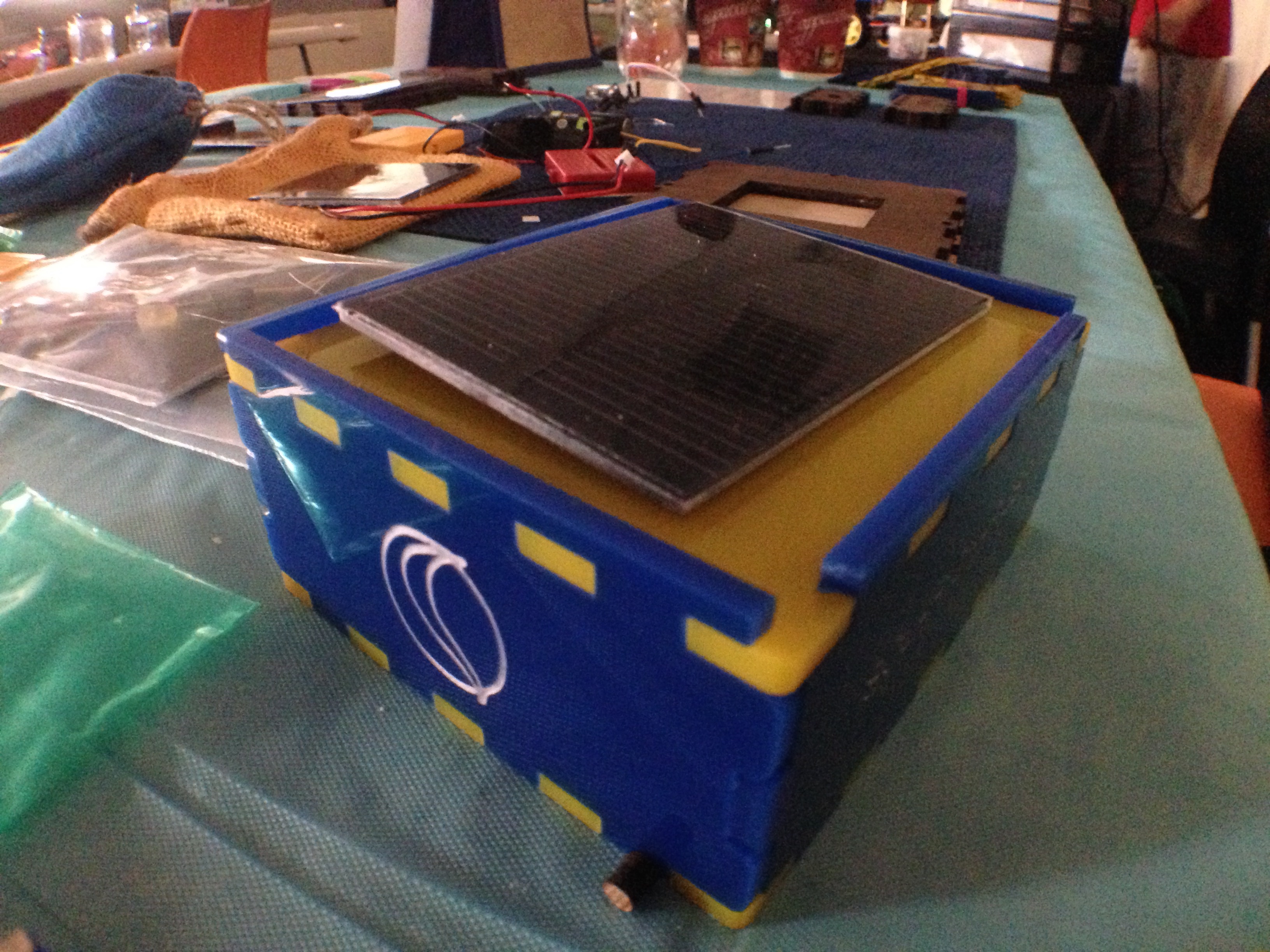
Hardware hacking is what Solomon King does in Uganda, he already makes his own robots, now he’s taking that idea a little further. He’s taking it to kids, trying to get robotics into the hands of Ugandan youth through his Fundi Bots project. (Fundi is the word for technician).
Their plan comes in three parts: a lab, school robotics clubs and robotics camps.
That first item is important, a lab. A central place where the members of Fundi Bots can come in and find the relatively expensive tools, software and computers needed to make the robots and learn together. It gives a hub to their spokes of activity taking place in the schools throughout the year, a much needed “club house” for the community.
This idea of hardware hacking garages is something I’ve spoken about before:
This is an idea that effects everyone across Africa, a space like this is accessible and usable by young and experienced, rural and urban inventors and entrepreneurs. As much as we’d like to pretend that the ideas coming from outside of Africa will be picked up and used, the truth is that the ideas need to come from Africans for themselves and their community. An open Hacking Garage platform is where real hardware innovation for Africa will come from.
Interestingly, the founder of Fundi Bots is from the software side, he’s the CEO of his own web services company Node Six, and a well-respected member of that community. I find it interesting that a lot of times, the people who get into the robotics side come from a software background.
What I find even more encouraging is that Solomon and his colleagues in this enterprise, Betty Kituyi and Gasper Obua, are doing this on their own. They aren’t waiting for investment, grants or some other form of support to get started. Instead, they’re creating robots, making inroads into schools and figuring it out as they go. Too many times people sit on a good idea and make excuses for why they’re not doing something about it. That’s not the case here.
Finally, if you’re interested in Fundi Bots, I do know that they could use some support. It might be getting them into schools, or connections with robotic parts manufacturers or resellers.
Other Hardware Hacking News
Makeshift Magazine
Put together by Steve Daniels, Myles Estey and Niti Bhan, Makeshift is a new quarterly magazine and journal about maker culture from far parts of the world. The first publication will be themed “Re-culture: Reuse, repair, and recycle at the grassroots,” featuring stories such as everyday product hacks in Kenya, industrial fabric recycling in India, improvised tools in Myanmar, recycled art in Colombia, and adaptive reuse of industrial sites in the United States. Support their Kickstarter campaign.
Maker Faire Africa 2011: Egypt

Also happening later this year is Maker Faire Africa, in Egypt. It’s a mashpit of hardware hackers, just like Solomon, who are creating new inventions and making new products. This is the third Maker Faire Africa, following Ghana and Kenya, and will bring a unique northern Africa flavor to the event.
{ 1 comment }
Africa’s small merchants and payments
I’ve been pondering small business, payments and incentives quite a bit recently. Partly because of the web startups I’ve been seeing crop up locally, partly due to the inefficiencies in the system, and also because I’m a bit of a merchant at heart.
Specifically, I think that small business in Africa will bring a major wave of activity in the online space. That some smart startups will take advantage of mobiles and the internet, and will be beneficiaries of this growth. We’re all quite impressed with the peer-to-peer mobile money growth on the continent, but those numbers pales in comparison to what can be done with high penetration of active merchant payment options.
The African Payments Picture
A recent post about Square (the merchant payment system for iOS devices) and their use by small businesses started me thinking beyond the mobile peer-to-peer payments we’re so focused on here in Kenya and more in the direction of the merchant side. Right now Square moves $4 million per day, a healthy business, but not a massive amount compared to the big guys in the field. Most merchants in the US and Europe default to having some type of credit card or bank card payment setup for customers, it’s almost a given.
Meanwhile, in Africa it’s a different story. Mobile payments have taken the stage due to the lack of credit/debit card penetration. In short, African’s lack payment options, so innovative ways to use what they do have (phones) has pushed payment innovation forward.
While the mobile operators have been busy diversifying their revenue streams and figuring out new ways to hook in their subscribers with mobile money, the banks haven’t been nearly as active. Many of them would rather just create a mobile way to check your balance, rather than provide a tool with truly meaningful interaction, something you could pass money through to merchants or your contacts. Instead of offering something of equal, or better, value they’ve instead chosen to try and block the operators movements.
As I’ve suggested many times, we need an agnostic system, where the user isn’t penalized for their choice of mobile operator or bank.
New Ideas
While the big players continue to fight it out, the small players are innovating where they can. We’re seeing mobile payment aggregators, such as PesaPal, begin to see success as their web options catch on with merchants, schools and events. Meanwhile, groups like KopoKopo are going further down the stack, providing a subscription-based mobile payments processing package for SMEs.

New startups like Niko Hapa are creating locally-relevant incentive systems for merchants that works with everyday customers. Others, like M-Order, are creating simplified mobile and web-based ordering systems for customers to order services and products. MIH-backed Dealfish and Ringier-backed Rupu/Pigia continue to duke it out against each other across sub-saharan Africa, getting small merchants to list their goods on their marketplaces.

What I’m pointing out is that we have a wave of new products and services specifically aimed at merchants. Most of them are small and don’t have critical mass, but that is changing rapidly. These are just the first movers.
Shifting Sands
Bonk is a t-shirt company in Nairobi that offers the coolest designs around for their target market of urban Nairobians, and they have a shop set up in a nice shopping center in town (Junction). Let’s call them the high-end of the small merchants who need a good way to get payments. Their current setup allowing Visa transactions account for around half of their customers, and they have to pay a rather large 5% transaction fee. They don’t have an online store (yet… Shame on them.), so walk-ins are their only sales channel and they do very well with them.
Other examples of small businesses that run the range of medium- to lower-level transactions would be auto parts stores, retail clothes shops and restaurants. They all have a need to attract customers and they are all served better by having an easier way to setup a merchant account and have easier ways for their clientele to pay.
There are hundreds of thousands of these small businesses across Africa. Few of them have any solution other than cash. Companies that accept credit cards, like Bonk, are the anomaly.
A Hybrid Solution
What would a Square-type solution look like for them? What if a company were to create a simple (for customers) payment system that solved the problem that Square is solving? That is, a way to get your hands on a solution easily, without oversized transaction fees, and which also worked within the local context of mobile payments plus credit cards.
I can imagine someone coming up with an device that works on most phones. Probably Android phones here instead of iOS devices. That way, as a merchant I can buy an $80 IDEOS Android phone, get one of these swiping devices, that also has a chip in it for near-field communication payments and which seamlessly works with Mpesa and other mobile payment options. It’s simplified, and it works across not just a country, but across the continent.
What would this device look like? How could it connect to the phone? What type of technology would be embedded in it to make it work right? Which merchant systems could be signed on in order to allow people to signup and get started?
{ 13 comments }
IPO48 Nairobi Startup Finalists 2011
I’m at the final pitches for the 2011 Nairobi IPO48 event that’s been happening non-stop over the last 2 days. This year it’s being held at the iHub, with 12 companies working through ideas, prototypes, business plans and finally an investment for the winner. In total, they’re offering:
- 25.000€ (3.3m Ksh) in funding after 48 hours
- Mentorship from serial entrepreneurs and professionals
- Great media exposure for your startup
- Find talented people that want to join your startup
If you want a quick rundown of who the 12 finalists are, and what their apps do, check out Afrinnovator’s writeup. You can also watch quick 1-minute videos on each of them on YouTube.
The 2011 Winner: Tusquee Systems with their SchoolSMS app (which also won their category at Pivot25)!
Runners Up Ghafla! and 6ix Degrees will win an additional 15k Euro investment (more on Afrinnovator).
Kenya Startup Events

It’s only 2 months since Pivot25 and now we’re on another startup event with Human IPO back in Nairobi for the second year. The Tandaa $690k startup grants for techies have gone out to 15 companies. We didn’t have any of these events going on. None.
This is important for a number of reasons:
- Kenyan entrepreneurs are getting experience in pitching their ideas.
- Techies are finding out the hard truths about themselves as business people, and that technology alone doesn’t make a business.
- Local and international mentors are giving the entrepreneurs much needed insights and wisdom.
- Investors and international media are being catered to, they’re getting a chance to see the Nairobi startup scene up close and personal.
- Design is being taken a little more seriously (though a lot more needs to be done).
- It brings an angel and early-stage investment mentality to Nairobi that hasn’t really existed before.
In short, we need to continue with local startup competitions. The more people who learn how to think through, build and pitch their ideas, the more likely we are to continue our upward growth in mobile and web innovation. It’s only by a lot of practice, lessons learned and hard knocks that we’ll see more success stories.
The finalists in these competitions represent a small percentage of the people who apply, but don’t make it. It’s a pure numbers game, where we’ll see the 10-15% succeed and most fail. Again, that’s okay, it’s how the startup game works.
We’re only half way up the mountain, and startup competitions are only part of the equation. There’s a lot more work to do if we want to see more success stories. Thus we need the whole technology community in East Africa to continue supporting the events and the people behind them, but also get involved in the startups themselves, whether for mentoring, business or investment.
{ 2 comments }
Going Off-Grid (Holiday)
I’m off-grid on holiday until August 8th. This means that any communications that come in before Aug 8th will be DELETED upon return. I do this for peace of mind on vacation, not because I don’t value what you have to say. No one wants to come back to an inbox of 2000+ messages.
Feel free to get in touch with my colleagues at Ushahidi and the iHub in my absence.
Interesting Reads
{ 1 comment }
What makes the iHub work?
I often get asked what the iHub is, what happens here, and why it has worked. Often followed by the question of whether or not this model could work elsewhere in Africa. Here are my thoughts on the matter.
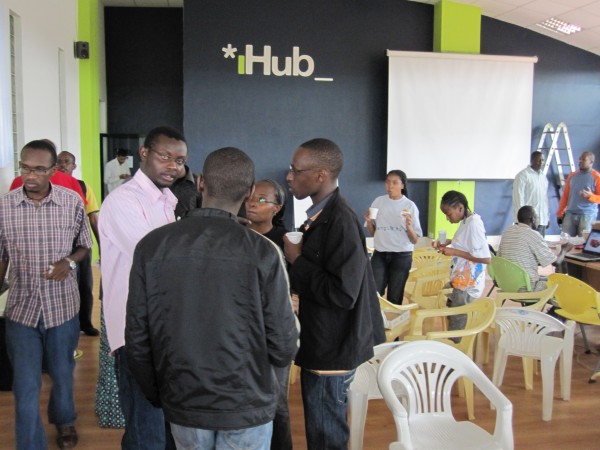
The iHub is Nairobi’s nerve center for technology; a place where we can grab coffee, create apps, find funders and build businesses. It’s where the community of web and mobile programmers connect with each other, businesses, the government and academia.
[TLDR version: Championed by credible people, alongside advisors from the community. Experimental mindset. Strong connections to corporates. Strict community focus.]
A brief history
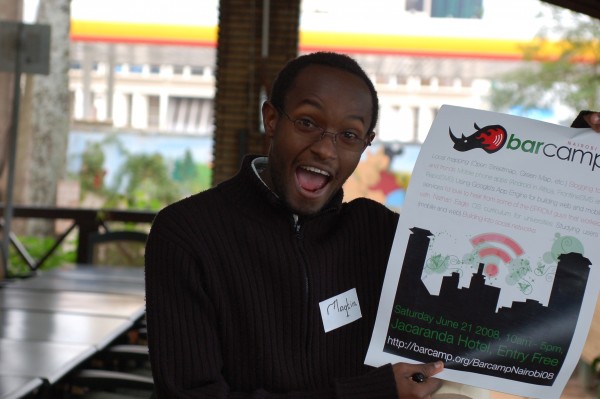
There was a discussion at Barcamp Nairobi 2008 about how valuable it would be for the Kenyan tech community to have a static space of our own. No one would fund that idea. My organization, Ushahidi, decided that we liked it the idea enough that we would fund it. It fit with our overall thoughts on being “open”, it would serve as Ushahidi’s home in the region, and most of all, we thought we could use our good fortune to find and help the next startups in Kenya.
Thus, I moved back to Nairobi in 2009, with funding from Ushahidi via Omidyar Network and Hivos, to build the iHub. I quickly selected a space, and picked the energetic and gifted Jessica Colaco as the Manager. In March 2010 we started work on the space, and in June it was open for use.
Though we had provided funding for the first 2 years, the iHub is an independent Ushahidi initiative. Meaning, that it runs outside of the normal Ushahidi operations and organization. Though the Ushahidi team has full access for the space, we have a very light footprint, and use it the same way everyone else in the community does. We knew that even though we were the most neutral of parties, with a ton of local credibility, trying to “own” the space would fail – just as it would if it had been named the “Google iHub” or the “Nokia Innovation Hub”. It had to be owned by the community, and that meant name and usage both.
The community
At the heart of all that happens at the iHub is the community. They designed the room layout and logo, run the network, hold events, built the website, create the house rules and drive the direction of the space. The management of the space is there to provide basic infrastructure support, a foundation, which the community then builds on to make the space what it is today.
What’s important to understand is that we come from this community too, we are it. We knew it could work because it was ourselves we were building for. When people ask me if I could do the same thing in another city, I respond that it would be questionable. A space like the iHub needs to be put together by someone from that community of techies who understands at a basic level the needs and has the credibility within it to make it happen.
As the iHub grew, we realized that all of the administrative duties, mixed with community interaction, were too much for one person. Thus we brought on Tosh to be the community manager, where he is in charge of working with people, memberships and events. His job is to aggregate, translate and enable the communities needs.
The advisors
That “being part of the community” was what drove me to start looking for a small team of advisors who could help make decisions, especially early on. This iHub advisory board was made up of 4 influential and highly credible technology players from Nairobi, plus myself. The greater community could appreciate that they were being represented well, and it provided a small enough team to move quickly.
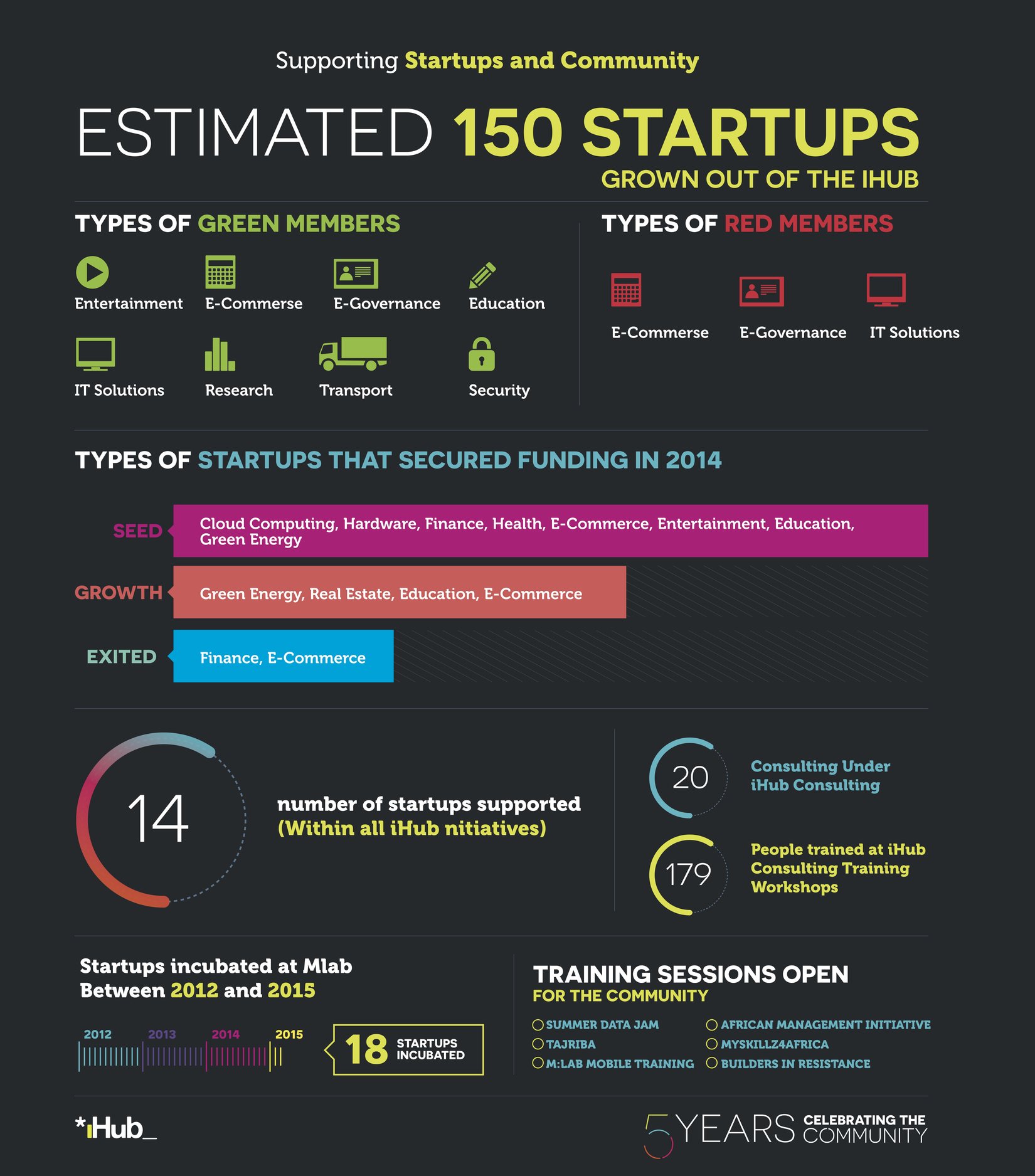
Initial roles for this team were to make the final decision on build out design, logo and name, as well as figure out how to deal with an influx of members in a tiered membership model if the need arose (and it did, quickly). With over 4,300 white-level members, this team is also responsible for making the decisions on who gets green-level membership, the people who ultimately get to have free and unfettered access to the iHub facility.
The design
The design of the space was very important, and we were lucky to have Fady Rostom and Kwame Nyongo to lead the design team. They spent a lot of time listening to the ideas and thoughts of the advisory team before they started drawing, and it shows in what was built.
We needed a place that was open, and could be flexibly turned from community commons to event space. We wanted a subsection of the space to be rentable desks, for pre-incubation and co-working activities. At no time was a coffee shop not included – it was seen as core to the vibe and culture of what would happen here. We’d need a secure server room, and plenty of ethernet and electrical points, both inside and outside.
Most of all, the iHub needed to be a place where Kenyan techies were proud of. A place that was uniquely ours, and that we could show off to our visiting friends from abroad. It had to have the feel of being any high-tech community space in the world, with a Kenyan flavor. And it is.
The sustainability strategy
Early on we had no idea how we would pay for things beyond the first 2 years. We projected costs, but didn’t know where the revenue would come from. We had some ideas, but instead of creating a grand plan, we decided to take a very experimental approach, iterating on what worked and killing ideas that didn’t fit.
Right now the iHub has revenue coming in from red members (co-working desk rental), events and the new research arm. Events and desk rental were obvious and worked from very early on. The R@iHub arm didn’t come into being until January of this year, and was very much a big experiment – which appears to be working marvelously well. Jessica’s background is as a technology researcher, and she’s built a brilliant team around her to focus on this. Already we can see that 50%+ of future income will come from this initiative.
The other experiment was taking lead on the m:lab, a space the same size as the iHub which sits one floor beneath us. It’s an incubator. It plays the iHub’s foil, where upstairs is about community, openness and fun, the m:lab downstairs is about professional tech companies building quality products and making it into the market. We took the lead on the consortium behind this, and it is seen as a sister-facility to the iHub, with many shared services between the two.
The corporates
Both the iHub and the m:lab have strong corporate partners. Early on, before the first brush of paint was dry in the iHub, we had started talking to big technology corporates who call Nairobi home. Large tech corporations need an active dev community, and the dev community needs them. Luckily, Kenya is geographically well-positioned for some great companies to make it their home in the region, which worked well for us. We also happened to know a number of them personally, which sped up the discussions and interactions considerably.


We didn’t want to just have corporate partners who were sponsors. We made it very clear early on that their money was less important to us than what value they could add to the space that would help the dev community, but that it was a 2 way street. If we couldn’t facilitate a strong value back to them from the local tech community, then it was a no-go.
Fortunately, despite our lack of a clear idea of exactly how things would work, or what our metrics of success would be, we found some great patners. Nokia, Google, Wananchi and Microsoft are corporate partners with the iHub, and downstairs we have MIH, Nokia and InMobi working with us.
A small aside here, which isn’t corporates, but we’ve also nurtured strong connections with the Kenyan government, though we take no money from them. This also applies to academia.
Final thoughts
By the end of 2010 people were already claiming that the iHub was a model for technology engagement, aid stuff (gah!), etc… in Africa. I thought that was a premature statement, it was an experiment and it still is. The success of the iHub has come from a strong foundation of advisors and community members who understand their city, their peers and their region.
The success of other tech hubs across Africa will be based on leadership credibility, and ability to engage their community.
Much of the iHub’s success comes from a community that works together. In that spirit of “harambee” that is so much a part of our Kenyan life. While there is always healthy competition, we would rather work together and celebrate each others success, and ultimately help each other along with the knowledge that if more of us succeed, then we all benefit.
I hope to see many more labs and hubs across the continent, and we’re seeing them grow too, in Cameroon and Ethiopia, Uganda and Nigeria. Though some of them will need financial assistance to get going, like Ushahidi did with the iHub, they’re organic growth is what makes them viable.
{ 25 comments }
TEDGlobal 2011
This last week I was in Edinburgh, Scotland at the TEDGlobal conference. As always, it was filled with inspiring talks, great conversations and I went away with a brain full of new ideas. (TEDGlobal picture sets)
I’m one of the TED Senior Fellows, and I should add that there is one more week open for applications to this program. Every class of new TED Fellows seems to get better, where their talent, ability to speak and communicate their ideas grows stronger. In fact, I think this year’s TED Fellows talks were at a higher quality on average than TED U talks.
Not all of my favorite talks are up yet, but two of them are, embedded below.
A Magna Carta for the Networked World
One of my favorite people in the world is Ethan Zuckerman, who gave a talk at TEDGlobal last year in Oxford. He co-founded Global Voices, and his colleague on that was Rebecca MacKinnon, who spoke at this one. Here’s her talk on why we need a Magna Cart for the networked world:
Trial and Error
As knowledgeable as we are in whatever our chosen field is, there are things that we shouldn’t jump to assumptions on. Instead, economist Tim Harford makes a case for the use of trial and error in order to come up with the right decision.
{ 1 comment }
Africa’s First National Open Data Initiative: Kenya
Today Kenya becomes the first country in Africa to launch a national open data initiative. There have been many people pushing for this, over many months, and it’s been an exciting process to watch unfold. Foremost amongst the drivers on this has been Dr. Bitange Ndemo, the Permanent Secretary of Information and Communications. This is indeed a very proud moment for Kenya, and a leading position to take on the continent.
The Kenya Open Data Initiative (KODI) goes live this morning in a big event that includes President Kibaki, as well as many politicians, government officials and local technologists. The World Bank, who has been instrumental in organizing and helping publish the data is here as well, along with Google, Ushahidi, the iHub community and a large selection of youth.
Data Sets
The data is available online through the Socrata platform, which allows users to view different data at national, county and constituency levels. They can compare different data sets, create maps and other visualizations.
Data sets are categorized into 6 main categories: Education, Energy, Health, Population, Poverty and Water & Sanitation. It includes data from the national census, the ministry of education, ministry of health, CDF projects and many more.
Here’s an example of that data, “county expenditures by administration”:

Mashing up the Data
This all came together rather quickly, starting about 3 weeks ago. The tech community was immediately reached out to, and as the data sets have come online over the last week, we’ve had access to them early in order to show what can be done. Here’s a few samples of that.
The Ushahidi team is taking the census data and overlaying healthcare institution data on top of it into our Huduma site. It’s still very beta, but it shows what can be done in just a few days.
We’ve also built a simple SMS query tool. If you’re in Kenya, send an SMS to 3018 with the name of your county or constituency and you’ll get back an SMS with the demographics and MP of that location.
The Virtual Kenya team has built an app that shows which MPs refuse to pay taxes.
The iHub community has done some things around tracking CDF fund usage in the constituencies. There’s a mobile app called “Msema Kweli” that allows you to find CDF projects near you, and for you to add pictures of them.
{ 51 comments }
A West African Mobile Hacking Event
There’s generally a communications wall between francophone and anglophone Africa. Both sides could use greater exposure to the other.
It’s no surprise to see a bunch of tech companies and community members coming together for a 24 hour hackathon on September 24th in four French speaking countries: Côte d’Ivoire, Benin, Senegal and Cameroon.
What’s great to see, is that there are 6 tech labs/hubs that are supporting it in these countries:
Côte d’Ivoire : AKENDEWA
Sénégal : JOKKOLABS – ACT DAKAR – iHUBSENEGAL
Cameroun : APPSTECH
Bénin : ETRI LABS
{ 2 comments }