From the category archives:

Africa

Broadband in Africa Report

by HASH on November 13, 2008

Russell Southwood’s Balancing-Act newsletter is one of the best sources for internet and mobile statistics and reports in Africa. If you don’t read it, you should. If you run any type of mobile, web, or ISP-type company in Africa and you can afford it, then you should be buying the reports. Here are some excerpts from the recent one on Broadband Markets in Africa with some opinions thrown in by me.

Every country needs a price wiki

“Confusing range of pricing structures: Different pricing structures are applied to different delivery technologies (DSL, CDMA, WiMax, GPRS, EDGE, 3G, etc) and this makes “like-for-like” comparisons across all African countries an almost impossible task.”

No matter where you go in Africa there is no easy way to find out what types of broadband connections are available. There would be nothing more useful than a wiki-like tool that people could add to and compare against. A place where people who use these tools can put up their experiences and let others know about the “true” bandwidth provided by companies. This is especially true for residential customers.

Geographic broadband penetration

In the world’s most developed OECD countries, 61% of subscribers got their broadband through DSL services by 2007, 29% through Cable TV (CATV), and 8% through Fibre LAN connections. Just 2% of subscribers – some 3.455 million – subscribed to broadband through ‘other’ fixed wireless broadband services. In Africa, some 59% of broadband subscribers use DSL, just 1% use CATV, and the remaining 40% use wireless broadband.
Broadband to OECD countries in Africa by type

By December 2007 terrestrial broadband networks were now available in every capital city in Africa, some 50% of main cities, 10% of secondary cities and 2% of towns.

Traditional media is still king

Users in the more developed broadband markets make the Internet a modest supplement to a diet composed mainly of radio and television. As South African media owner Prakash Desai, CEO, Johnnic has pointed out in October 2007:”99.9% of revenues are offline. The Internet doesn’t feature.”

As elsewhere, the Internet in Africa has a symbiotic relationship with other media, particularly television. After a controversial scene in the second series of Big Brother, there were five million downloads of that scene. Ninety per cent of those downloads came from within Africa and of those 33% were from South Africa and 37% from Nigeria and Uganda. Similar response rates on SMS voting and competitions shows that this will be fertile ground for broadband content development as the subscriber numbers increases.

Mobile providers hold the high ground

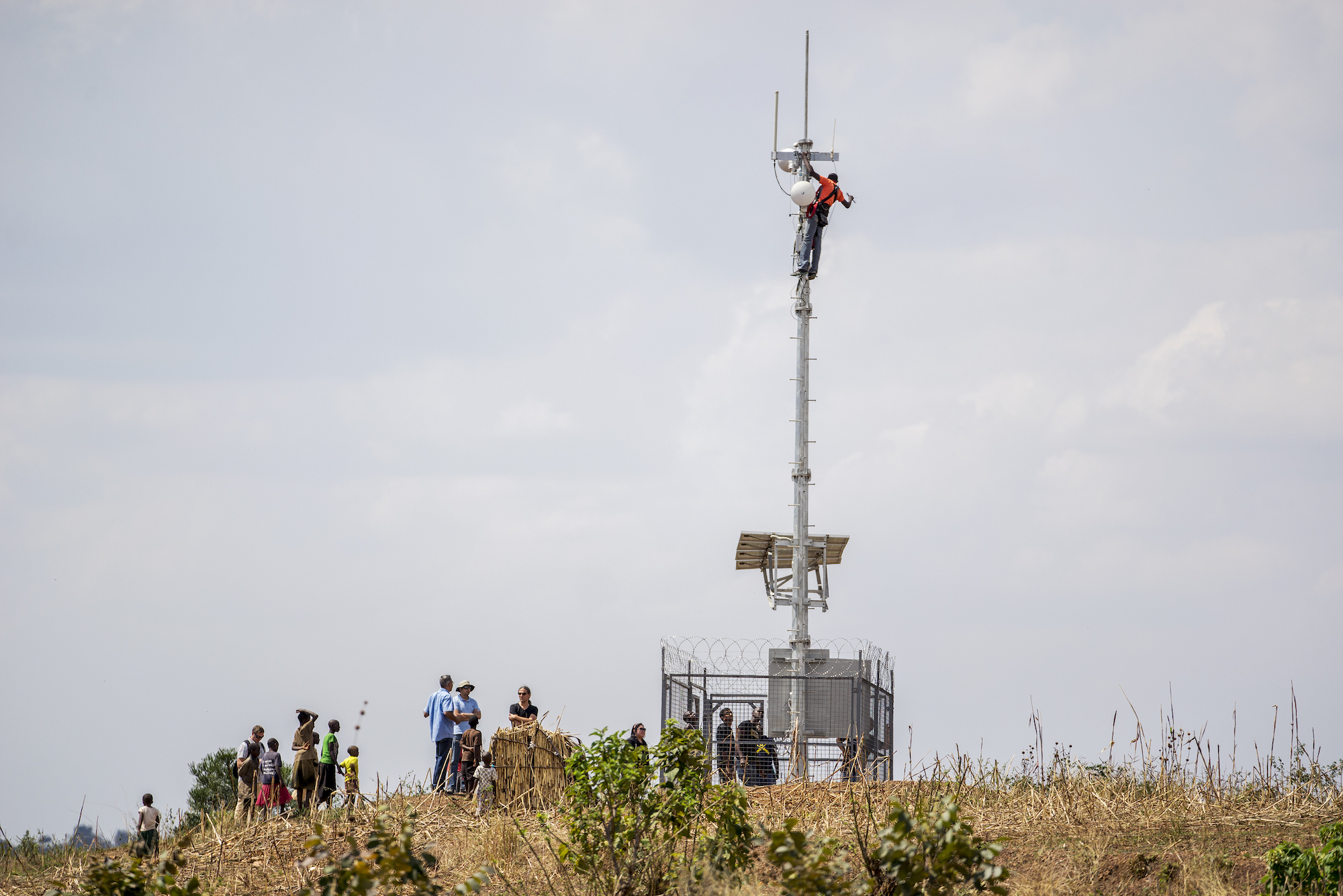
On a continent that has a wide variation in the amount of internet access available when moving from urban to rural settings, the hand tips to those that have lower costs in rolling out infrastructure. Land lines, cable and fibre all cost a great deal to deploy. Mobile phone carriers have the ability to do so at a lower cost through towers. It’s a node vs line problem.

The key battle ground in the next five years will be between 3G services (or higher) offered by GSM and CDMA operators and fixed wireless broadband services. The outcome of this battle will shape the broadband experience in Africa, whether customers use mobiles as Internet access devices. …Mobile operators launching 3G networks are offering access speeds which compete with the broadband wireless services.

When that access is just as fast as land lines, then there’s no reason at all to stick with an internet solution that forces you to stay in one place.

{ 15 comments }

Adgator: An African Blogger’s Ad Network

by HASH on November 11, 2008

Justin Hartman and the guys at Afrigator are at it again. I’ve wondered for a very long time why no one had created an ad network for African bloggers, thinking that there surely must be someone out there who wanted to advertise on some African blogs.

adgator

Adgator is here to ask that same question, and prove it out. Make sure you read Justin’s post on the new platform.

Afrigator recently had a sizeable stake acquired by MIH Print Africa, a division of Naspers Limited. This gives them more money to work with, and more credibility. This also means that they have a sizable sales team at their disposal, which is one of the biggest issues when doing an ad network.

Before you run off to Adgator and sign up, here are a couple things you should know:

  • It’s a 50% revenue split with Adgator.
  • You get paid on a CPM basis, so you had better have a good deal of traffic to make money.

Questions

I had a couple questions for Justin regarding Adgator, and he was kind enough to reply with some answers. Here is our dialogue:

How do bloggers outside of South Africa get paid?

At this stage we’re only piloting the program in South Africa. We need to test the viability of the program in the country where Afrigator’s largest base lies and if we can make it work here then we’ll take what we’ve learned into other African countries. When we do, we’ll most likely setup our own bank accounts in those countries so that we can facilitate the payment process from within those regions. One of the core issues we’ve always struggled with in the Adgator idea is the payment one and we realise that paying people from SA simply won’t work.

Are you mainly focused on South Africa right now?

Yes - we’re only SA for now. I’m hoping to roll this out to Kenya and Nigeria by March 2009.

I know you have a sales team, how much of those sales are done outside of South Africa?

None at this stage and herein lies the problem. Because we have little resources in other African countries it makes Adgator even more difficult to implement outside of SA. However, through our efforts with Afrigator we are working on overcoming this issue and establishing ourselves in our larger African countries.

How many advertiser are already lined up?

This is without doubt the most difficult aspect of the job as advertisers need to be educated in this process. That said it looks like we’ve got between two and four advertisers depending on how the final negotiations go.

{ 7 comments }

Maneno: A Blogging Platform Made for Africa

by HASH on November 8, 2008

Maneno means “words” in Swahili. An apt name for a new blogging platform being created right now by Miquel Hudin Balsa. It’s all new. There is nothing in there that’s part of some pre-packaged system.

Maneno.org - blog platform for Africa

Do we need another blogging platform?

When I first heard about Maneno, the first question that came to my mind was… “what about WordPress.com and Blogger.com?” Don’t those serve the same purpose? Realizing that my knowledge in this might be lacking, I contacted Miquel to answer a few answers. Here is his response:

“We travel quite a bit and I found that anything hosted in the US gets slower and slower the further you get from the US, so I worked to create a CMS/blog platform that was very stripped down, yet fully functional. Don’t get me wrong, Wordpress is a beautiful, fantastic system that I admire and also use, but when you’re on a satellite connection in Bukavu or very slow DSL in Sarajevo, it’s mighty slow to use, which is the same problem with GMail and other web based applications that were developed in North America and Europe. So, I realized that what I was doing for our personal blogs would translate very well in to a system that would meet a great many of the needs for a new blogging system for Sub-Saharan Africa.”

That makes sense. Any hosted web platform based in the US and Europe is going to have lag issues Africa. Every byte counts, so a system that has been custom built to work in this scenario can be useful.

Primary African Languages

Currently, the Maneno website interface is available in English, Spanish, French, Portuguese, and Kiswahili. Most of the translation work is being built on feedback from translators who work on multi-lingual sites and have problems with the interface - as most are built for just writing and not for translating.

“For the time being, since we are still in Beta, we want to incorporate about 3-4 more non-colonial languages in the next 2-3 months, perhaps Akan, Hausa, Lingala, or Zulu. For now, we’re trying to include languages that have a large amount of speakers. The system is quite open for translations, and we’re in fact looking for new volunteer translators.”

Maneno side-by-side translation UI

For translating individual articles, it’s a instantaneous system where if someone is reading an article, they just click on the dropdown next to it and go to a translation page that allows them to work on their version side by side with the old one.

Final thoughts

The site absolutely flies. It’s a lot faster than most other blogging platforms. I’m interested in hearing from others around the African continent on how fast the site loads for them.

Besides the standard text and images, Maneno allows you to add up to 10Mb audio files as a post. This is a great idea, and shows just how much they’re thinking about things differently, as many normal users of blogging platforms can’t figure out how to host podcasts or audio files to get them out in the public.

What Maneno is trying to build could be a really effective hosted blogging tool for Africa. Besides language and page-load speed, on their blog they state that they’re also thinking about using mobile phones as a way to blog.

The software is in it’s Beta stage, which means it’s time to try it out and see how well it actually works in the field. If you’d like to help in local dialect translations, make sure you visit the Maneno Languages page.

{ 12 comments }

Ushahidi in the Congo (DRC)

by HASH on November 7, 2008

When we pushed the first version of Ushahidi live in Kenya, I was trying to juggle that as I spoke at a conference in New York. Today, we’re deploying the new Ushahidi Engine (v0.1) into the Democratic Republic of the Congo (DRC), and I’m in Rhode Island speaking at another conference. I’m starting to see a pattern emerge…

Reporting Incidents from the Congo

The DRC deployment can be found at http://DRC.ushahidi.com, and the mobile number to send SMS reports to is +243992592111.

Ushahidi Deployed to the Congo (DRC)

Note: This is the alpha software for Ushahidi. If you find any problems, please submit them to bugs.ushahidi.com.

How you can help

Get the word out. Let people know the mobile number (+243992592111) and website (drc.ushahidi.com). Help get word to the Congolese on the ground in the DRC of this tool, that’s who needs to know about it.

Things are serious in the Congo… They are bad, very bad. As Sean Jacobs states:

“Since August this year at least 250,000 people have been left homeless in Eastern Congo in the latest outbreak of a civil war described here as between government troups and a rebel group claiming to protect ethnic Tutsis. At least 2 million people are refugees from that war which dates back to 1996.”

It’s a difficult situation, with a swirling mixture of militia and armed forces, compounded by particularly brutal and confusing activities. External military forces, years of displacement and a misinformation mar the landscape.

A new Ushahidi, a new test

To be quite honest, we’re a little nervous, just as we were the first time. The new engine still has a few bugs, and there are some process flow issues that we’re still trying to get figured out. This time we’re backed up by a group of competent developers who are working to get things straightened out. Want to help us make it better? It’s an open community, and we’re looking for your input.

We are VERY interested in hearing from you on how we can make the system better. If you have ideas, thoughts, comments - tell us. Leave them in the comments here, on the Ushahidi blog, or on the Ushahidi contact form.

This is a test of the system, albeit a very difficult one, but it will affect the way the software is changed, modified and upgraded in the next version. What we get right here, we can make work for you in your area when you need it.

How SMS messages route through Ushahidi

This simplified graphic was created to show how SMS messaging moves through the Ushahidi system - it’s a 2-way communication cycle.


SMS Reporting Through Ushahidi, originally uploaded by whiteafrican.
  1. An SMS gets sent to a local number
  2. It passes through FrontlineSMS
  3. This syncs with Ushahidi
  4. The message shows up on Ushahidi
  5. Admins can decide to send a message back to the original sender

We use FrontlineSMS so that we can provide local numbers in areas where the larger SMS gateways don’t operate. For instance, if you were to try to run this in Zambia, you’d probably get a UK phone number if you went through Clickatell. However, we do use Clickatell for the messages that we route back to the original sender due to cost savings. They also have a very nice, easy to use API.

{ 8 comments }

No Connectivity, No Phone, No Electricty, No Problem

by HASH on November 6, 2008

solarnetoneNext time I’m in Orlando, I’m going to see Scott Johnson. He lives about an hour away in Daytona Beach and has developed a solar-powered Internet “hub” system (running Ubuntu GNU/Linux) that he builds to order. In the video below, he talks about the what, why and how of his system. Incredible work, and well worth watching.


GNUveau Networks builds solar-powered computer networks for remote villages from roblimo on Vimeo.


SolarNetOne

His objective is to bring computers and the Internet to places that have no connectivity, no phone service, and no electricity.

On the wiki, I was able to see that there is a SolarNetOne installation running in Katsina State University, Nigeria right now, providing wireless connectivity and “Internet Cafe” access to hundreds of people. Scott also tells me that they’re in Tunisia and Benin as well, with more requests coming all the time.

Find out more on his website at GNUveau Networks.

(h/t Christian Ledermann)
(thanks to Roblimo for getting me better embed code for the video)

{ 6 comments }

“Made in Africa” my talk from Pop!Tech

by HASH on October 29, 2008

Here is my 5-minute talk that I did at Pop!Tech this Saturday. It touches on Ushahidi, AfriGadget and why I’m optimistic about Africa.


The best part for me is that in a recording I can make sure I don’t forget any lines and I can add more images into the slideshow. I know I had to cut out a section of the talk in the live event as I was running out of time. Either way, I hope you enjoy it, as it’s a mixture of my history that explains a little of my present occupation.

{ 13 comments }

Ushahidi “Eldoret” (v0.1) is Released!

by HASH on October 28, 2008

I’m very excited to take a moment to give a big thanks to some very special people who have taken a lot of their time to make Ushahidi’s first release of the new engine come together. Each release is named after an African city or town which has seen a large crisis or disaster overtake it. The “Eldoret” release is in recognition of the problems that were centered around that town in Kenya earlier this year.

Ushahidi Alpha

A special round of thanks goes out to the following people for going the extra mile and getting this done:

It’s really looking good too, in no small thanks to Caleb and Jared. Check out the demo for yourself. More on it at the Ushahidi blog.

Bugs

Of course, there are bugs that need to be found and squashed. Many bugs, legions of them I’m sure, as this is just the alpha. Send all of your errors, bugs and failures to bugs.ushahidi.com - Thanks!

v0.2

The partying isn’t even done, but it’s time to finalize features and start building in the new ones. Check out the task list at http://wiki.ushahididev.com/doku.php?id=october_tasklist_2 if you want to get started.

{ 2 comments }

FrontlineSMS, Clay Shirky and Project Masiluleke

by HASH on October 24, 2008

Ken Banks at PopTech 2008

Ken Banks, who I’ve become even better friends with since we roomed together for the PopTech Fellows program, spoke today about FrontlineSMS. With his British accent, talk of Daleks from Dr. Who, and witty comments he won over the room.

Matt, Clay and Chris at PopTech 2008

Two of my favorite speakers were in the first session of the day, Clay Shirky (Here Comes Everybody) and Chris Anderson (The Long Tail). Just read their books, it’s probably the best advice I can give you.

PopTech 2008

Project Masiluleke

From the PopTech Blog:

“In Zulu, the word masiluleke means “lend a helping hand” and “give wise counsel” - a concept at the heart of a new project announced this morning at Pop!Tech. Project Masiluleke, which spun out of a talk by HIV campaigner Zinny Thabethe at Pop!Tech 2006, is attempting to wrestle back some initiative in the HIV-Aids crisis in Africa.”

PopTech 2008

When the team who worked on this went through the numbers, the impact and the process created to attack the issue of HIV in South Africa, it was incredibly emotional. Robert Fabricant of Frog Design worked on this, and I’ve learned first-hand how this man can laser in on strategic design challenges - and they did the same for this project.

Robert of Frog Design at PopTech 2008

Really, this was an all-star team, Gustav Praekelt - one of the most knowledgeable mobile phone specialists in Africa - is helping to run the program. It’s done using the 120 character free space in “Please Call Me” SMS system that’s used in South Africa. They tack on messages to get people to come to get HIV treatment in private, so that they don’t have to worry about what stigma attached to that treatment.

{ 4 comments }

There’s a Problem with Seed Capital in Africa

by HASH on October 20, 2008


John Balen of Canaan Partners, originally uploaded by whiteafrican.

Wherever I go in Africa, one of the consistent comments that I hear from young entrepreneurs in the technology space is that there is no way to get started. There is little seed capital and very few angel investors to be found. That’s a problem - and it’s true in East Africa as well as South Africa.

In a conversation with John Balen, General Manager of Canaan Partners - a top tier Bay Area venture capital firm, over breakfast this morning at PopTech Fellows we discussed a few of these challenges. Canaan has operations and offices in India, Israel and the US, which means that they have some experience working in areas with non-traditional VC ecosystems.

Problem: The Investment Community

It turns out that one of the main problems in places like Africa, which is somewhat similar to places in India, is that the investors have to be educated first. Seed capital and early venture funding is a high risk proposition. There are few investors who care about technology, and those that do are interested in the later stages of investing.

A common problem in Africa is finding young entrepreneurs with a good idea, generally technical in nature, and they need about $5000-$10,000 to handle operations and build out of their technology in the first 6 months to a year. If they can find a local funder, that person generally wants an inordinate amount of equity in the operation - anywhere from 40-80%.

Some serious education in the investor circles in Africa needs to take place.

Lastly, there should be some recognition that a lot of the young entrepreneurs need some help. Beyond the funding, just giving some help in learning how to set up and grow a real business is hugely important. Introducing potential partners, helping broker deals and giving advice on how to hire employees are ways that investors grow into being a true partner - and African entrepreneurs badly need this too.

Ideas

I’m interested in seeing some Y-Combinator style venture funding companies AND communities developing around different regions in Africa. Groups that only fund the very early stages of development ($5000 - $15000) for very short periods of time (3-6 months).

I know there are some individuals doing just that, but let’s talk about communities around this space. What I think would be interesting would be to see these individuals band together and create real communities that connect with and plug in to the community in much closer ways. Become part of the local technology ecosystem and really learn how to find promising individuals and foster them to greatness - and make a lot of money along the way.

As John Balen said, “It’s hard for large VC funds to invest in small enterprises.” This is especially true in Africa, so why not figure out a way to foster earlier stage investments as a community of smaller investors?

{ 18 comments }

7 Rules Explain Innovation in Africa

by HASH on October 17, 2008

Ethan Zuckerman has produced yet another amazing thought piece. This time, he’s talking about innovation in Africa and how that is brought about by resource constraints. Go read the whole post here. In the meantime, here are his 7 rules explaining how developing world innovation proceeds:

  1. Innovation (often) comes from constraint (If you’ve got very few resources, you’re forced to be very creative in using and reusing them.)
  2. Don’t fight culture (If people cook by stirring their stews, they’re not going to use a solar oven, no matter what you do to market it. Make them a better stove instead.)
  3. Embrace market mechanisms (Giving stuff away rarely works as well as selling it.)
  4. Innovate on existing platforms (We’ve got bicycles and mobile phones in Africa, plus lots of metal to weld. Innovate using that stuff, rather than bringing in completely new tech.)
  5. Problems are not always obvious from afar (You really have to live for a while in a society where no one has currency larger than a $1 bill to understand the importance of money via mobile phones.)
  6. What you have matters more than what you lack (If you’ve got a bicycle, consider what you can build based on that, rather than worrying about not having a car, a truck, a metal shop.)
  7. Infrastructure can beget infrastructure (By building mobile phone infrastructure, we may be building power infrastructure for Africa.)

Brilliant.

{ 6 comments }

Open Mobile Consortium Launches at MobileActive ‘08

by HASH on October 15, 2008

Open Mobile Consortium - first meeting group at MobileActive '08
(Image by Tino Kreutzer)

One of the big initiatives that was just formed/announced at MobileActive ‘08 was what we’re calling the “Open Mobile Consortium” (working name). This is a body much like the W3C, focused on bringing together groups working on initiatives in this space, formulating best practices and standards and generally working to bring this fragmented industry a little closer together.

We’ll see where this goes, but there seems to be a lot of enthusiasm and willingness to make something happen. On top of that, the organizations taking part carry a lot of weight. There were representatives from UNICEF, Shuttleworth Foundation, Tactical Tech, InSTEDD, Cell-Life, Ushahidi, UN Foundation, Open Rosa, Columbia University, and many more that I can’t remember.

Benevlolent Dictator of Open Mobile Consortium: Robert Kirkpatrick of InSTEDD

This is an open group, and there’s room for input from the private, academic and the non-profit sectors. Look for a website shortly, until then know that our benevolent leader, Robert Kirkpatrick of InSTEDD, or Peter Benjamin (secretariat) of Cell-Life.org will be handling the process going forward.

[Needless to say Ushahidi is a proud founding member of this group.]

{ 4 comments }

Mobile Phones in Crisis & Disaster Situations

by HASH on October 14, 2008

This morning I had the honor of putting on a workshop at MobileActive ‘08 with Robert Kirkpatrick, of InSTEDD, and Christopher Fabian, of UNICEF. Both of them are doing some amazing work in the field of disaster and crisis response, using all different types of technology, but specifically what people carry in their pockets all over the world: the mobile phone.

InSTEDD, UNICEF and Ushahidi at MobileActive '08

InSTEDD has a number of ongoing projects, generally thinking about ways to use technology to help organizations collaborate better in some of the harshest disaster environments in the world. You’ll find their tech guys everywhere, from Cambodia to hurricane Ike. Their Mesh4x and SMS GeoChat technology is incredibly important, and I foresee it being used in many applications in the future.

the UNICEF BeeUNICEF has two interesting skunkworks-like projects (among many more) that they talked about today. The Bee, which allows communication, connectivity and data access in field conditions where such technologies are often difficult or impossible to use (video of the old version of the Bee). Christopher also talked about RapidSMS, an SMS and voice data gathering tool that is currently being used in Northern Uganda.

Takeaways: Free, Open Source, Customizable

It was interesting to hear each of us talk about our projects and how we each have an immense amount of respect for what each of the other groups is doing. Ushahidi’s focus is on gathering distributed data from civilians for visualization, InSTEDD is focused on collaboration, and UNICEF is trying to figure out how that works within groups and communities.

One consistent message is this: every crisis situation differs, so we need to build tools that are open and free for anyone to access. It’s a little like all of us creating different Lego pieces that go into the Lego box for everyone else to use.

Ushahidi needs to figure out how to incorporate both RapidSMS and SMS GeoChat. UNICEF’s Bee needs to get Mesh4x embedded in their device - which has both open source hardware and software. There are other tools, like Sahana, that we need to learn how to incorporate into our systems as well - or at the least make possible to interface between when people need that specific mix of tools in their particular situation.

Lastly, but probably most importantly, we all see that developing within the context of the areas of the world where these disaster or crisis situations are happening is vital. UNICEF has developers in a couple different African countries. InSTEDD’s devs are training local devs in all of the countries that they go to. Ushahidi has 85% of our dev team in Africa. It’s a trend, and a good one - making sure that the people build the tools using the devices and limitations in which they will be used.

Look for big things stemming from this meet up soon.

{ 3 comments }

Debates on the Mobile Web at MobileActive ‘08

by HASH on October 13, 2008

We just finished a really good conversation on the the future of the mobile web at MobileActive ‘08. Toni Eliasz of Ungana Afrika moderated a discussion where one side of the room was charged with arguing against the mobile web, and the other half for the mobile web. I sat on the “for” side of the room.

MobileActive '08

My Position

The web is made up of data, and we generally think of it as what we access via the PC. However, that same data can be accessed and added to through mobile phones as well. Whether its basic SMS, Java apps or direct web browsing. Data is data - how you access is what matters.

Some of the issues holding back penetration of the mobile web:

  • Accessibility - though this gets better every year
  • Cost - The reason why you can’t directly compare interaction or development of apps and services that use the mobile phone to the PC is because of the cost associated with data and SMS costs on mobile right now.
  • Interface - usability can be a major problem on Java apps, and 160 characters is very limiting.

But the basic truth remains. If you can access and contribute to the global databases of content, then you are in fact on the mobile web.

The mobile web is already here. It’s happening now.

Mobile Web Questions

Mobile Web questions
The questions we debated.

Rabble’s and Blaine’s Positions

Rabble, creator of Yahoo’s Fire Eagle, and Blaine, the original architect of Twitter, continued the discussion with me afterward. The claim here is that the only truly mobile web device is the iPhone, all else is negligible - maybe not in theory, but in action.

Rabble explaining how we access the Mobile Web

Rabble tells me that it’s much like saying that if you could get the web through this blurry glass, even if it’s feasible, it’s not useful or likely. He’s got a good point…

[final note: I was preoccupied while trying to post this with Rabble and Blaines' conversation...]

{ 6 comments }

Kelele - the African Bloggers Conference

by HASH on October 12, 2008

Kelele - the African Bloggers Conference

Kelele, the African Bloggers Conference, was announced today at Barcamp Africa. That event has an incredible amount of energy and enthusiasm behind it, and it makes the perfect segue to the next big African community event: Kelele! This event was born out of connections made at TED Global in Tanzania last year, when 25+ bloggers from around Africa were brought face-to-face for the first time.

The specific theme of Kelele ‘09 Nairobi is “Beat Your Drum” – which connects the traditional African method of getting your message across vast distances – the talking drums – to the 21st century and the tools we use today, blogs and the Internet. We anticipate that this conference will continue to be called Kelele wherever it is held.

Daudi Were is producing the event, along with an organizing committee of bloggers from all over Africa. This includes Ndesanjo Macha, Dave Duarte, Nii Simmonds, Mshairi, Sami Ben Gharbia, and myself.

Bloggers Representing: Nigeria, Kenya and Madagascar

Why Kelele?

From Daudi:

“Kelele is the Kiswahili word for noise. We are organising a gathering of African bloggers in the tradition of historical African societies where everyone has a voice. With too many voices marginalized, or simply ignored in Africa society today for a variety of reasons, we believe that the internet in general and grassroots media tools such as blogs in particular represent the most powerful way in which to give Africans back their voice. We are gathering to make a powerful, positive, inspirational noise that will be heard across the continent and beyond. KELELE!”

I think we’re at a place saying, if Africans want to do something, then do it. So, let’s do it! Let’s celebrate the cultures we have in Africa and let the conference be a reflection of that. Let’s make it truly African, where the people involved are coming from all 52 countries on the continent and the diaspora. Let’s seed the next generation of bloggers and advocates of open dialogue in Africa - which is why one day will be focused on having the top 100 bloggers around Africa training new bloggers in whichever host country it’s in.

This is a pivotal kind of event that I think will grow each year. The goals are big - REALLY big - and I think we’ll reach them.

Sponsorships and a big Thanks!

Sponsors - We have only begun canvassing for sponsors for Kelele this week. Already, the Berkman Institute at Harvard is on board. If you’d like to join us and be a part of making some real noise in Africa, please get in touch with Daudi, or at main@kelele.org.

A very special thanks goes out to Foxinni and David Kobia for the logo and WordPress design work.

As my friend and fellow organizer, Ndesanjo, puts it: Peace and kelele!

[follow along on Twitter @kelele]

{ 14 comments }

Bush-videostreaming at Barcamp Jozi

by HASH on October 12, 2008

We had a great day 1 at Barcamp Jozi yesterday, and then a mad evening rushing around Johannesburg trying to find a good enough uplink connection to run the live streaming panel back to Barcamp Africa. We didn’t exactly succeed in live streaming, but the video will be uploaded shortly.

More importantly, we had an incredibly good time having the adventure, spending the evening having a conversation about mobile phones, the web and technology in Africa - all under the open skies of South Africa.

Panelists:

I can’t actually view the video, but if I could it would be at this link: Barcamp Jozi panel

{ 3 comments }