I’ve argued before, alongside others, that the main inhibitor of ubiquitous and perpetual internet connectivity at a global level isn’t a technology problem, it’s a business model problem. Mostly the tech exists to put the signal everywhere. What we overlook when we say this is, that while that is true, it’s unsavory to point out that many of “those users” are not valuable – that the population covered won’t make a good return on business investment. So, even if you covered the initial cost of the equipment outlay in those areas with a subsidized government funds, without a proper business model to support the ongoing operations of running the network, then the ROI would be weak and maybe even negative.
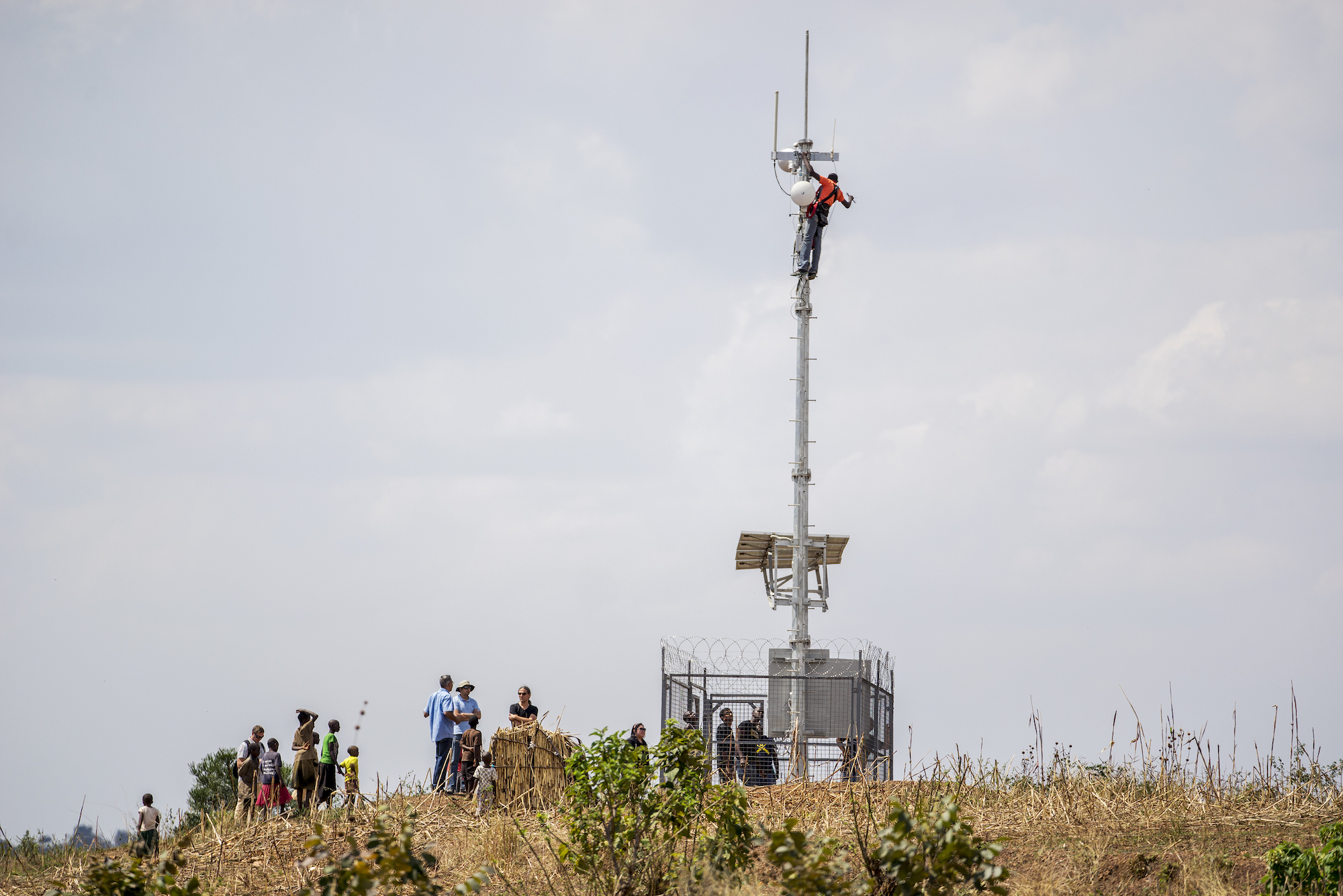
A low cost tower set up in rural Africa
The unspoken technology issue
Many of the incumbent ISPs and mobile operators have sunk too many resources into legacy technology, and then subsequently, outsourced their technical capacity and platform knowledge to foreign firms. This leaves them in an unfavorable position when it comes to new technology that would decrease the cost of rollout by up to 90%, or of taking advantage of how software is changing the way networks work. Due to heavy GSM investment, the industry thinks it best to switch those from 2G/EGDE to 3G. This misses the mark though, it’s iterative change driven by sunk costs, ignoring the fact that we’re moving to a data-only network world. GSM is a dead man walking. IP networks are the future.
It’s not just me saying this, two years ago Deloitte was saying,
“African MNOs should create business models around smartphone users and brace for the rise of the data exclusives and data centric phone users.”
This then provides the opportunity. This is the time to bring new networks without legacy business or technology paradigms, and the ability to apply web-scale economics to the network itself, backstopped by new open software stacks and business models that don’t rely solely on end-user payment.
Fortunately at BRCK we’ve been able to find great investors and strategic partners who see this bigger picture and understand the investments needed to make change happen in this connectivity industry of ours. BRCK, alongside some other firms, are on the forefront of changes happening across all types of data pipes, at the infrastructure level all the way through to the retail side – for both people and things. And as we start running the numbers it becomes increasingly clear just how big of an opportunity this actually represents. It only helps that many incumbents are stuck in aged technology stacks and legacy business models, so the window for positive change is here and profits are substantial.
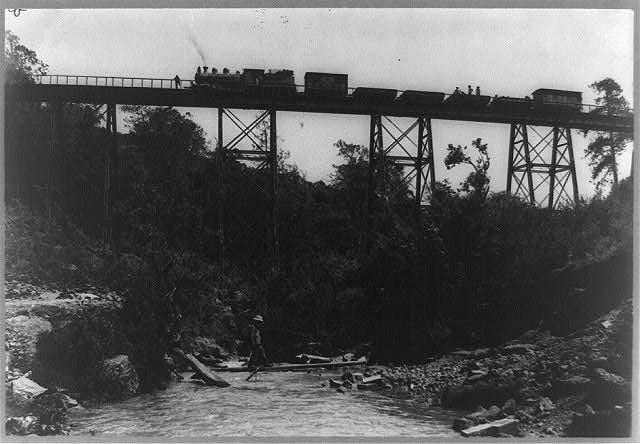
East Africa Railways train
A new railroad
I tend to think of what we do in the connectivity space as similar to our forebears building railroads, making it easier, faster and more efficient to move data and connect far-flung parts of the world. The 1990’s brought us the rebels in the form of scrappy upstart mobile operators and ISPs, they were real cowboys and renegades then! Inspiring leaders, courageously trying everything from pre-paid credit models in Africa, to thinking of mobile credit as cash, to digging the first fibre cables into the hard parts of the continent. Regrettably, these cowboys have handed the reins over to our modern day robber barons, sitting fat and happy on their oligopolies (or monopolies), and making damn sure that no one else has a chance to build something better if they can help it.
I like to think that at BRCK we are building the new connectivity railroads. The tip of the spear for us is unlicensed spectrum, where we take advantage of the ability to roll out public WiFi hotspots without much in the way of regulatory or political hurdles. We layer this with a free consumer business model, so that anyone who can get that signal can connect and take advantage of the whole internet. The underlying economics of the Moja platform are built around the idea of a digital economy. Businesses create engagement tasks that users can complete to earn value within the system. Users then spend their value on faster connectivity, premium content, or additional services. The flow of value into and out of the Moja platform creates the monetary value necessary to profitably run the network.
This is just the BRCK model though, and as I sit on some global boards and in meetings I hear of the others trying their new models as well. New technology stacks, driven primarily by open source software (and some key open source hardware plays), are a big part of the significant decrease in the cost profile (both CapEx and OpEx). But again, the business models… this is where we see the real changes coming and I’m excited to have a front row seat.
As these new railroads are built, by us and others, there lies such great opportunity for economic growth, social development, and business profit.
Sponsor this article: casino cashlib and casino en ligne yggdrasil
]]>What I find interesting is that everyone wants to benefit from a basic underlying availability of connectivity, but few understand what it is or why it is so important. If you’re with me at a public event, I’ll eventually spout off something along the lines of, “you can’t have a 21st century economy without power and connectivity.” This is my simplified way of stating that for any industry to be meaningful on the world stage (or even their own country stage), they need the ability to move data. If power and connectivity are the foundation, then the aforementioned ecommerce, agtech, fintech, and others are all pillars that stand on that foundation.
Economic growth
I’ve written before on how smartphone penetration has reached critical mass and proceeds on a noteworthy trajectory across Africa and other frontier markets. Africa, coming from a largely 2g/Edge based on old legacy GSM technology will have some of the highest growth rates in mobile data subscriptions globally, driven by chat apps and mobile video, as we transition to data-only networks. In 2022, there will be eleven times more mobile data traffic in Central and Eastern Europe and Middle East and Africa (Ericsson 2017).
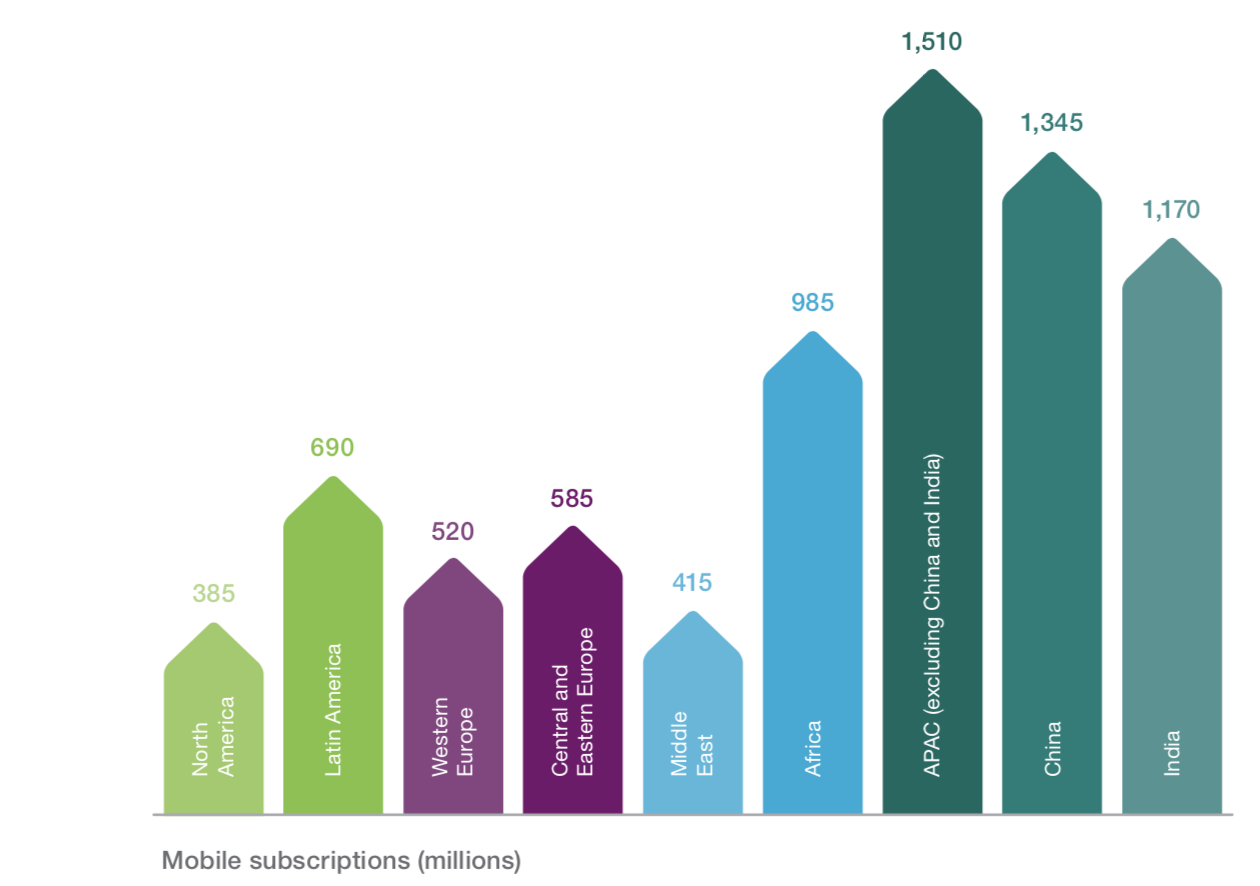
Mobile subscriptions (global)
- 250M smartphone subscribers in 2016
- 770M by 2022 (Y-o-Y growth of 30%) (Ericsson 2017)
- Over half of mobile phone shipments into Africa in 2016 were smartphones (Deloitte 2017)
All of this means that there are millions of new customers available for new, smart, and data-intensive financial products, agricultural services, marketplaces, logistics, and the list goes on. This is why we’re seeing the rise and rise of startups in these spaces, as well there should be.
What we’re not paying attention to is this: the market is still smaller than it could be.
Imagine that you’re finding amazing market traction with your new mobile lending app, or with your logistics system, or with your online goods marketplace. Imagine that you’re doing well, however did you know that you’re only reaching 20% of the people who own smartphones in the country…. Oh, right, that’s the piece that’s surprising! You could be doing even more, growing faster and capturing more market share if only the other 80% of smartphone owners in your market could afford the costs of getting online regularly to use your service.
This is where BRCK is stepping in with our Moja platform (free to consumer internet). You’ll benefit greatly from our growth. We’ll benefit greatly from your growth.
Social development
Even though I’m largely driven by the economic reasoning for connectivity alone, since I believe that the best way for us to make significant change in Africa is to grow wealth for everyday Africans, there is a strong social argument for widespread and affordable connectivity as well.

Connecting an additional 2.5 billion people to the internet would add 2 trillion dollars per year to global GDP and create 140 million jobs
- It enables improvements in health (Deloitte 2014)
- Unlocks universal education (Deloitte 2014)
- Strengthens civil society through public services, social cohesion, and digital inclusion (Deloitte 2014)
It turns out that if we connect people to the largest, greatest network of knowledge and information in the the world, then a lot of great social benefits are realized across a number of important areas. It’s hard to argue against more jobs, better education, better healthcare, more informed citizens, and a stronger civil society in any country.
Connectivity is the foundation
Like everyone else not involved in the plumbing and distribution of the internet, I used to think of this only academically. It’s easy enough to understand and think through intellectually. However, I found that in living it, in dealing with the practicalities of the internet, in coming to know the end-user I began to appreciate just how important connectivity is. Building a new app or service can have big effects, changing the affordability equation for connectivity and you send a shockwave reaching everyone, everywhere.
Sponsor this article: best iphone casinos in canada and grand mondial casino
]]>
We had an idea of what we were getting into back in October 2013, but none of us were sure where it would actually take us. All we knew then was that the barriers to creating hardware had dropped enough for us to get into it, that there was a problem in the internet connectivity space in Africa (and other frontier markets), and that we had the right mixture of skills, naiveté, and optimism to figure it out. Over the next 12 months we grew to a team of 10 that had this the desire to meet a big challenge and believed we could do hard things. As I write this, 8 of those 10 are still at BRCK.
In the intervening years we’ve built 3 full products and taken them to market (BRCK v1, Kio Kit, SupaBRCK), and a fourth (PicoBRCK) that is still in R&D. That alone is quite an accomplishment. I hadn’t known back in 2011 when the idea for creating a device was first hatched, just what the life cycle of building a hardware+software product would be. I do remember having a conversation with an old friend, Robert Fabricant, that I thought we should be done with the first one in about a year. He laughed and said it would be at least 2-3 years. He was mostly right.
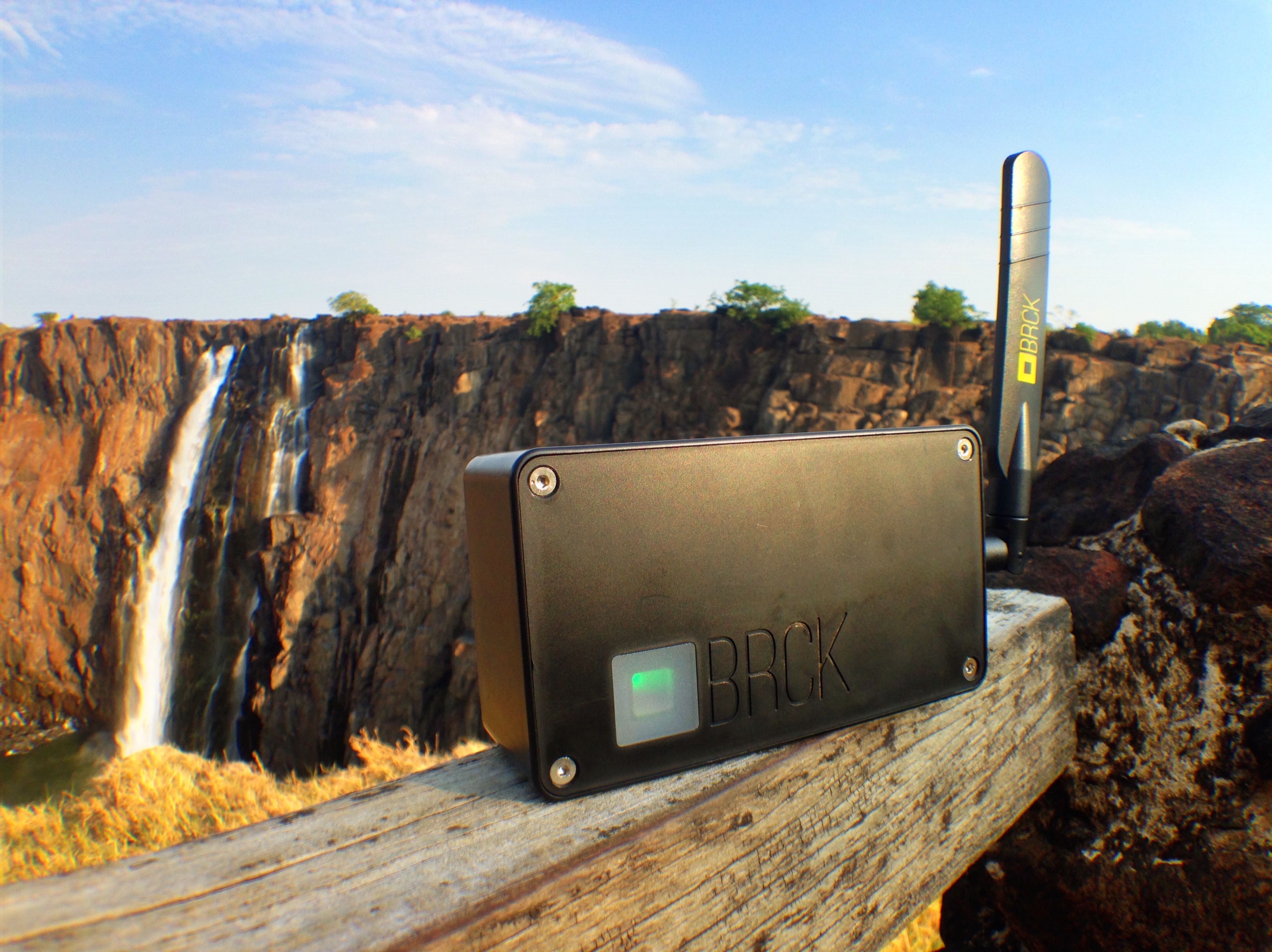
The BRCK at a dry Victoria Falls
I’ve since learned that it takes approximately 18 months for a product to go through the concept, design, testing, productization, and first samples stages. Then it typically takes us another 9 months for iterations and small fixes on hardware to happen, while that same time is spent concurrently hardening up the software side of things. For example, our most recent SupaBRCK took approximately almost two years from conception to product, and then another 6 months of continued fixes/changes to the low-level software and the hardware before it worked well consistently.
Asking the Right Question
You would often hear us saying, “Why do we use hardware designed for London or New York, when we live in Nairobi or New Delhi?” as a way to frame the problem we thought we were solving. It was only in late December 2014, after we had shipped the BRCK v1 to 50+ countries, that we realized we were only partially on the right track.
It turns out the problem isn’t in making the best hardware for connectivity in difficult environments. Sure, that’s part of the equation – making sure that you have the right tools for people to connect to the internet. But the bigger question involves people, who is connecting to the internet and who isn’t? If, after many years of building BRCK, we had built the best, most rugged and reliable solution for internet connectivity, that would be something we could pat each other on our backs for. However, if the problem instead was “How do we get the rest of Africa online?”, and we were able to solve that problem, then that was a legacy we’d be proud to tell our children about one day.

Sitting in our tiny office around Christmas 2014, we started thinking hard about this bigger issue and began doing deeper research into the problems of this loosely defined “connectivity” space. We started doing some user experience research, manon the street interviews, to figure out what the pain points were for people in Kenya.
Connectivity can generally be broken into two buckets:
First, accessibility – can I connect my device to a nearby signal?
Second, affordability – can I afford that connection?
The results were quite telling, it was definitely about affordability.
For everyone who’s not deep in African tech, let me lay out some interesting numbers for you. Accessibility in most of the emerging markets has been moving rapidly since the mid-2000s when we started to get the undersea cables coming into the continent. These cables then went inland and started a rapid increase in available internet connections and wholesale internet costs decreased rapidly. Since 2008 we’ve had more than one million kilometers of cable dug across the continent, and we have over 240,000 cell phone towers. Concurrently, the mobile device prices continued to drop globally, and by 2016 we started to have more smartphones imported into Africa than non-smartphones.
Reaching deeper into the market research, we started to study this affordability problem.
“A4AI found that the average price of 1GB prepaid mobile broadband, when expressed as a % of average per capita Gross National Income (GNI), varied between 0.84% in North America and 17.49% in Africa.”
It turns out that in almost every country in Africa, there is a consistent ratio among all the smartphone owners in a country: 20% could afford to pay for the internet regularly, and an incredible 80% couldn’t.
Interestingly, when we looked at who else was working in this connectivity space, almost everyone was focused on accessibility, not affordability. Those that were focused on affordability thought that just making the price cheaper was enough. What we’ve seen is that if you just make “less expensive” subscription WiFi (as most do), then you’ll capture another 10% of the market. And while that can make a profitable enterprise, it still leaves 70% of the market unaddressed.
This last blue ocean of internet users in Africa, as well as Asia and Latin America, is still largely ignored. Those who do have the resources go to after it tend to try with iterative approaches in both business models around affordability, and only marginal creativeness in solving for technology accessibility.
Moja Means ONE
It’s taken us five years, going through multiple iterations of new tech, building new hardware, and creating new software stacks that go from the firmware up to the cloud. We’ve been mostly quiet for the past year as we put our heads down and tried to take a new platform to market. Where are we now?

“Moja” means “one” in Swahili, and it was the brand name that we chose to call the software platform that we would build on top of the BRCK hardware. While Moja means one, “pamoja” means “together” or “oneness”, and that was the root we were looking for. To us, Moja is the internet for everyone.
We started by trying to make it work on the BRCK v1, but that was a bit like trying to make a sedan do a job built for a lorry (truck) – it wasn’t powerful enough. The SupaBRCK was envisioned as the hardware we could leverage that would allow us to not just have enough of a powerful and enterprise-level router, but a tool that was actually a highly ruggedized micro-data center. With this, we could host content on each device, as well as get people connected to the internet. Another way to think about the accessibility side of what we do is that we have a new model for how a distributed CDN works on a nation-scale, moving away from the centralized model that the rest of the world uses. In environments like Kenya, we can’t continue to just copy and paste models from more developed infrastructure markets, we have to think of new ways to deal with how the undergirding system actually works and operates.
We give the internet away for free to consumers. How does that work if we all know that the internet isn’t free? After all, someone always pays.
The business model is an indirect one. We charge businesses for some form of digital engagement on our Moja platform (app downloads, surveys, or content caching), and the free internet to our consumers is a by-product of this b2b business model. Like everyone else, we thought we could do it with advertising at first. But we realized that our unique hardware capabilities allowed us some other options, since advertising is a poor option for all but a few of the biggest global tech platforms.
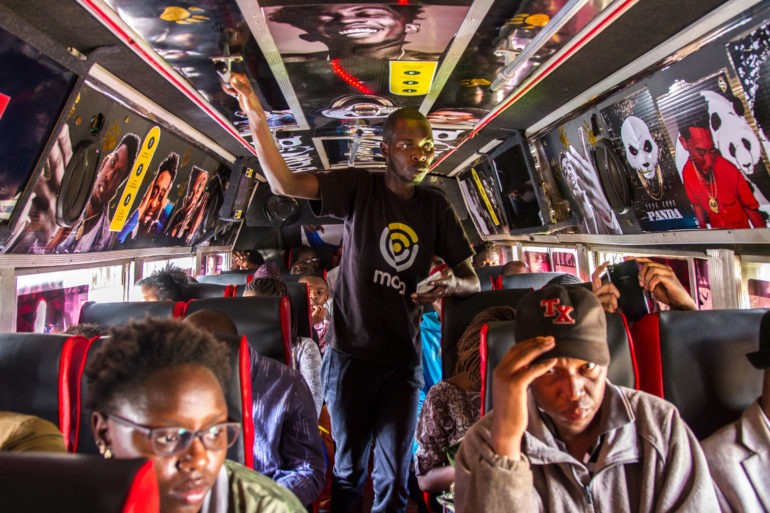
Today we’ve deployed 850 of the SupaBRCK’s running our Moja software into public transportation (buses and matatus) in Kenya and Rwanda. They’ve been quite successful with almost 1/4 million unique users monthly in just the first 3 months. We have both a tested and working technology platform, as well as product market fit. With unit economics that make sense, a growing user base, and a business model that works, we’re excited for the growth phase of the business. This next step means going nation-scale in each of these countries, and also determining our next market to enter.

It’s important that ordinary people across Africa and other frontier markets can stop thinking about the costs of the internet and don’t have to turn off their mobile internet on the smartphones that they already have in their pockets.
Once they know they can afford it, the way they used the internet changes dramatically. An Internet like this is feasible today, and it’s a cheaper, faster, more distributed and resilient one. It’s also being built from the ground up in Africa, where we’re close to both the technology and human problems, and have a better chance of building a the right thing.
Thoughts and Lessons Over 5 Years
First, make sure it’s a big enough problem.
If you’re going to spend 5+ years of your life on something, make sure it’s something that matters. At BRCK we are creating the onramp to the internet for anyone to connect to the internet, and a distribution platform for organizations trying to reach them. If we succeed we only succeed at scale, which by its nature means that we’ve done something big and that it has made a large impact on people.
Second, figure out what to focus on.
When you start out it’s difficult to determine product market fit. We started with a wide funnel of possibilities for our technology, industries that we could target and consumer plays. Over time, we were able to narrow down what could work, and what we could actually do, to the point where we focused on this big “connecting people” problem. We did detour into education with our Kio Kit, which we still think is one of the best (if not the best) holistic solutions for emerging market schools – after all, it’s in places across Africa, as well as the Pacific Islands and as far as Mexico. However, it proved to be too costly for our bottom line to hold inventory, sales cycles are too long, and it was largely a product sale. When we realized that, we started to focus most of our efforts on the bigger underlying issue across all of the markets, which was affordable connectivity and our Moja platform.
Third, persistence trumps skill.
building hardware is hard. It’s even harder doing it in Africa. The upside however is that you’re both closer to the problem, and that if you succeed in figuring it out, you have a good head start on everyone else. The process takes time, costs money, and there are people and organizations who don’t want you to succeed. It always takes longer than you want to get software working properly, or hardware built and reliable. We’ve often been faced by that same problem that plagues all venture backed companies in Africa, in that you have to do a lot of education to investors to even raise the capital, and then when you do you get charged a premium for perceived risk. Partner organizations take resources and time to work with, and they don’t always come through on their promises. All of these things (and more) mean that the best ideas don’t always win in the market, because it’s those that push the hardest and longest that win.
Fourth, it’s the people you do it with.
If you’re going to be on a journey that takes a great deal of time, with intense pressure, and where success is not guaranteed, then you had better do it with people that you can trust, who you can work with, and it helps if you like them too. Throughout my work career I’ve been more fortunate than most (whether at Ushahidi, iHub or BRCK), and this time is no exception. I get to work with a host of wonderful people; not just smart and talented, but also genuinely good human beings. It makes work a joyful challenge, not an exhausting chore.
So, to those back in the day who believed we could do this when it was just a sketch in my notebook, thank you Shuler, Kobia, Nat and Juliana (and the rest of the team at Ushahidi). To our investors who have joined us in this dream of connecting and doing hard things, you’ve continued to step up and that has made this possible. Thank you.
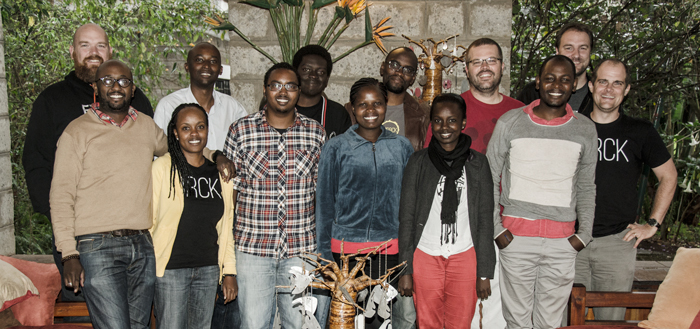
To Jeff, Janet, Birir, Kurt, Barre, and Oira, thank you for sticking it out for all these years and stepping up to more leadership challenges as we’ve evolved. To Philip, Reg, and Kala, I want to thank you for making the impossible happen, time and again, each for more than 5+ years.
]]>
Reg and Philip giving a BRCK demo at Bongohive
Friday was amazing. We had gotten in the night before to Lusaka, and this meant we got to spend the whole day with the BongoHive team and the rest of the tech community here. They were some of the most hospitable people, and we gave demos/talks on the BRCK, as well as Mark giving a talk on User Experience (UX), which was one of the best talks I’ve heard in a long time. Later, I gave a talk on Savannah Fund and raising investment money for startups, and the whole evening was finished by Juliana and myself giving a joint keynote to get the local Startup Weekend going. Busy, and fun!
It’s interesting, with Lusaka being a smaller, though major African city, they have the ambitions of larger things. However, their issues become more challenging than people who live in some of the larger cities like Lagos, Cape Town or Nairobi, since there isn’t the critical mass of things like investors, customers or talent. It seems like the strategy to build a big company is that you have to move across borders and anchor off of a larger region more quickly.
A Day Off on the at Vic Falls
Today I’m sitting in a camp on the edge of a tributary to the Zambezi river, a couple kilometers from Victoria Falls. The rains have been late here, so everything is dry, including the falls themselves – they’re still epic, but not nearly the same as the real falls. We went out there this morning to get a few pictures, and were able to get the BRCK connected from “Danger Point”.
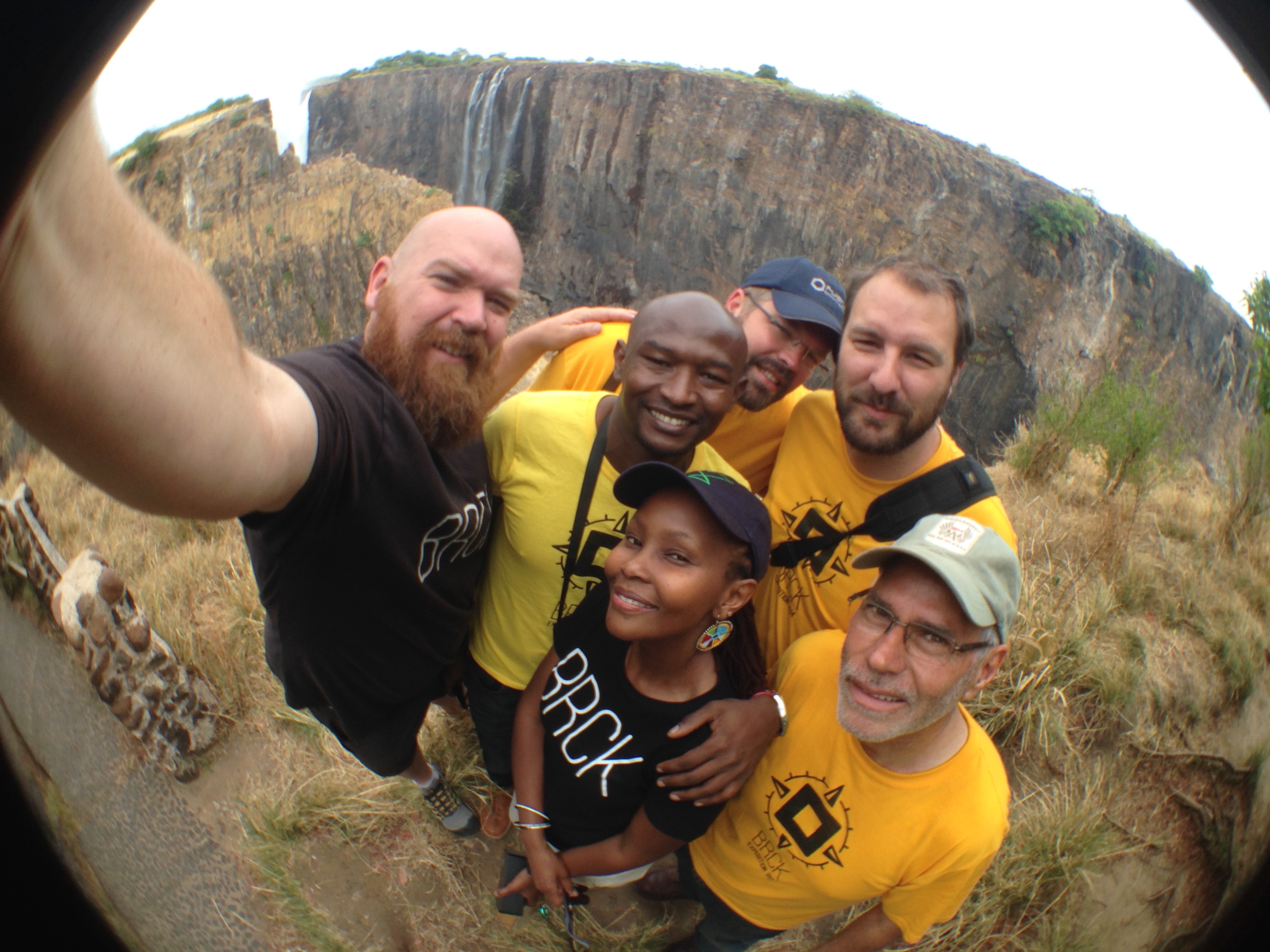
The BRCK Expedition at Victoria Falls

Mark Kamau of the iHub UX Lab at Victoria Falls, Danger Point

BRCK at Vic Falls
Today is mostly about rest. We’re doing a bit of testing, connecting the BRCK to the vehicle mounted Poynting antenna, and then amplifying that with a Wilson booster, which successfully turns a non-existent signal on a mobile phone into a 19 (with antenna) and then a 61 (with amp + antenna). It’s great to have a device like this where we can get such great connectivity wherever we go.
Mark has begun his lessons on how to ride a motorcycle today. He’s been busy putting around the campsite this afternoon with a big fat grin on his face. 
Mark Kamau learns to ride a bike at Victoria Falls from WhiteAfrican on Vimeo.
The Road to Livingston
We had an interesting day yesterday, with a plan for a 5-6 hour ride from Lusaka to Livingstone. It turned into an 11-hour drive though, since the Land Rover had some issues with air in the fuel line. For a while, we could only go 20km at a time before it would stop and we’d have to bleed it. Luckily Philip really knows his way around a diesel engine, we worked through all the obvious issues and finally got it to go 100km before we had to bleed it again.
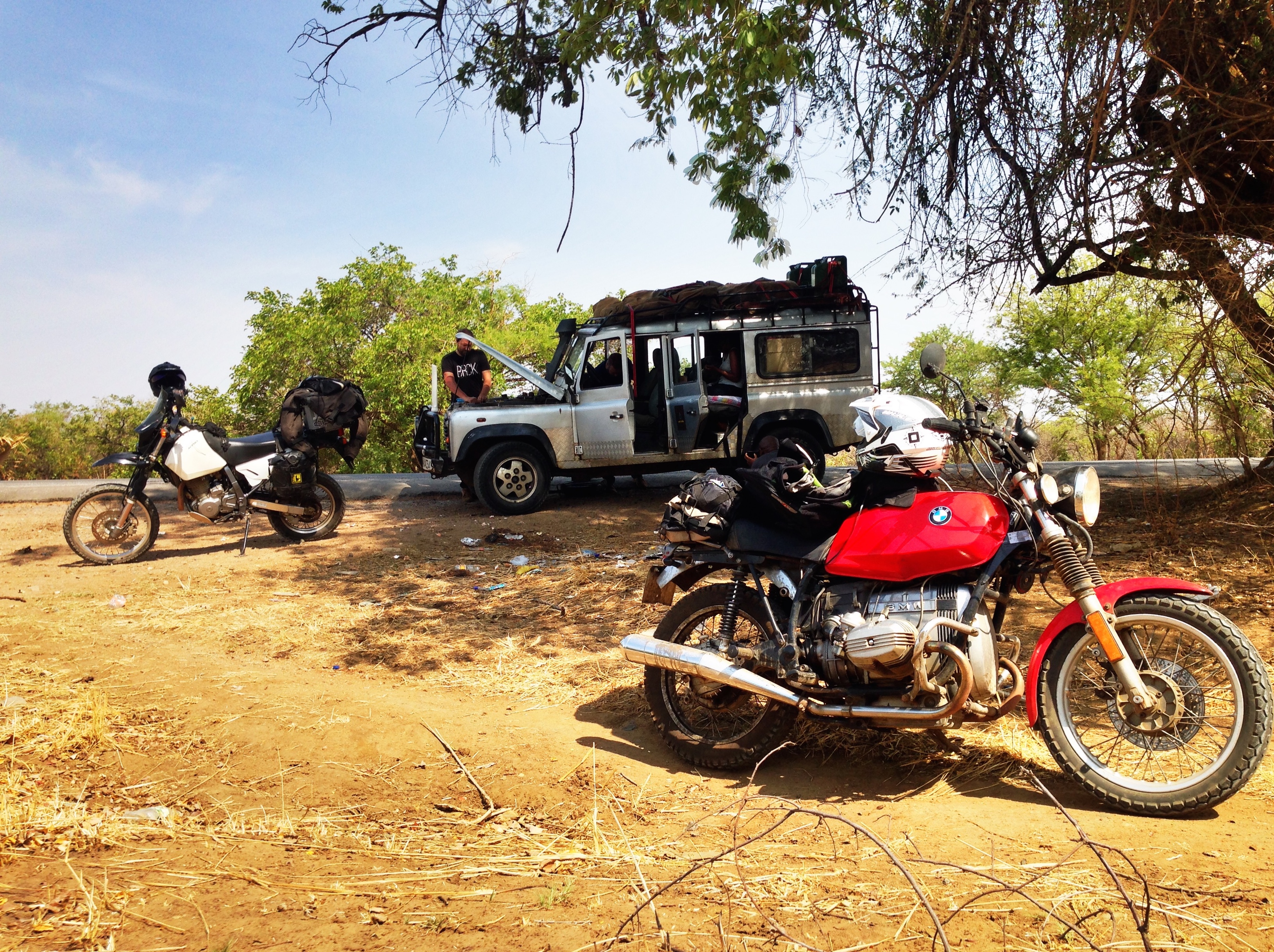
Fixing the Land Rover
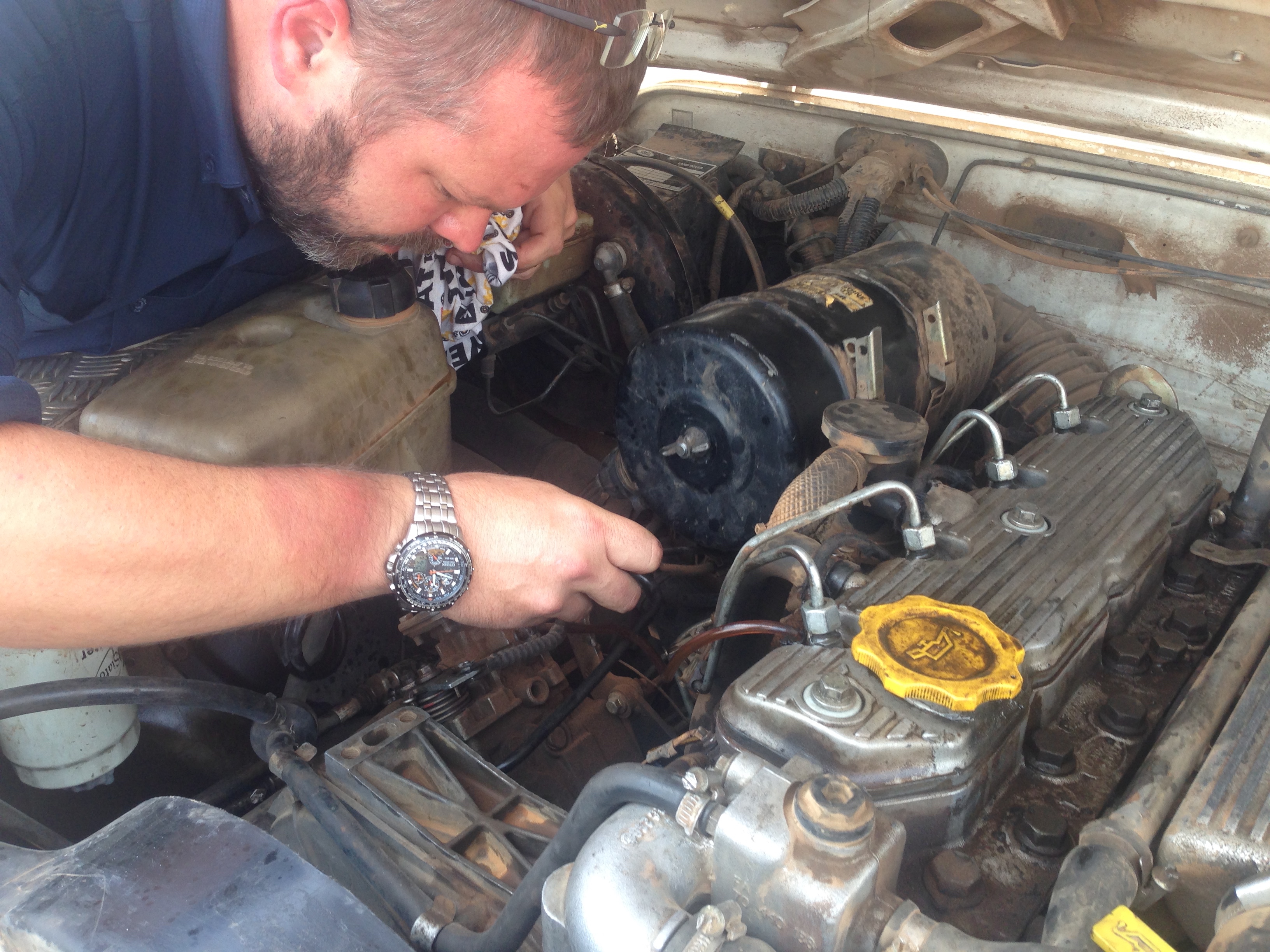
Trying to figure out the source of the air in the fuel
Last night Reg spent some time on it and though we think the fuel lift pump is the culprit (and weak), it’s working well enough to make the 500km run to Francistown, Botswana tomorrow.
Stinking Thieves
We thought Zambia was different. Mark accidentally left Juliana’s big Nikon camera at a restaurant in Lusaka. Mark wanted to go by and see if it was there, I was skeptical, it was lost forever. However, the next day our friend and TED Africa Fellow, Mulumba went by and they had found and kept it for us. Where were we? This doesn’t usually happen in a big African city…
Today, we had to run to pick up some food at the local Shoprite grocery store in Livingstone. We locked up the Land Rover and went in for 30 minutes or so. When we cam out we found everything sitting in the back seat was stolen, including a nice 300mm Nikon Lens, a riding vest, and most importantly of all, our amazing Med Kit. This med kit is put together by my wife, a nurse practitioner, and has some of the best expedition stuff you can find.
Oh, just found out that they got our Mozilla Firefox phone… this is a 3-SIM phone, and it’s what we used to top-up credit on SIM cards and figure things out along the way. What a shame.
We’re more than a bit pissed off about this, if I found the thieves there might be violence.
Pushing On and a Jua Kali hack
With the vehicle acting well all day today, the bikes tightened up and a chance to rest ourselves, we’re all set to hit the Botswana border in the morning and do a run down to Francistown. Reg had to head back to Kenya, so Mark will take over on the Land Rover, though we will miss having an engineer with us.
With Joel’s riding vest gone, we had no water for him. Fortunately, I carried an extra bladder. We put together a jua kali water pack for him using this, along with one of those small Alite chair bags, and a couple Rok straps (see below).

A 2 liter water pouch, a small chair bag, and two Rok straps make a new backpack for water.
- Hype around NGO-funded apps is stifling Africa’s innovation
- Before Anybody Convinces You That NGOs Are Messing Up The Tech Ecosystem
- Is there enough funding for startups in Africa?
- Silicon Savannah [Kenya]- Must be careful of Hype
- ‘NGO’ Money: Really?
Most of the people talking haven’t actually built anything – they’re media, analysts, investors or grant-giving organizations.
A few are entrepreneurs – and I’m not talking about the type that thinks that is a sexy title and who wave around a CEO business card – I’m talking about the real entrepreneurs, the ones who are in the trenches, finding the right talent, securing funding, battling it out for clients, and shipping solid product. Too few of the voices we hear are of this type.
The debate is skewed. You’re told that money is evil if it is free (grants), that it’s only pure if it comes from an investor (angel, seed, VC). That if you get grant money that it will take you off focus and derail your business. Sure, this is a danger. It’s also a danger that you get a VC who gives you money, and who doesn’t understand the market, our region, or something else about your business and forces you to go off focus and derails your business as well.
The truth is, that as a leader of a company, your job is to decide what is the “good” money and “bad” money. This isn’t some academic or theoretical issue, it’s real life or death decisions that you stake your company on. When you can’t pay payroll and have to take a loan from the bank at 24%, you’ll take it to keep the business alive. When you’re starting up you might go for those piddly $15-25k grants that everyone seems to think grow on trees (but don’t). When you’re at that stage where you have real success, but now you need to expand much further, you’ll deal with the slick-talking VCs in order to work out the best deal for your future. It’s just how it works.
This argument of grant vs investment money is a false dichotomy – neither is pure. As a leader of my own business, if someone offers me free grant money that I believe is in our best interest, I will take it every day of the week. I measure it in the same way that I would if a VC wants to give me a dodgy deal – I refuse it.
If it was easy, everyone would do it
As a tech entrepreneur in our region, be objective and pragmatic. Be wary of pundits, analysts, investors, NGOs and anyone who hasn’t built something of their own. The entrepreneur life you’re signing up for means you’ll work harder, sweat more, stress more and feel both great euphoria and defeat. It’s hard, grinding work, and those who push hardest, longest and the most creatively win. And if you win, the prize is big, so it is worth trying for.
Everyone has an opinion, but few have tried, and fewer have built something that succeeds. Your job is to think bigger, and more creatively, and to boldly aim for success. Few have the courage it takes to go this route, so remember that and make sure the person you’re talking to actually has the qualifications worth your time to listen to.
However, do listen to those who have been there, they are the rare ones who have made it through the battle lines and won, seek them out. The best mentors are rarely found in the institutions that have the money. A few investors have been there and have the experience, not many. Even fewer on the NGO and foundation side.
Here’s a better idea. If you can build your company without taking investment money, do it. There’s a fallacy in thinking that you need investment or grant money at all. Instead, try to do as much as you can, get as many clients as possible, grow fast, build a great product, and then only when you actually HAVE to have it, should you go for any other outside money.
]]>1. The Akamai “State of the Internet” Q3 2013 report
[Akamai Report – PDF Download]
Has good information on overall usage globally, and trends. In Africa, even though they have a node in Kenya, all we’re seeing is stats on South Africa, Egypt and Morocco. However, there is a really fascinating chart by Ericsson in it on wireless usage.
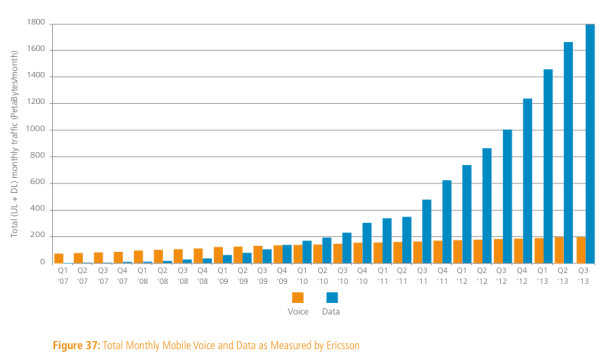
Mobile data vs voice growth globally – 2013
2. GSMA’s “Digital Entrepreneurship in Kenya” report 2014
[GSMA – Entrepreneurship in Kenya report 2014 – PDF Download]
The GSMA puts together some fantastic reports, due to the amount of data at their fingertips due to their association’s membership. Alongside the iHub Research team, they’ve done a deep dive into the tech entrepreneurship side of Kenya, and you can see the results here.
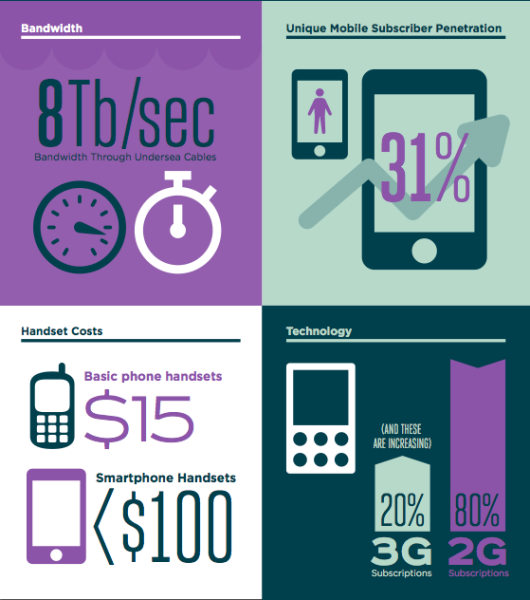
3. Deloitte’s “Value of connectivity” report 2014
[Deloitte’s – Extending Internet Connectivity report 2014 – PDF Download]
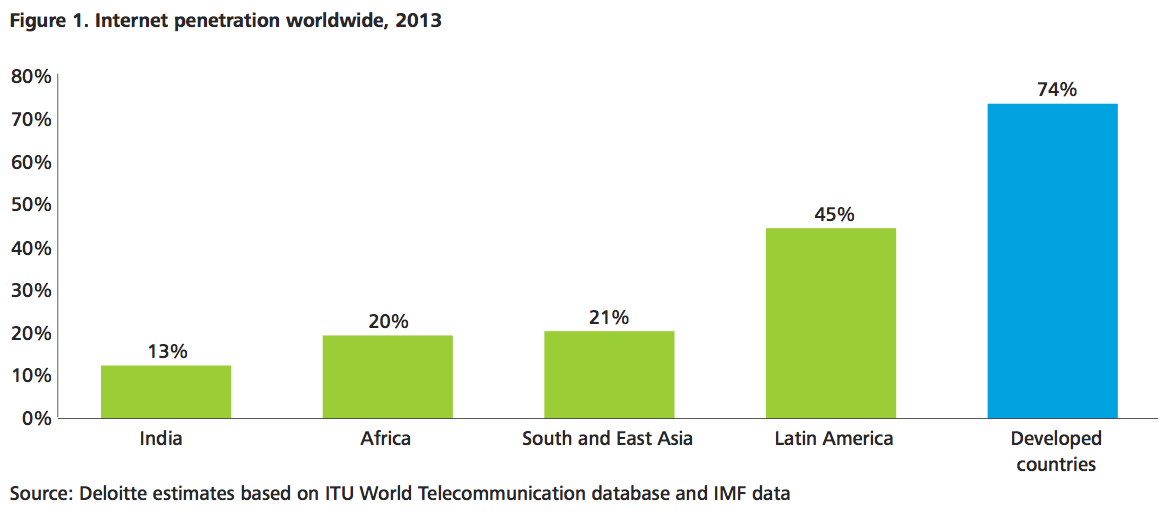
The Deloitte folks do a study and argue that an increase in internet penetration could have a large impact on an emerging market country’s GDP.
“Deloitte estimates that the resulting economic activity could generate $2.2 trillion in additional GDP, a 72% increase in the GDP growth rate, and more than 140 million new jobs.”
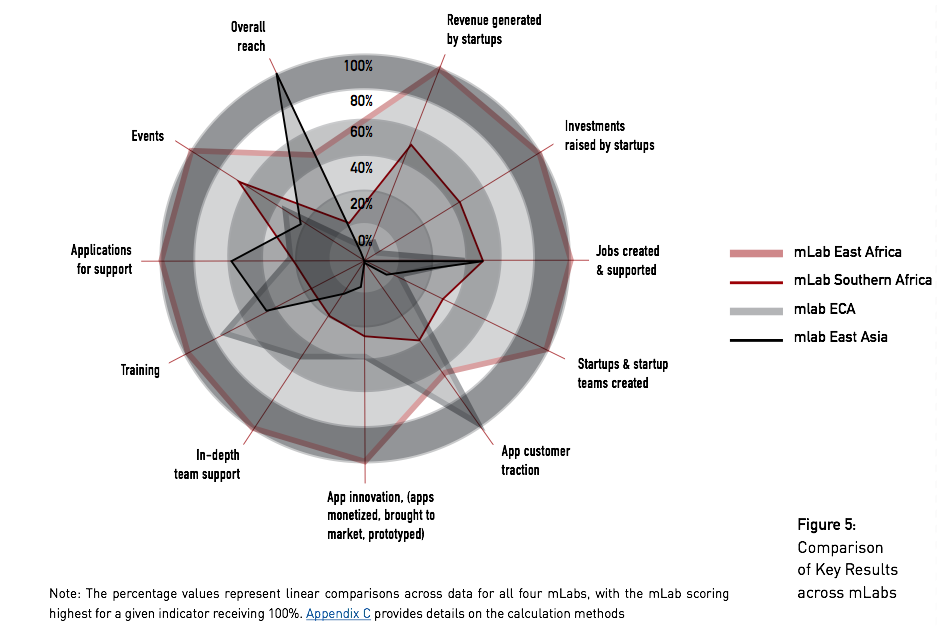
4. infoDev’s “The Business Models of mLabs and mHubs” report 2014
[The Business Models of mLabs and mHubs 2014 – PDF Download]
I’ve had a front-row seat to infoDev’s work starting and supporting places like the m:lab in East Africa. After doing it for 3 years, here’s their indepth report on what’s working, not working, how much money has been spent and what the future might look like.
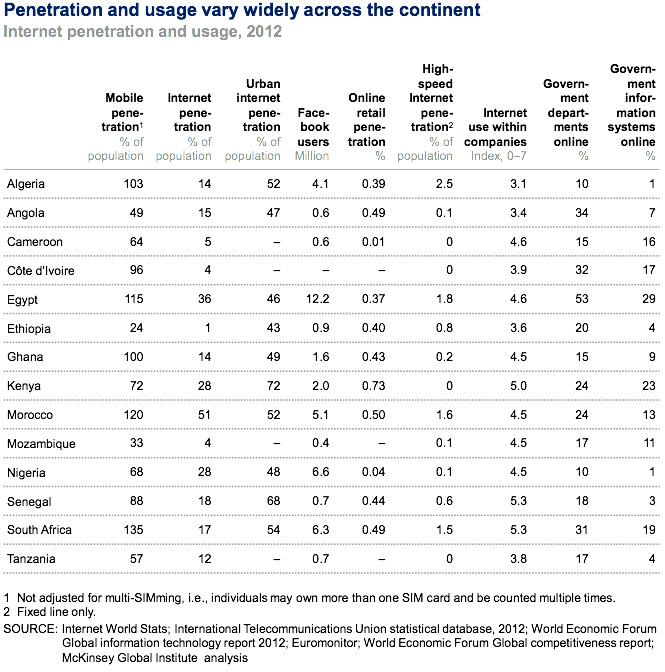
5. McKinsey’s “The Internet’s transformative potential in Africa” report 2013
[MGI Lions go digital_Full report_Nov 2013 – PDF Download]
Mostly useful due to the interest large corporates and banks put in McKinsey, this report makes that the greatest impact of the internet in Africa is likely to be concentrated in six sectors: financial services, education, health, retail, agriculture, and government. What they’ve done particularly well is gather a large range of numbers from diverse and various sources to make better sense of what’s going on.
Yesterday I read about the Berkshire Hathaway “strategy of trust”:
Mr. Munger, 90, was ruminating on the state of corporate governance, offering a counternarrative to the distrustful culture of most businesses: Instead of filling your ranks with lawyers and compliance people, he argued, hire people that you actually trust and let them do their job.
It’s well worth a read, and I didn’t expect to find parity in leadership philosophy between us and a 300,000-person family of organizations.
How do we do it?
There are probably other organizations like ours, ones who have decided to trust their team and assume that people make good decisions based out of the best intentions of the organization and their colleagues, over themselves. We didn’t set out with a great body of knowledge on how to do this, but instead with some theories that we’ve refined over time. Here are the most important ones:
Find the Right People
David, Juliana and I particularly don’t like to micromanage. We’ll work with you to define the goal, but if you expect someone to tell you how to get there, you won’t fit. We don’t check up on you all the time, you tell us when there’s a snag. You need to work autonomously. We’ll help, and are always there for a conversation, but your job is to get from point A to point B.
It’s always better to find people who are smart and get things done, who can work autonomously and tend to not put themselves first. Big egos don’t go well with this kind of team, so we look for humility when interviewing.
I remember making a mistake back in 2009, hiring someone off of reputation and resume, without really digging into their portfolio or doing multiple interviews. Ever since then I’ve refused to look at CVs or resumes and each new person goes through about 4-5 other people on the team before we make the final decision. Those other people on the team catch things I wouldn’t, some about skill, but most about ethos and personality.
Knowing the Ethos
If an emergency happens where you are, can you make a decision and run with it, without having to ask permission? You should be able to. This is especially important in an organization with a globally distributed team that deals with crisis and disaster. We decided that everyone should be able to make critical decisions about deployments of the software, partnerships and strategic steps on their own. Just fill everyone else in on it as it comes up and if adjustments need to be made, then we do it together.
To make this work, we had to ensure that everyone on the team, from junior engineers to new QA staff actually understood the foundational elements of the organization. Not just what we built, but why we built it, how it all started and where we were going in the future. While there’s no “intro to X” classes, we do throw you in the deep end early on. It started with our first hire, Henry Addo from Ghana, who found himself speaking in the French Senate in Paris in his first month on the job. That made us realize that public speaking forces you to learn a lot more about the organization that you’re in, quickly.
Our goal is that a camera and mic can be put in front of any team member and they can answer any question on the organization. The way they answer it might be different than me due to speaking styles, but because they understand the ethos of the organizations, it is still correct.
Per Diems
We don’t do per diems. You’re traveling for the organization, spend what you need on food, lodging and transport. Be responsible about it, since this is money needed for the organization to grow. If you’re in NYC, we know things are more expensive, if you’re in Omaha we know they’re not. The “Agency Effect” (or Principal Agent Problem) comes into play here as the incentives are wrong between a team member and the organization if they get an allowance for travel.
Final Thoughts
I suppose what I’m saying is that if you truly trust people to act like the adults they are and to do the right thing, they generally do. All the corporate oversight you can apply won’t stop an Enron from happening, so something else has to work. It has to be something that’s real though, people can sniff out very quickly if it’s a manufactured, or fake, trust. This means as much of the onus lies on the leaders to “let go” as it does for the team members to shoulder and own the expectations that come with their role.
My greatest takeaway from the Mr. Munger and Mr. Buffett was found in the last paragraph:
Mr. Munger, in a previous annual meeting, contended that the best way to hold managers accountable is to make them eat their own cooking. Mr. Munger pointed to the late Columbia University philosophy professor, Charles Frankel, who believed “that systems are responsible in proportion to the degree in which the people making the decisions are living with the results of those decisions.” Mr. Munger cited the Romans, “where, if you build a bridge, you stood under the arch when the scaffolding was removed.”
We all need to stand under our own bridges more often, and I’m going to figure out how to make that happen in my organizations.
]]> There’s quite a good read up on the Tech Coctail site titled, “What (US) VC’s Are Missing in a Rising World of Smartphones“. It’s a little about smartphones, though the underlying discussion points are really about how blind the investors in the West are to the Middle East, Africa, and Asia due to their preconditioning on Silicon Valley being the only place that big tech things happen. Meanwhile, massive deals are ongoing in the Middle East and Asia that are under the radar.
But Western VC’s are slow, and US VCs in particular are slow to catch on to this trend. In part, this is because US investors are accustomed to seeing the best US deals, and they are used to dealing with our ecosystem, our rule of law, the network effect of talent that is Silicon Valley, and other places here that are attracting dollars accordingly.
After spending 3 months raising investment for the BRCK company in the US, EU and Africa I can confirm that there is a great deal of investor unease in putting money into something in Africa from the US. Silicon Valley types tend to pay lip service to this idea, but don’t actually invest their money that easily.
I just wrote a post on the BRCK blog about what Juliana brought up at TED last year about “unequal distribution”, this time shown on a world map of the internet of things. This idea of unequal distribution of information and how it played into the industrial revolution, the scientific revolution and now the digital revolution that we’re sitting in today.
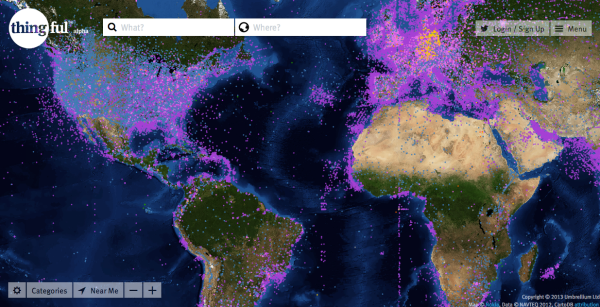
Thingful.net – mapping the internet of things
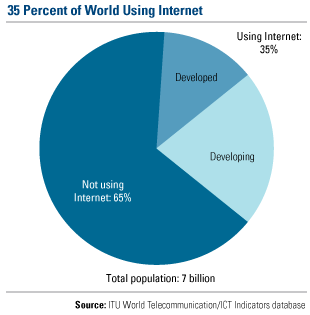
Unequal distribution is not static, it’s a constant dynamic where no one region of the world will lead indefinitely. ITU stats already point out that 65% of the people who get onto the internet today come from emerging markets. Meanwhile, only 24% of the people in emerging markets are online. That means that whether the West realizes it or not, the internet focus has already shifted, the ripples of this are only now being felt.
If you think that Google’s, Yahoo’s, Cisco’s, Intel’s (and many other’s) partnership in the Alliance for Affordable Internet and Facebook’s Internet.org strategies around global internet connectivity are just CSR activities, then you’re sorely mistaken. These companies (literally) see the numbers and the know that they need to stake a claim in the regions where the future of the internet already are.
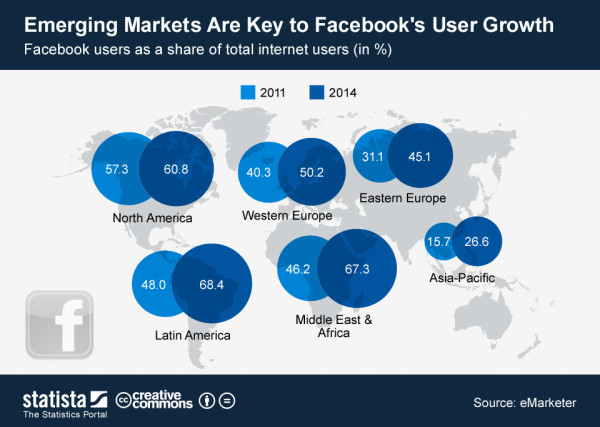
Where Facebook’s users are coming from 2012 vs 2014
In a world of 7 billion people, 4.2 billion still can’t access the internet. 3.8 billion of whom live in emerging markets, specifically Africa, the Middle East and Asia.
Market research in this space is fascinating, because as we look at penetration rates we see that even though the lion’s share of internet is being driven by the developed world, that that in fact only one in three internet users comes from those countries. 65% of internet users are from the developing world today, 35% from the developed.
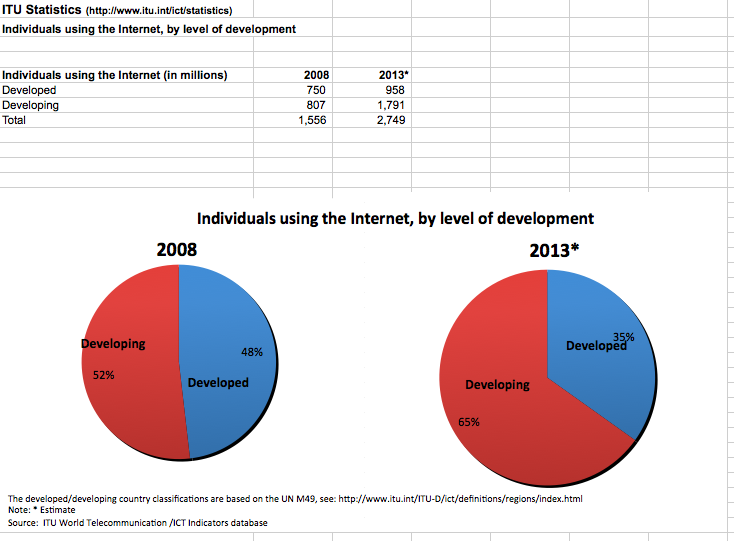
Individuals using the Internet, by level of development – 2013
The takeaway here is that most everyone’s assumptions about the internet are wrong. The fastest growth is already in the emerging markets, and that growth is only accelerating. If you’re going to pick a place to put your money, it’s not in the US or Europe, it’s in Africa, the Middle East and Asia.
My new job is to truly understand these numbers. As I talk to investors about investing in BRCK, our new router/modem/smart battery device made for this part of the world, I’m expected to know about the market. So I know things like this: if only 24% in the developing world are connected to the internet, then BRCK targeting 1% of these 3.8 billion unconnected people means a potential market size of $7.7 billion.
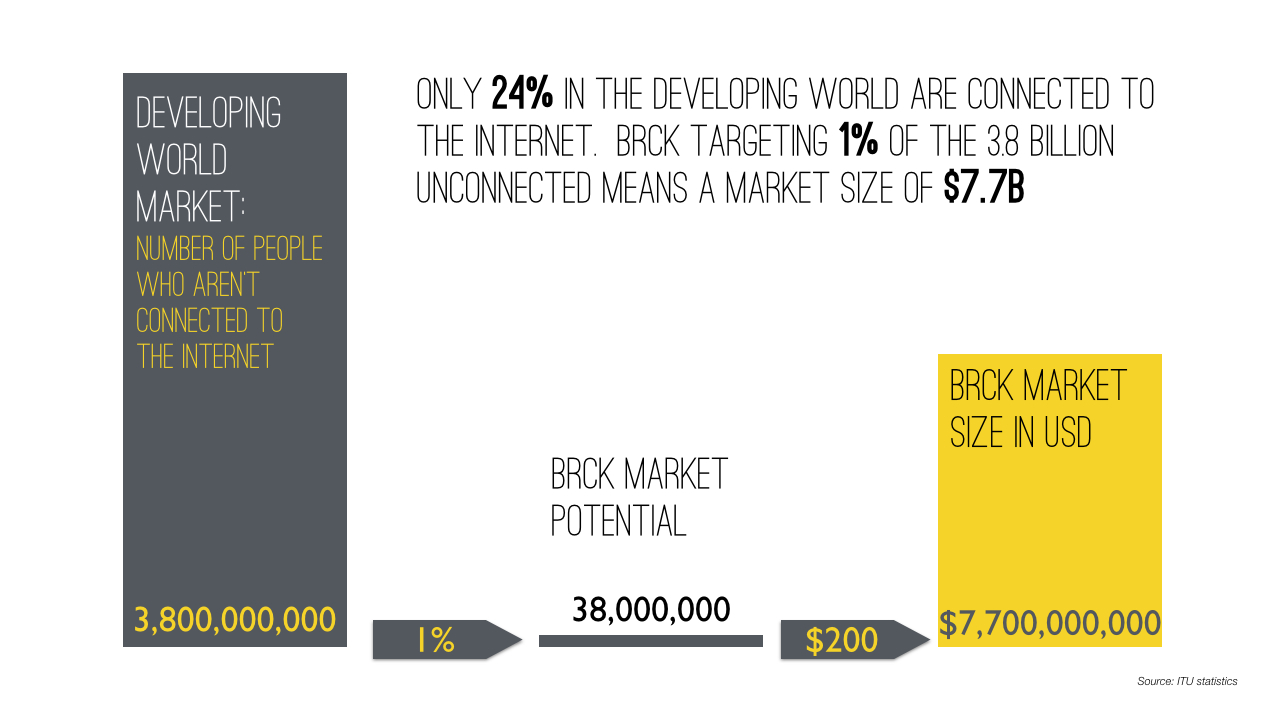
Only 24% in the developing world are connected to the internet. BRCK targeting 1% of the 3.8 billion unconnected means a market size of $7.7B
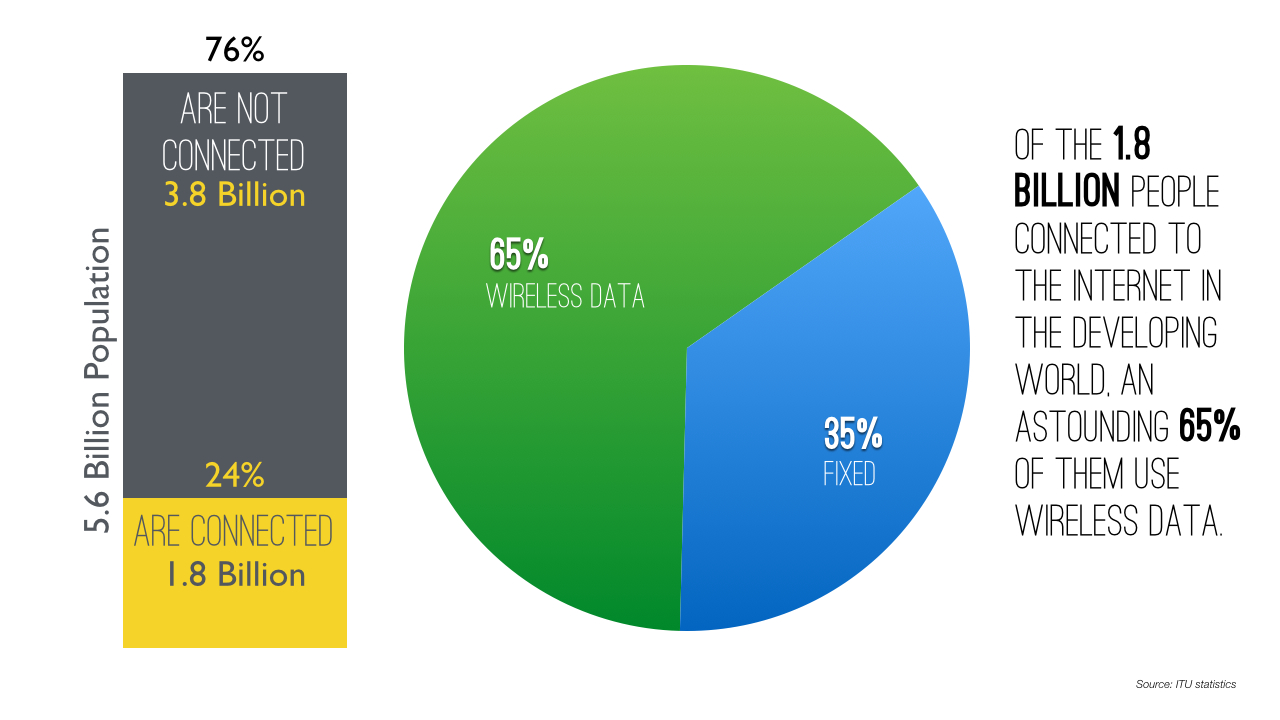
Of the 1.8 billion people connected to the internet in the developing world, An astounding 65% of them use Wireless Data.
That’s a big number, and it’s why I’m so excited about the future.
[Stats source: ITU]
Infrastructure plays
In an earlier blog post I talked about the “rail lines of connectivity“, talking about the pioneering engineers of yesteryear who built the railroads, and who’s rails we still ride on for communication today. Where Physically connecting people and things was the great challenge of their time, digitally connecting people and information is the great challenge of ours.
There are other big infrastructure plays right now, specifically in communications, and heavily internet-focused. If the 90’s and 2000’s were characterized by the rise of mobile infrastructure, the 2010’s are equally characterized by the internet.
It started with the undersea cables in the late 2000’s, and is now about terrestrial cable and growth in technologies that cost less but spread over greater regions. The race is on to connect the world – at least to build the road and rails for the internet, if not the driveways into people’s homes and offices.
For the former, Google’s just-launched “Project Link” in Uganda underscores an intent to increase speeds and decrease costs by providing Google fiber on the continent. There’s also no lack of investment available for companies digging trenches for terrestrial cable across the African continent, this is private equity fund territory, and it’s booming.
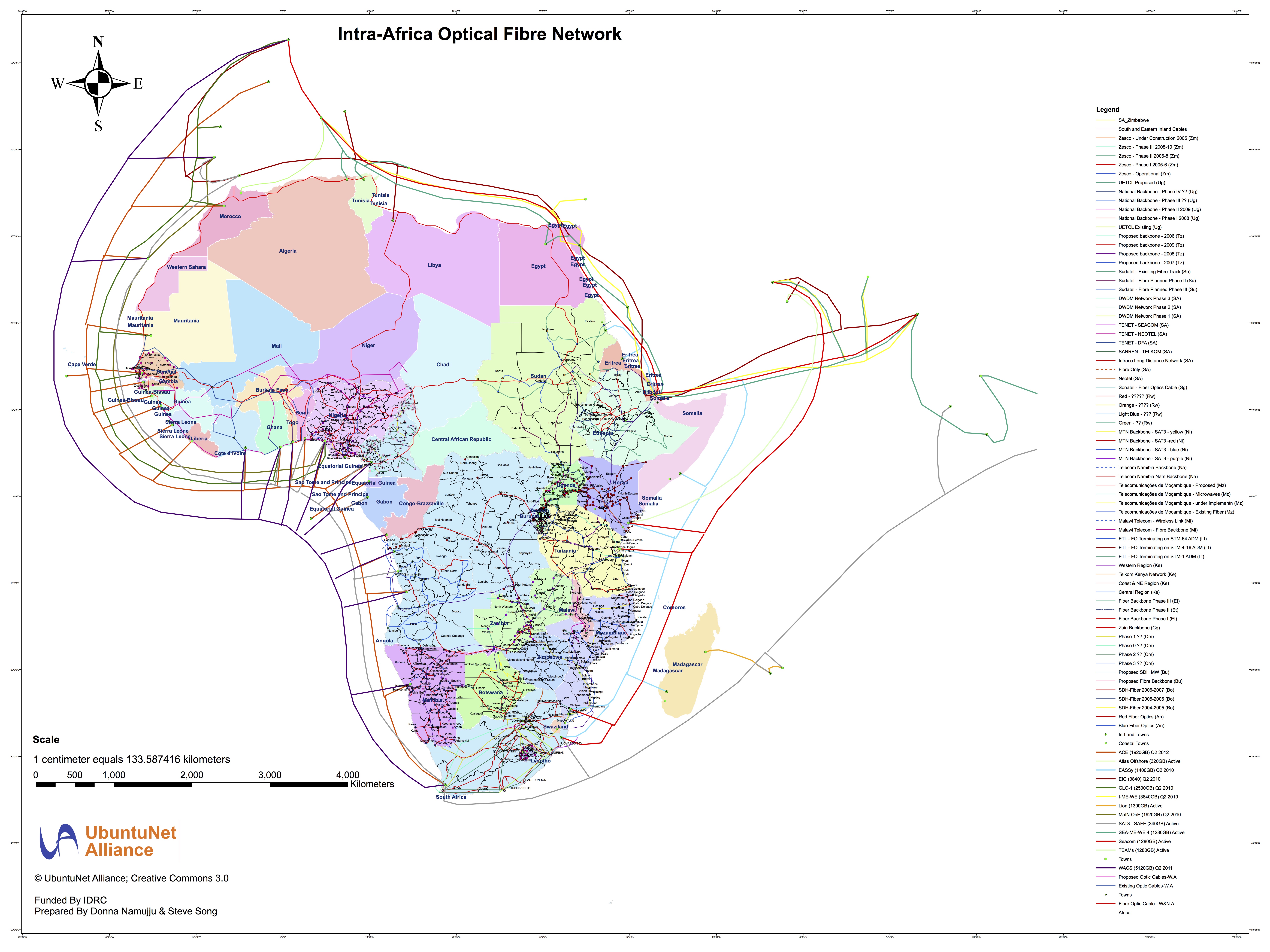
Intra-Africa Internet cable map – Donna Namujju & Steve Song
Both Google and Microsoft are experimenting with the widely available TV White Spaces spectrum, which can spread wider and costs less other solutions over broad areas of dispersed populations. Then there is Project Loon, a true moonshot idea by Google to cover wide areas of the developing world with internet balloons floating at 20km.
I’m often asked why the BRCK is so important for internet growth in Africa and other parts of the world with poor infrastructure. This is why: so many focus on building the backbone, and so few focus on the last-mile, the end user.
The large international tech companies are putting a lot of effort into cracking open the developing world market as it’s where the growth for the next ten years comes from. We all need this, and I’m a big fan of what both Google and Microsoft (as well as the private equity investors) are doing.
We also need tools that work here, devices that are created to work in areas where there might be connectivity, but no power. Where the roads are still dirt and dust and rain affect all of you your electronics. The BRCK was designed for this world, it’s designed in Kenya (where we live) and it’s this last-mile problem that we are committed to solving.
We’re taking investment right now, closing a convertible debt round in mid-December. If you want to take part of this seismic shift in the internet, you can join us at https://angel.co/brck.
BRCK – final mile connectivity for the rest of the world
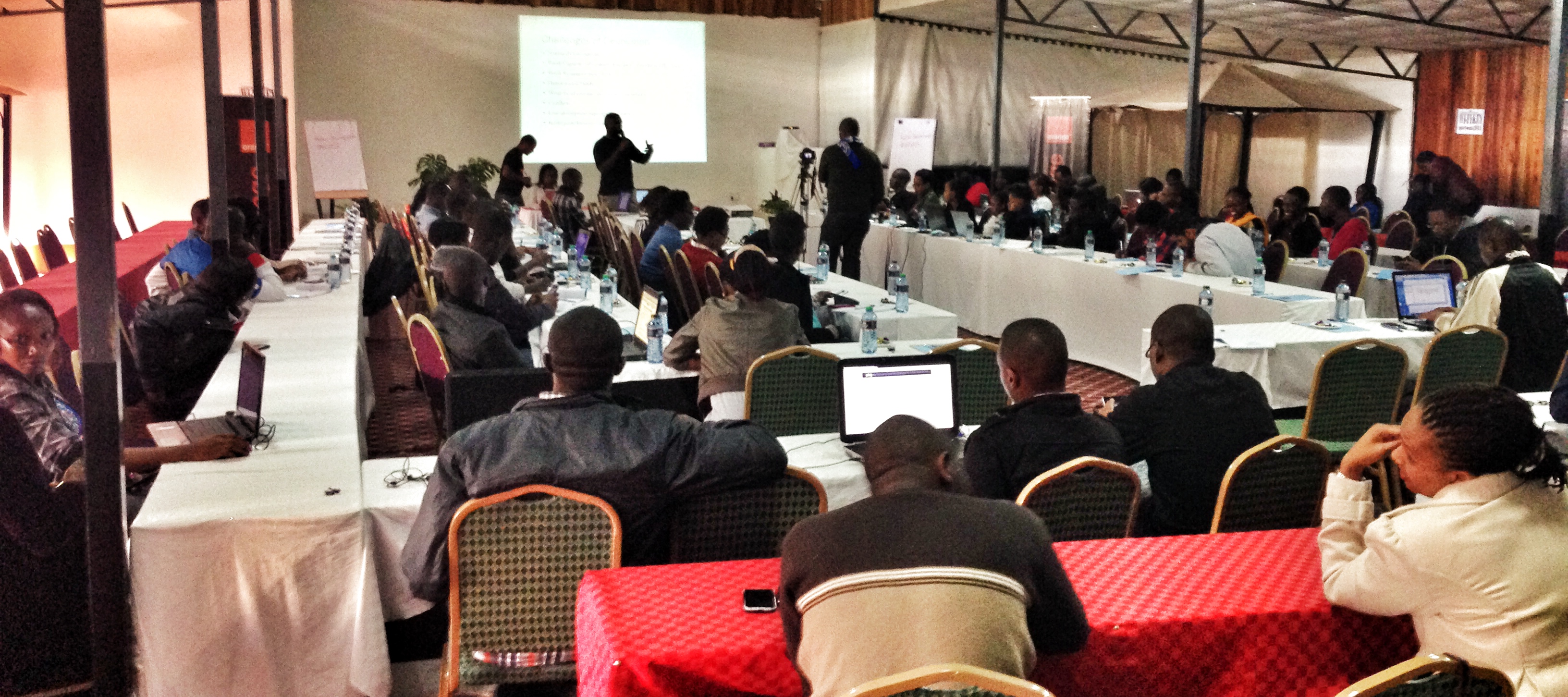
WordCamp Kenya 2013, Nanyuki
Today finds me in Nanyuki, Kenya at WordCamp Kenya 2013. The past couple years, I’ve been traveling during the event, but this year I get to come hang out with my blogging brothers and sisters.
As I was thinking about what to talk about, I thought I’d cover four areas:
- Why we blog
- My rules for blogging
- 3 things that are bothering me in the Kenyan blogosphere
- Using blogging as a tool
Why We Blog
“No, no! The adventures first, explanations take such a dreadful time.”
– Lewis Carroll
The best bloggers are storytellers, they take you on a journey. They tell you why you should care about things, they’re opinionated and informative, and they understand what makes things interesting to their readers.
My rules for blogging
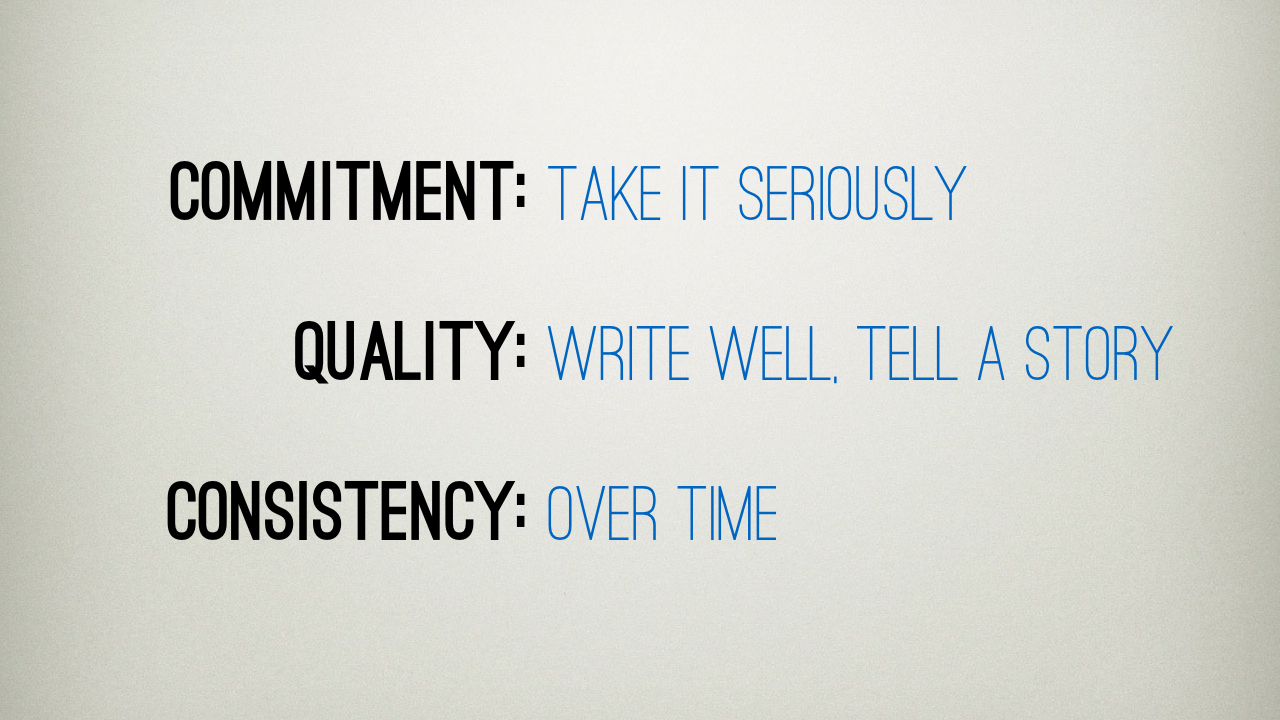
Commitment: to be a really good blogger, you have to commit to it for a long time. Success doesn’t happen over night, and if you take it seriously and really put your mind to it, you can leverage that for much greater things in the years ahead.
Quality: take the time to write well. Sometimes I’ll write a 4 paragraph blog post and it’ll take me more than 2 hours. That sounds ludicrous, but it’s because I’m trying to find the right phrase, link to the right places and put the right images in that make this worth someone’s time to read.
Consistency: this is where I’ve been falling down over the last year or so. If you consistently publish quality blog posts, you’ll gather a following and generate a community around what you do. I blogged consistently, 3-4 times per week for two years before I really got noticed. It’s important to remember that blogging is a long-game, and that if you stick with it, it will pay off.
3 things that are bothering me in the Kenyan blogosphere
1. The Kenyan elections
Back in March of this year we had the prolonged (5-day) Kenyan elections, where there was a lot of tension. Where I believe we traded “peace” for truth. I wasn’t surprised that the media didn’t do their job. I was surprised that there were so few bloggers who did theirs. I took a lot of heat for creating the IEBC Tech Kenya blog on Tumblr to track the facts around the IEBC technology failures, but I kept wondering where the other bloggers were.
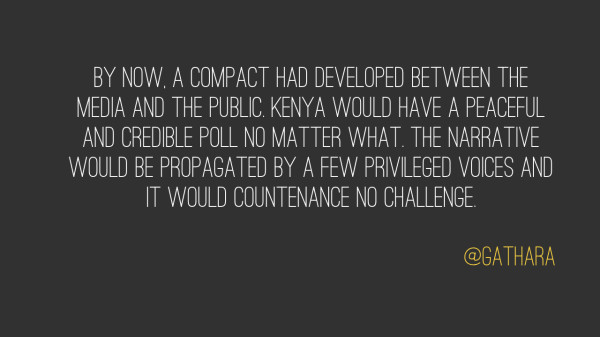
One person who did blog was @Gathara, and boy did he blog well!
Our job as bloggers is to be independent voices, and we’re most powerful when mainstream media isn’t doing their job. When we do this blogging in a timely manner and get that information out there quickly and in a well-researched and circumspect way. We need to get back to our Kenyan blogging roots, which were just like this back 4-7 years ago.
2. Corporate sponsored bloggers
Making money off of blogging is fine, nothing wrong with that. I’m tired of cut and paste blogging though, where people take press releases from a corporate and get paid to just paste it with no changes. I want to know why what that company is doing is interesting, why I should care. I want to know what your opinion is.
Don’t sell out and lose your identity.
3. Kenya’s new media laws
Kenyan MPs have approved a contentious media bill that journalists say amounts to government censorship
I see articles on the East African, the Telegraph, the Nation, but only a couple blogs show up in Google search results.
Why? Already we have loose set of laws around media and information, it’s a slippery censorship slope that hurts all but the powerful in Kenya. This new law makes it even worse, it smacks of Moi-era censorship.
Where are the bloggers using this opportunity to push back? Don’t we realize that this law applies to us too?
Blogging as a tool
My final discussion points were about how even if you have very little, you can still use WordPress, Twitter and Instagram to build a brand. I talked briefly about where we’d come from with Ushahidi and the iHub, just using blogging and social media to get on the map. Now, we’re doing the same thing for BRCK.
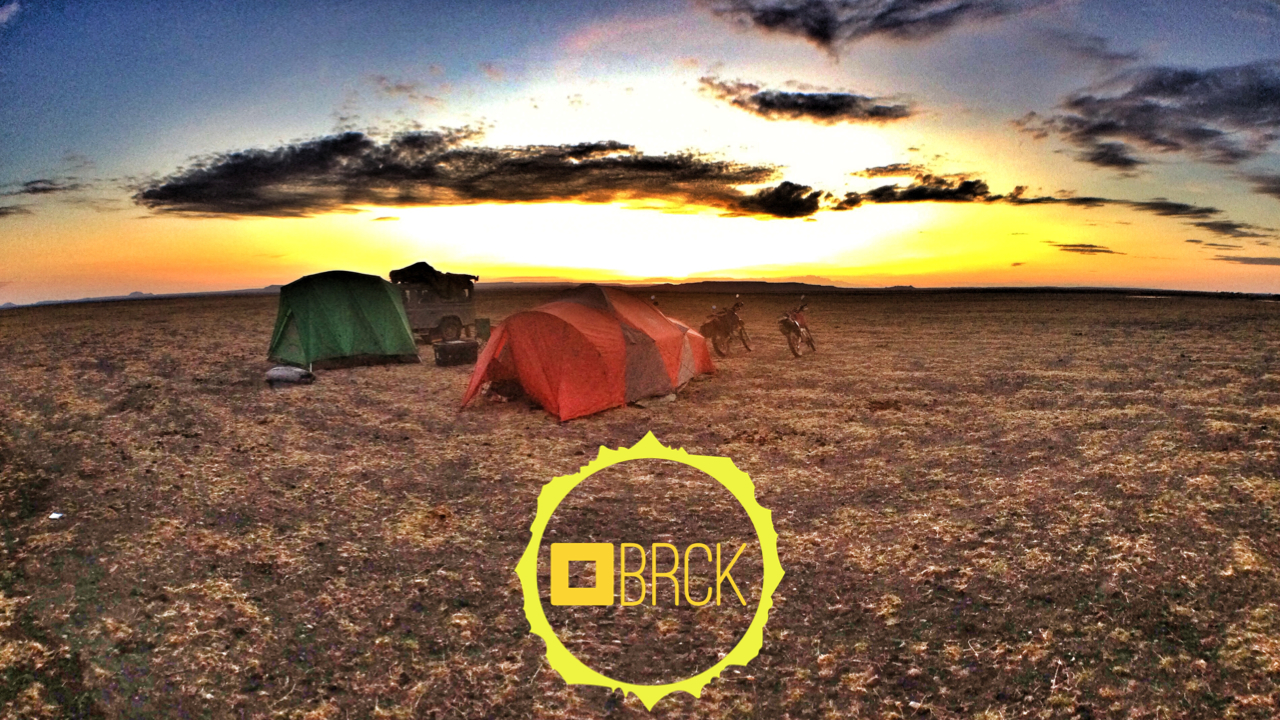
The BRCK Eclipse Expedition
I used the example and ran through the story of the BRCK expedition to Lake Turkana to catch the Solar Eclipse. I used my blog, as well as the BRCK blog to create the narrative, amplified by Instagram, Twitter and Vimeo.

Tools used to blog the BRCK Eclipse expedition
When you’re building a new brand, what you write and the images you use, help people understand what the narrative and brand is about. For us, it was important to put a stake in the sand (literally too, I guess), about the BRCK being a rugged connectivity device. Nothing said that quite like the team behind it out and thrashing it themselves (and also thrashing themselves…).
The results of this were that by the time we got back a week later, there were many more people interested in buying a BRCK themselves, but also people who now wanted to partner with us and even invest.

Telling the story, creating the brand narrative
Blogging is a long-term strategy. The Ushahidi blog has been a big part of our identity for almost 6 years. The team who built Ushahidi were all bloggers, so it makes sense that it’s part of our DNA. For the iHub the same. For BRCK the same. I don’t believe in press releases, I believe in blogging the story and if you’re doing interesting things and telling the story about them well, then the right parties will find you.
]]>