From the category archives:
Business
Nokia World 2010
At the Nokia World event in London. Keep up with it using the #NokiaWorld hashtag on Twitter and on their Nokia Blog.
“At Nokia, “connecting people” is more than a feelgood tagline.” Niklas Savander, Executive Vice President Markets, Nokia.
He goes on to talk about the fact that they’re the largest manufacturer hitting the largest number of people worldwide. Just as everyone has a different need, they have to create phones that offer different features, compromising on the device due to the customer needs.
Smartphones
“People bought far more Nokia smartphones than Apple and Android combined.” On average, people buy 260,000 Nokia smartphones daily. Despite all of these new competitors, Symbian is still the largest with just over 40% of the smartphone market.
Symbian 3 has been rewritten to be faster, easier to use and more developer friendly. “A transition from legacy to leading edge.” They plan to ship 50 million of these new Symbian 3 smartphones. Over 100 operators and distributors will be offering the N8 globally.
Another dig at Apple: “Our phones work day in, day out, no matter how you hold them.”
Maps
Nokia has invested a lot in Ovi Maps, having bought Navteq a couple years ago, and going on from there. NIklas claims that they have further reach and impact than Google Maps. It’s more accurate, has dedicated (correct) pedestrian routes. You also don’t need to be connected to the internet to use it, without a constant mobile connection. If you do need it connected, you’ll find it much less data hungry than Google Maps.
Nokia’s Ovi Maps is available in 78 countries and 46 languages.
By 2013 over 800 million people will be using GPS enabled devices. Soon, everything on the internet will have a location. This is huge and will transcend the user experience as we know it today. “It’s a space we intend to own.”
The Nokia N8
Anssi Vanjoki, EVP, General Manager of Mobile Solutions comes on stage.
“People are buying more than hardware and software when they buy a smartphone, and Nokia is the company that built this market.”
“A few critics have looked at the Nokia N8 and said that it looks like the “same old Symbian”. That’s like dismissing the experience of a new car because it has the same dashboard. You have to drive it to know the difference.”
A broader distribution base than any other platform. He’s talking to developers.
The Nokia N8 is an important milestone, because it’s the first to take the new Symbian OS to the next level. It’s got new hardware, and new software – a new user experience. He wants us all to give it a test drive, they’ve got plenty of them around the event to play with.
He talks about the N8′s 12mp camera, and shows us some examples. They are amazing. It has a mechanical shutter, so the images look great. It has the largest sensor used in any phone-like device.
No other smartphone on the market can give you such a high-level experience. Anssi then shows us a trailer for Tron, with a direct cable (HDMI) onto the big screen from the phone itself. It is amazing.
A lightening fast processor and a 3d graphics accelerator. Aluminum body. Glass OLED Screen, etc.
More new phones
Different people have different needs. A new family of Symbian devices.
Introduces the Nokia C6. Has an 8mp camera, built in Ovi Maps, location sharing is made easy. It also features something new, the ClearBlack Display (CBD), a premium touch screen with a great view. “The black screen is blacker than black, as the sensors take away reflection on the glass.”
The Nokia C7 is thinner, with a stainless steel body.
Social network support for Facebook and Twitter are built into the new C6 and C7. Since Nokia’s customers are global, they’re also supporting Renren in China, Orkut in Brazil – and other global mobile social networks. Both will start shipping in Q4 2010.
They’re looking to find the “most active Facebooker” among their 1.1m Facebook Fans. They’ll choose 5, and they’ll win a new Nokia C6 and C7 and 20 of their closest friends.
“The Nokia E7 is BIG.”, it takes over the space that the Nokia 9000 started in 1996. It’s an office on the go, supporting Microsoft’s suite of business software.
[Note: trying to find an image of the Nokia e7 to share with you, but their site gives me no responses for a search... crap. Bad marketing.]
Found one on Engadget:
Environmentally friendly: C7 uses biopaints, C6 uses recycled metal.
Nokia Developer Community
Purnima Kochikar, VP Forum Nokia and Developer Communities
1.3 billion Nokia people. She crisscrossed the world to talk to developers (she didn’t go to Africa though).
2+ million developers globally.
Simplified developer interaction and made it easier to distribute applications. “You have an improved ability to write apps that mean the most to 1.3 billion Nokia users that use payment methods that serve them best.”
We believe that success isn’t measure just in Dollars, Euros or Pounds, but also in the lives of people. We see this impact everyday in the apps that you have built. Our goal is to help increase the health, wealth and lives of our users, and bring them joy. Uses the example of Proxil for checking if drugs are legitimate.
Think globally and act locally. This isn’t a race to the next million apps. It’s about getting relevant apps to everyone around the world.
Have created a way to reach consumers via demographics, not just geographic location. For instance, have found a great desire of Indian apps in Canada.
Last year alone Nokia shipped 364 million phones with Java (s40) on them. There is a real hunger for great apps on these devices, and people are absolutely willing to pay for them.
Ex: VuClip allows you to watch videos on your mobile phone. The founder thought it would sell best on smartphones in the West. He was pleasantly surprised to find that most of his users come from the emerging markets.
“Touch and Type” SDK for s40 is available on ForumNokia.com.
The Ovi Store
175 million devices available to be sold to.
45 million touch devices
50 million potential new users with the new Symbian 3 OS phones. (C6, C7, E7, N8 models)
There are 2 simple ways to build for Nokia: native Qt SDK and the Symbian Web Runtime (web SDK).
The new standard compliant Nokia Browser. It has been updated for touch, improving consumer interaction, especially for people who will use the mobile as their primary internet device.
Available in 190 countries
Supports 120+ Nokia devices
Credit card and operator billing (choose operator billing 2/3 times… that’s huge.)
Fizwoz as an example has 167 country reach due to the Ovi Store.
App distribution cost reduced on Ovi Store – application signing is free for Java and Symbian.
They have 150 people in Forum Nokia to support developers, with someone on every continent, including someone in South Africa (do they help the rest of Africa or only South Africa?).
Mikael Hed, CEO of Rovio, leader in mobile games. Creator of “Angry Birds” (which I and my daughters love) and has sold over 7 million copies and the free version has been downloaded 11 million times. A new bird, the “Mighty Eagle”, is released to let you not get frustrated with a level – an in-app purchase for $1.99. (awesome new video)
The Ovi Store’s in-app purchase option let’s them maintain the immersive gameplay experience.
Vodafone
Vittorio Colao, Chief Executive Vodafone Group, comes on stage. “I personally believe that data is a great opportunity.”
Vittorio talks about his recent holiday in Greece, and how they interact with their mobile devices now as compared to years ago. They’re emailing, hiring cars, booking restaurants, mapping beaches, reading news on tablets, watching video news, getting wind forecasts by the hour, etc… They’re using data seamlessly.
Life is changing in an incredible way amongst the masses. Real life.
Here’s just 1 month from Vodafone Group usage of data:
- 1/3 browse
- 25% play games
- 20% Email
- 15% social networking
- 11% maps
- 30% business
- Video and music fastest growing.
All people, rich or poor, north to south, will have their interactions done on the mobile. We need 5 things now to make things work better:
1. Network speeds and quality of service – the expectation, in terms of quality, is quickly rising. Pervasiveness, speed, accessibility, distribution and care. Vodafone has never cut investment in this area. The operator can provide two things: privacy and security. Data pricing and data caps have to change, he wants different levels of service.
2. Devices and operating systems – low-end smartphones, PCs, emerging market smartphones.
3. Content and services – Thinks social networking will double. Navigation will increase by 90%. Streaming music and video are already the largest of Vodafone Groups work.
“In reality, the network’s main job is not voice anymore, it’s handling our customer’s entertainment.”
A couple recommendations for devs: 1) tailor your apps to individual users – they have loads of customer information that can be tapped as an operator. 2) Operator billing is quick, intuitive and much easier to manage and will grow your usage of paid apps.
4. Customers affordability – pricing is becoming more important than features in the new segment of adopters of smartphones (emerging markets).
5. Ecosystem profitability – There has to be the right return for all the players. Pricing should be adjusted to reflect usage and load on the system. We’re reaching the end of the “free” time, otherwise we’ll have a free bad experience. Segmentation must drive the right device to the right demographics at the right time. There must be enough margin for developers to have a strong incentive to create locally relevant experiences for customers.
{ 4 comments }
Nokia World in a Time of Flux
I’m at Nokia World this week in London as part of the final judging panel for the $1m Growth Economy Venture Challenge. I’ve been reading and reviewing dozens of entries from all over the world, and I’m excited to see the finalists in action as they do their presentations tomorrow.
Nokia in Flux
There are a lot of things going on within the world of Nokia right now. The Monday Note has a great overview of the big challenges facing Nokia right now, not least their incoming Canadian CEO, Stephen Elop, and the effect that it is having internally on other high level executives.
A couple months ago I gave a talk on “Innovating Africa“to some of the Nokia executives in Nairobi, they largely dealt with Africa, as well as specific products and operating systems. Most of my suggestions were directly from passionate customers of theirs from all over Africa. The Nokia brand is still very strong in Africa, the game is still on here. However, Nokia needs to be careful that they don’t lose this advantage by faster moving, cheap Chinese manufacturers and the better software and UI found on the Android/iPhone smartphones.
Developers, Money and Nokia in Africa
Smartphone growth and marketshare is getting more and more aligned with the types of apps that are available for people to use. If the apps, utilities and games that they want aren’t present, then they’re more likely to move somewhere else. In Africa, where unlimited, high-speed bandwidth isn’t the norm, the mobile web as an option isn’t quite reality yet. It’s a different paradigm than in the West.
This means that you need third-party developers interested in building apps on your operating system. While almost all operating systems have a store for apps now, including Ovi, iPhone, Android, Bada and others, there is a glaring hole in Africa:
You can’t get paid…
So, here’s a hint for Nokia, taken from the talk months ago: make it easy for developers to make money, even in Africa. Figure out a way that people get paid and can bill via your server-side offerings like Ovi.
Smartphones
Africans are aspirational; they might not be able to afford the Mercedes Benz, but everyone is working their way towards buying one. The same holds true for smartphones, though the vast majority cannot afford a high-powered iPhone, the latest $600 Android phone or the Nokia N8, they look to who the leader is in the space. He who controls the mindshare of the smartphone space, holds the mindshare of the mobile brand as a whole.
I’m looking forward to testing out, I’m sure it will have excellent hardware as all Nokia devices tend to be well engineered. However, I’ve yet to find a Nokia with good software or UI, and since it’s running the brand new Symbian 3 OS, it will likely be laden with bugs as all first-time OS are prone to have. (Engadget and CNet reviews)
{ 1 comment }
$100 IDEOS Android Phone Launches in Kenya
Google and Huawei have launched a very competitively priced Android smartphone in Kenya today, called the IDEOS. It is being sold for 8,000 Ksh (~$100).

It runs Android 2.2 (Froyo) and have access to the Android Market. The IDEOS is a touch-screen phone that comes with bluetooth connectivity, GPS, a 3.2-megapixel camera, up to 16GB of storage and can be transformed into a 3G Wi-Fi hotspot connecting up to eight devices.
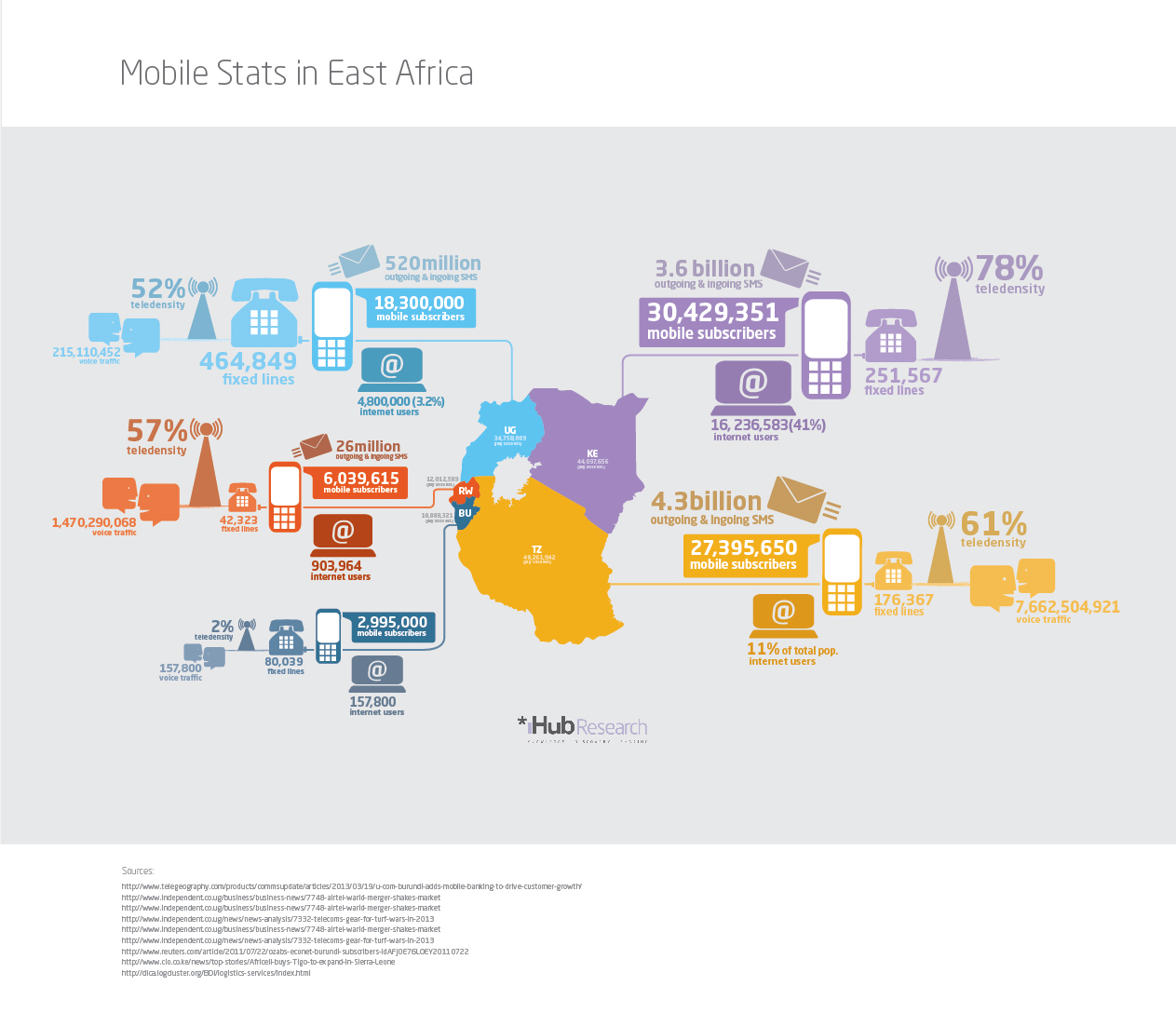
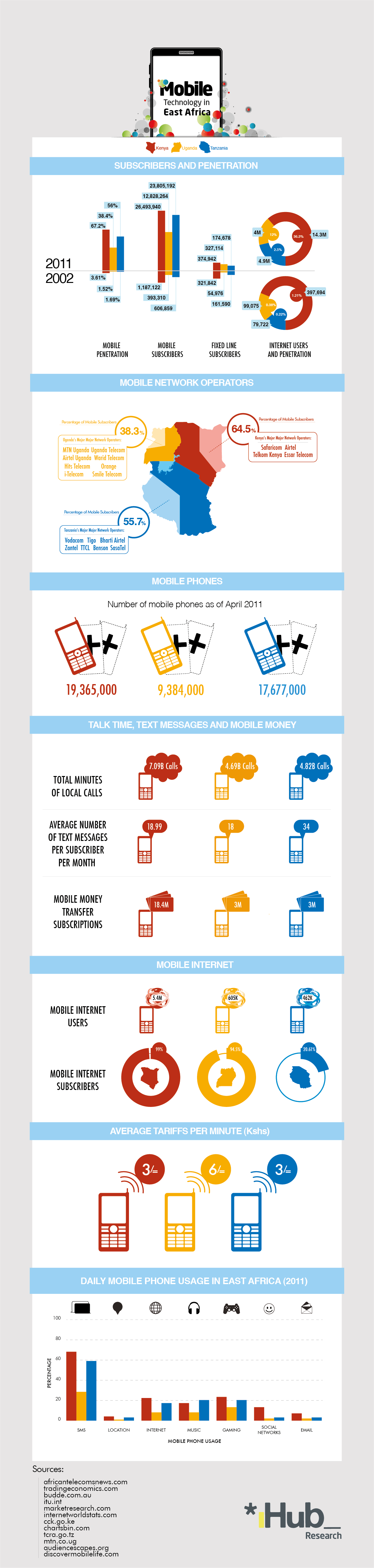
2 out of every 3 internet users in Kenya connect through their mobile phone. This is why data is the current battleground in the mobile operator and handset space. Though there are only 6 million internet users in Kenya, the data market though the mobile is huge. Currently, there are 20 million mobile phone subscribers of a total 38 million possible.
Data enabled phones of any type cost a minimum of $40-50 in Kenya, a touchscreen smartphone coming in at $100 is going to be a big deal for a lot of people.
gKenya
Google Kenya started their gKenya conference today. They are meeting with software developers, entrepreneurs and CS students at Strathmore University over 3 days to discuss innovation and growing businesses, as well as discussing their own suite of products.
[An update, after discussions with a bunch of Google employees at the iHub yesterday. The Google team said they didn not know when the phone would be able to be bought in Kenya.]
Android and pre-paid phones
There are two very big issues that the Android team will need to take care of before we see Android being used heavily in Africa.
First, the lack of access to SIM applications is surprising. These are the apps like Mpesa, top-up services and such. These aren’t just “nice to have” features, these are critical and the phone will fail if it doesn’t have them enabled. Your most basic phones can do this, but smartphones running Android cannot? (Note: unless you root your phone)
Second, there are a lot of background services running on an Android phone that use data. That’s fine for people living in an all-you-can-eat world of bandwidth, but here where we have to pay by the megabyte, it doesn’t work. I remember one day when my phone used up 1000 Ksh of credit ($12), that’s unacceptable and will drive users away very quickly.
{ 59 comments }
DukaPress: A WordPress eCommerce System from Africa
DukaPress is a new customized WordPress eCommerce platform. It allows you to easily set up a fully featured online shop which can be used to sell digital or physical goods to customers all over the world.
I’ve been using WordPress for many years, and am a huge fan. When I saw DukaPress last week, I was at impressed to see that it was built locally in Nairobi, but I also wondered why another eCommerce WordPress build was needed, as there are already some good ones out there such as WP-ecommerce and Shopp. So, I asked the Kelvin, from Nickel Pro, and here is his response:
I know you’ve probably been using WordPress even longer than I and the rest of the DukaPress team so I can probably say you know that WP-ecommerce is a bit…buggy (I say this with the highest amount of humility, we are nowhere near achieving what they have). The other free WordPress e-commerce plugins are much less usable, to us, than Wp-ecommerce.
Shopp is really really good but it sits behind a pay-wall – which is okay.
We built DukaPress to be fully featured, yet super simple to use and, well, free. It actually did not start out life as something we’d give out to the public – we built it primarily to serve our own purposes at Nickel Pro because we build a lot with WordPress and when it came to building e-commerce stuff it was always a big problem. One thing led to another and DukaPress, the plugin for public release, was born.
Around the net where WordPress e-commerce is being discussed, there is always a lot of complaints, primarily against WP ecommerce (some people call wp ecommerce a trojan for their ‘for sale’ upgrade), we hope that with DukaPress, people out there have a viable and better (I hope!) alternative.
Other than that, we offer features that none of the other WordPress e-commerce plugins do! As you rightly assumed, we support all three Kenyan mobile payment systems ZAP, yuCash and MPESA! Although I have to qualify that and say that integration of this is still being developed to be more fliud. We’re just at version 1.0.1
How shall we make money with this? We already do, we’ve used it in at least 4 major projects for our client work and it has already paid for itself.
Other than that, we’re currently working on version 2 which will bring full WordPress Multisites support – so that you can build your own etsy.com in 15 minutes – among other features we think are nice. At that point (in the next month or two), we may launch our own etsy.com-type service (or, in better terms, a wordpress.com which can host fully featured shops); or licence the multi-site version of DukaPress for a fee; or both. No other e-commerce plugin has “successfully” pulled off a WordPress Multisites integration to date i.e. users still cannot build a wordpress.com that can host shops without a great amount of hacking.
DukaPress is also a gateway for www.madoido.com.
I think there are certainly similar plugins which may outperform DukaPress but I also do think it probably beats some of the more established ones. I hope the larger WordPress userbase gets to prove me right, but even if they don’t, DukaPress certainly makes our lives easier, and gives a really welcome international perspective to our business.

On a personal level, I’m impressed to see Kelvin and his team at Nickel Pro working on DukaPress, and I hope that they continue to make it better. If you’re a WordPress pro, or in need of an eCommerce solution, check out their website, documentation and features.
{ 3 comments }
Safaricom Innovation Board and the Kenya Tech Community
Safaricom is Kenya’s largest mobile operator with approximately 80% of the market. Most people don’t know this, but they get hundreds of business and technology proposals each week from people all over the country – techies and non-techies alike. It was with this problem in hand that they decided to open up an “Innovation Forum” for Kenyans to share their ideas.
In short, it was a disaster. Draconian legal terms and conditions mixed with ham-handed community engagement meant that they met with a lot of resistance and outright mockery on public channels such as Twitter and Facebook. Just a sample from one blogger:
Engaging the Community
Safaricom is now back to the drawing board. Their problem hasn’t gone away, they’re still overwhelmed with emails, letters and proposals for business ideas that might/might not make sense for them to engage on. Wadzanai Chiota-Madziva heads up their VAS (value added services) department, and is in charge of this. After the noise caused by the less-than-stellar launch of the Innovation Forum, she and CEO Michael Joseph met with one of the techies who was very concerned about the way they were handling this: Al Kags.
Al Kags has sat down in a couple of meetings with them thus far, finally he suggested a board that could serve as a buffer between Safaricom and the people sending in proposals. The Innovation Forum Board’s job would be to speak for the community to Safaricom, as well as push for better access to APIs, a developer sandbox and possibly and app store. They would also be responsible for helping to translate Safaricom’s position to the community.
I was invited, along with some other’s from the tech community, to sit down and discuss this with them last week. It was a fruitful discussion about the possibilities and the roles and responsibilities that the board would have.
Some of the discussion was about the need for a buffer to be created between Safaricom and submissions to foster fairness and openness, to provide confidence to developers to innovate without fears of intellectual property (IP) misappropriation.
“The intention is for the board to create a fair environment for innovatioin by playing the middle ground between Safaricom Ltd and the developer and innovator community”
The position is largely one of an enabler. The board would oversee the Innovation Forum by:
- Create and agree rules of engagement with all parties
- Advocate developers perspectives at Safaricom
- Facilitate understanding of Safaricom position with the developer/innovator community.
Figuring out the Board
The people invited for the meeting, as the potential board, were Moses Kemibaro, Jessica Colaco, Al Kags, Karanja Macharia, Rehema Parmena and myself.
While it is up to Safaricom to decide who is on their Innovation Forum Board, those of us at the meeting pushed back a little on how they had done this. If they want to interact with the community, it might behoove them to reach out to that community for some of the nominations.
They listened, and starting today going through the end of the week, you can make your own nominations for the Innovation Forum Board for Safaricom to review on the website. This is your chance to put a name in of someone that you think would represent the community well on the board.
{ 15 comments }
A Mobile Payment Trifecta in Kenya
Kenya is quickly gaining a competitive advantage in the mobile payments space. Led by mobile operator giant Safaricom with their Mpesa product, the market locally sees huge value in mobile money transactions. Add to that a regulatory system that is relaxed enough for innovation to be encouraged, and you have a great space for interesting things to happen.
Pay.Zunguka
The team at Symbiotic always have more than one iron in the fire. I was surprised by their most recent release of a new product called Pay.Zunguka last week. Simply put, it’s a payment gateway and aggregator, allowing merchants, developers and content providers a way to monetize their work with the public.
There are two sources of inspiration in Pay.Zunguka (guys, we need to talk about names at some point…), that is the ability for people to utilize international online payment methods like PayPal and Google Checkout, but more importantly that users here in Kenya can do it all without a credit card, only using their phones. That’s a big deal, and it’s a nod towards recognizing that credit cards aren’t necessary, we can bypass that mess.
Mbugua Njihia, CEO of Symbiotic, tells me that their plan is to first integrate with content providers and create an easy-to-use micropayment space, charging 3% per transaction. This will be followed by a partnership campaign to work with larger organizations who don’t have an efficient payment platform for consumers.
PesaPal
PesaPal I’ve written about before. It’s a mobile payment gateway as well, but one with a specific focus online. Liko and team have made great headway recently, but not just in the technology, which is critical. They’ve made headway in some other important areas, funding and marketing.
We’ve talked about the need for local investors to buy into local technology startups. When that doesn’t happen, the international ones swoop in and take advantage of local investor myopia. In this case, PesaPal is receiving a healthy seed capital investment for scaling and marketing. With cash flow happening right now, it’s a good time to invest, and I’m glad to see someone doing so with this team.
I talked to Liko yesterday about this. Their strategy has shifted somewhat since last year, instead of just focusing on web merchants, the PesaPal team is working on relationships with educational institutions and educational book suppliers to make parents lives easier when their child starts the school year. The parent can now pay their child’s school fees using Mpesa or Zap, and then are directly linked to the list of that year’s books with the option to buy them too, and have them delivered to the school for their child’s first day. Brilliant!
This is the kind of fresh thinking that is great to see coming from tech startups: they’re not thinking or selling the tech, they’re selling a solution to a problem.
Zynde
Zynde is a new player in the space, but you’ll start to see a pattern here when you jump over to their website. Because none of the large companies are addressing the very real need for agnostic payment gateways the market is filling in that gap for them.
A quick email chat with David Kagiri of Zynde gave me more insight into their focus behind the service:
“My main driver was that new technologies existed that could enable me deliver cost effective solutions. After interaction with owners of small businesses I realized that most don’t keep track of their business finances and the cost of the available off shelf software that would help them with that was beyond their reach. I came up with a simple solution that uses the SaaS (software as a service) model so that I could deliver cost-effective solutions to them and an API that will enable creative developers to extend it to multiple mobile platforms and reach the masses.”
Zynde will have to prove themselves in what is quickly turning out to be a highly competitive space with competent players.
{ 26 comments }
Being in Africa Makes You Untrustworthy
I haven’t been able to use PayPal for two months. I just got profiled for extra security measures on Facebook. I can’t make certain purchases from Africa. Few organizations ship goods to me here.
Let’s be honest; living in Africa, or being African, gives you a certain unwelcome aroma in the eyes of global corporations. Frankly, we’re just not trustworthy.
The Africa trust problem
This isn’t new to any of us who live, or spend a great deal of time, in Africa. You’re blacklisted, given extra screening, and generally treated like a second-rate human. You’re not trusted, and you’re not worth the time to figure out if you can be trusted.
Frankly, as a total continent-wide user base, we just don’t make enough of a blip on the radar to be worth their time. There’s not enough money here in their minds, there is lower-hanging fruit elsewhere with a lot more spending history – and therefore power.
Does it make it right? No. Do my own stories of wrongs and misbehavior matter? No.
Jon Gosier states it well when reflecting on his blacklisting by PayPal (one of the very worst company offenders):
“Once again, the message perpetuated here is to be cautious when dealing with Africans, Africa or anything you suspect of being related to the aforementioned.”
A closer look at African cyber crime

From the Internet Crimes Complaints Centre (IC3) 2009 Annual Report [PDF download]
Nigeria has a significant 8%, but Ghana, South Africa and Cameroon all come in at a measly 0.7%. How in the world do Africans get so much worse treatment for so little compared to the others? There’s no doubt that one country in a continent of 52 countries has a problem – we all get punished for it.
Here are some more interesting statistics, according to the Consumer Fraud Reporting statistics for 2009:
“The majority of reported perpetrators (66.1%) were from the United States; however, a significant number of perpetrators where also located in the United Kingdom , Nigeria , Canada , China, and South Africa.”
So, there are two strong Africa contenders for fraud, but it’s amazing how much more hell internet consumers in African nations (outside of Nigeria and South Africa even!) have to go through in comparison to their much more cybercrime-ridden finalists like the US, Canada and the UK…
Texas in Africa puts this well after a recent foray into this space with Delta:
“it also reflects knee-jerk prejudice and the willingness to write off an entire continent of people as liars and cheaters. The consequences of this attitude are far reaching”
Too true, and there are only two ways that this might change:
First, we in Africa come up with our own payment and business solutions that work here first, and then interact with other global systems.
Second, the global corporates wake up and realize that there is quite a bit of spending power and money to be made in Africa, just like the mobile operators found out in the 90′s.
{ 40 comments }
Mocality: Mobile Business Listings for Africa
It’s not often that you hear of a tech startup from South Africa who chooses to build and deploy their product to Kenya first. In fact, I’ve never heard of such a thing. However, that is just what is happening with Mocality, a mobile and web-based business listings and directory application built for Africa.
Mocality’s job: create a digital platform that makes it easy for business owners to promote and expand their businesses in Africa.
“As a business owner, you get free SMS, a contact list, a free mobile website and a free mobile business card.”
Mocality represents this change in the paradigm that we’ve seen coming on for years in Africa. An application built agnostic to the client platform (mobile phone or PC), where data is fed into whatever you use in a meaningful way. Where the mobile usage is just as rich as the PC use.
In fact, they’ve studied usage of mobile phones on their system and have seen the usage of smartphones to be so negligible as to not matter. As CEO Stefan Magdalinski says, “This is the Mocality reality: RIM, Android, Apple are 2% of usage.”
About the Team
Successful startups generally have great leaders, Mocality has that. Stefan Magdalinski (@smagdali) is a seasoned web veteran and entrepreneur, co-founder of Moo.com and an early entrant into the programming space in England in the mid-90′s, and just recently relocating to South Africa for Mocality. They have plenty of funding, from MIH, a subsidiary of Naspers Group (who has been eying Kenya with recent forays such as Kalahari and Haiya).
I’ve met with Stefan in Kenya and South Africa, and I’ve also had the chance to meet some of the members of his team here in Nairobi. The impression that I’m left with is that this is a serious startup, with plenty of funding and a great vision and a strategy put in place to pull it off.
How it Works
Mocality is built for Kenyan businesses that don’t have enough money (or value to gain) to advertise in a print directory.
Again, a paradigm shift. They’re saying that they don’t care about the big end of the power law of distribution (the big companies), only the longtail (small, marginalized businesses). This is apparent in the images below of their typical user:
- SMS, WAP & Web tools (now J2Me, iPhone)
- Businesses can self list
- Geo-coding All business locations
- Map view of business
- Business toolkit:
- Add customers & suppliers
- Send bulk messages (400 free SMS monthly) (but with anti-spam controls)
- Send mobile business card
- Add details (e.g. Menus, Special Offers)
- Website, google optimised (white hat only)
Important to business owners in this segment is that the platform is free. Services will be added to the platform over time that business owners can pay for, but currently the only cost to them is data or SMS usage on their own mobile phone to access Mocality.
Scaling using the Crowd
Initially, the Mocality team walked all over Nairobi getting businesses to put their listings on the platform. They were successful, and in about 6 months of hard work were able to get approximately 11,000 businesses listed. That’s good, but barely puts a dent in the number of companies operating in this city.
The team then launched a crowdsourcing option, where they experimented with allowing anyone in Nairobi to add their own (and other’s) businesses to Mocality, and they got paid a bounty to do so. Within the last 6 weeks they have as many listings entered as the previous 6 months. If you live in Nairobi and want to become an agent, you need a WAP-enabled cameraphone and only need to visit http://www.mocality.com/money.
That’s impressive, but the impact is even more apparent when you look at the visualization:
If you have a business in Nairobi, you can get your listing onto it by visiting www.mocality.com email to info@mocality.co.ke or SMS callme to 2202 from within Kenya.
{ 16 comments }
What would you say to Nokia Africa?
On Friday I’ll be addressing some of the top business decision makers for Nokia in Africa. My goal is to shake them up a little, make them think deeply and differently about the African market.

Nokia hasn’t truly innovated in Africa since they put a flashlight in a Nokia 1100 in 2003.
I’ve been asked to discuss my views on how the handset and mobile services business situation is developing, what the opportunities are in those areas and suggestions on how Nokia could lead in this market.
Therein lies the problem: I’m only one person with one opinion, they need to hear from others with different experiences.
What would you say?
Add yours in the comments below. The best will be brought to the Nokia executives attention:
Here are a couple from Twitter.
- Top-end or low-end handsets, what does Nokia stand for here? (via Niti Bhan)
- Innovate on the user experience for low-end handsets. (via Rombo)
- Is Nokia serious about social impact, or is that just face paint?
- Africa is ripe for experimental phones and financing models, what is new coming out of Africa first?
Don’t just think cheap handsets. What else would you do within business models and solutions?
{ 60 comments }
Kenya’s Tech Regulation Conundrum
A lack of regulation, or at least a more relaxed regulatory environment, have been directly responsible for Kenya becoming a hub of innovation, specifically in the mobile payments and banking space.
The gorilla in Kenya’s room is Safaricom. The posted a Ksh 21billion pre-tax profit yesterday, citing growth and profits in almost all areas, including 137% growth in data services, which they see as the next big cash cow.
Safaricom has directly benefited from this environment and their savvy marketing and business moves have left others in the dust. Businesses should be allowed to make profits and smart strategic decisions rewarded by profit and market position should be expected and encouraged – else why do they do it?
A couple of weeks ago new regulations, put together last year by the CCK, were floated by the Monopolies and Prices Commission. These rules were intended to curtail the massive growth of firms like Safaricom and the ScanGroup, to the detriment of competitors and the market as a whole. Naturally, the only firms upset with these rules were the incumbents.
Just yesterday, Dr. Ndemo, the permanent secretary for information and communications decided that Kenyan professionals who drafted these new rules weren’t professional enough and called in consultants from the United States to review them. While it is true that the Monopolies and Prices Commission is weak in ability to fulfill its mandate, this move comes off as an appeasement by Dr. Ndemo to Safaricom as it came out on the same day that Safaricom was having it’s annual shareholder’s meeting. It makes you wonder who dances to whose tune.
Both sides have good points. Smaller firms do have an uphill battle, not only due to their size, but also due to the unfair practices that larger firms tend to busy themselves with in Kenya to keep the competition at bay. However, large firms also have point. If they are playing fair, should they be punished for being better than everyone else?
Too much regulation in a sector can cripple a country’s innovative business growth, especially technology (see South Africa’s banking rules…). Dominant players have the same effect.
Maybe, instead of adding unnecessary regulations, governments should look to truly and strongly punishing unfair and dirty practices that are already on the books. A 200,000 Ksh ($2,500) fine is the most that Kenya’s monopoly commission can do, and it’s laughable at best.
{ 4 comments }
Mxit is Imported into Kenya
Mxit is a massive mobile social network that was started in South Africa a couple years ago. Today, Safaricom announced a partnership with them, using their marketing muscle (7 pages of ads in today’s newspaper) to import Mxit into Kenya.
[For the time being, we'll ignore the complete ripoff of Twitter in their marketing...]
Mxit is a free instant messaging platform that uses the data network, thereby making it cheaper per message than sending an SMS. They claim 19 million users, most a younger demographic, who spend time chatting with friends or in chat rooms. MXit also supports gateways to other instant messaging platforms such as MSN Messenger, ICQ and Google Talk.
Local apps and entrepreneurs react
This should be a slap in the face to Kenyan programmers and tech business entrepreneurs. The model to build the same type of mobile social network has been openly working and available to do for at least three years.
To be fair, Mbugua and the Symbiotic team tried to create something like this a year ago, called Sembuse. Both he and Idd Salim aren’t very happy about this latest move, claiming that Kenyan entrepreneurs can’t get the same access or opportunities as their South African counterparts.
From Mbugua:
“The issue is not that they have a partnership with Mxit but that from personal experience, local developers and companies suffer greatly in their quest to have such partnerships.”
From Idd:
“Most likely, the marketing retards at Safcom were convinced to believe that Mxit will increase data ARPU for Safcom. Mxit is meant to be a replacement to SMS. … So Instead of sending an SMS, you will use Mxit. Safaricom will lose KSHS 3.5 per SMS, but gain KSHS 0.003 per data exchange over Mxit. Talk of Safaricon Conned! Pwagu amepata pwaguzi.”
The issue with Safaricom
On one side, the Sembuse team have a point. Safaricom has been promising to open up their API and platform for real extension. This has never been fulfilled. They have promised to (honestly) engage with the local programming community, and this hasn’t happened either. They were publicly called out on all of these facts and more at the Mobile Web East Africa conference this year.
In many ways Safaricom walks arrogantly through the Kenyan market, lying, stealing and cheating their way to even larger profits. However, they also push the edges. While others are happy to sit back and make their current margins, Safaricom takes risks and eats their lunch. Innovation, whether it’s home built, bought or stolen still has the same effect.
Business reality
For whatever reason (marketing, value add, etc), Sembuse didn’t catch on – it hasn’t reached critical mass. Numbers of users, rather than technology ability even when it’s better, are the things that larger companies are looking for in this type of play. If you don’t have half a million users, you aren’t even in the game.
Though I’m no Safaricom apologist, I can’t fault them for making a decision to go with a tested product from an established business. Yes, SMS is currently a cash cow, especially here in Kenya. However, everyone can see the writing on the wall: data is the future, and controlling the channel is more important than anything else.
As David Kiania from the Skunkworks list noted, “Rule No. 4 in business: Cannibalize your revenue and business model before your competition does it for you.”
I’m more disappointed that no Kenyan company has been able to make a go at this by themselves, just like Mxit did years ago. You don’t need Safaricom or any other mobile app provider to be successful in this space, Mxit if anything, has proven that.
Like I said 2 years ago, this is a sure win if you can pull it off correctly. The technology to do this is not new, as Idd Salim points out as well, neither is the model – so you know that the strategy here is on marketing and communications to show the value add to potential customers.
More than anything else, Kenyan entrepreneurs should be upset with themselves for missing a sure opportunity, not upset with Safaricom for making a good business decision.
{ 26 comments }
Facebook Zero: A Paradigm Shift
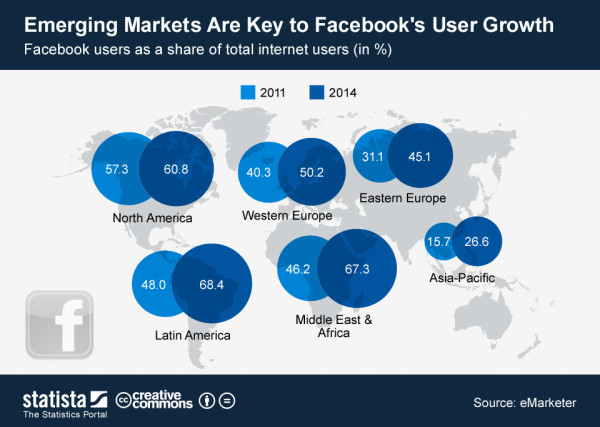
Just a week ago I was in Cape Town talking about how entrepreneurs in Africa are looking at the prepaid mobile phone market and are trying to solve for the cost structures for data provided by the mobile carriers. Who knew that internet giant Facebook would beat them to it?
This week Facebook launched 0.facebook.com, where they worked out deals with 50 mobile operators in 45 countries to either zero-rate data costs coming to that URL, or paying that data cost themselves. This means that anyone, even those with no airtime on their mobile phone, can still take part in Facebook.
“Thanks to the help of mobile operators we collaborated with, people can access 0.facebook.com without any data charges. Using 0.facebook.com is completely free. People will only pay for data charges when they view photos or when they leave 0.facebook.com to browse other mobile sites. When they click to view a photo or browse another mobile site a notification page will appear to confirm that they will be charged if they want to leave 0.facebook.com”
Interestingly enough, 5 of the 6 largest Facebook using countries in Africa do not have access to this service yet: Morocco, Nigeria, South Africa, Ghana and Kenya.
Why this matters
What has happened is that Facebook, even with all of their problems and questionable ethical moves on privacy issues, still have a great strategist with a global perspective in their midst. What they have realized is that the only way to increase penetration in the developing world is to cover the data costs for their users (or, if lucky, snooker a mobile operator into not charging them for it).
I pay for someone to visit this blog. I pay my web hosting fees and that means that you can visit it for free. Almost. Unless you’re on a free WiFi service you still have to pay your ISP to connect to the internet. This is akin to me paying off your ISP for when you visit my website.
It’s a big deal, and I think we’ll see a lot more of this happening. It raises the bar for everyone else. If you want to play in this league, you now need to pay off the mobile operator for the traffic that goes your way. Meanwhile the mobile operators laugh all the way to the bank – it’s a huge win for them, and a big score for mobile web consumers in the developing world.
{ 21 comments }
MKesho: Linking Banks and Mobile Payments
People are excited about M-Kesho (money for the future) which launched yesterday, where Safaricom has linked their mobile payments service Mpesa as a joint venture with Equity Bank in Kenya. This basically extends Mpesa into a bank and insurance company, with the future offer of microcredit as well.
- Equity bank has 80 branches in Kenya.
- Mpesa has 17,500 outlets in Kenya.
- There are approximatey 8.4 million bank accounts total
- Equity has about 4.5 million bank accounts
- Mpesa has 9.5 million users
- Kenya has 107,000 credit cards in circulation
See the pattern? These are are big companies with huge local connections and inroads into the popular culture. This is a strong indicator that every Kenyan will have access to banking and insurance via mobile phone very soon.
“This is a bank account introduced by both Equity and Safaricom where customers can earn interest from as little as 1 Ksh. Customers can withdraw cash from their Equity Bank Account to their M‐PESA accounts and customers can also deposit through their M‐PESA accounts to their M‐KESHO Bank account. Other features of the account include Micro credit facilities (emergency credit availed through M‐PESA), Micro insurance facilities as well as a personal accident cover that translates into a full cover after 1 year. For one to open this account, the person must be an M‐PESA subscriber.”
Reality Check
As others have pointed out, there have already been links between mobile payment systems like Zain’s Zap and banks like Stanchart. So, this isn’t exactly groundbreaking and new. Why is it big then? It’s big because of who is doing it: the giants of the banking and mobile sector.
Rombo has written a particularly good post about M-Kesho. She asks some hard questions, like who really benefits out of this deal: Equity or Safaricom?
It’s hard to say, but I wonder if the pressure put on by regular banks onto the regulator about how close to a bank Safaricom’s Mpesa really has forced their hand. Did they have to choose a banking partner in order to stave off the regulator, or did they do it to increase market share and positioning?
Finally, I think this move, like the moves made by Safaricom in the past on this mobile banking space are shortsighted. Yes, it gets them more subscribers and it does solidify their grip on the mobile market in Kenya, that is working. However, mobile money and payments are much bigger than just one operator or one bank. Becoming the “Visa of the mobile payments space” all over Africa (the world?), is a much bigger deal than being the biggest fish in Kenya’s small payments pond.
{ 2 comments }
Quick Hits Around African Tech
South African, Matthew Buckland, has launched Memeburn a site that tracks emerging technology trends and has opinion pieces by key influencers.
Amheric/Ethiopic translations have been launched within Google’s applications.
Freedom Fone, a free and open source IVR (interactive voice response) system, which started out of Zimbabwe, has now launched. You can download v1.5 now.
Afrinnovator has launched a news aggregator for African tech news.
I was interviewed by CNBC about the iHub and Ushahidi.
Panacea, a South African mobile phone company has the first (legit) bridge between Africa and Paypal live on the continent. Finally, at least one country is able to send/receive payments via PayPal.
Kahenya, from Virn, is launching a new ad platform, called Metro, that distributes ads to all of their sites and affiliate sites. They anticipate to start Web Marketing Campaigns from as little as 500 Kenya shillings (
{ 0 comments }
Maduqa: Online Shops for Every Kenyan
Maduqa is a fledgling web startup in Nairobi. Their goal: make it simple, fast and easy for any Kenyan business owner to get their own store online in just a few minutes. Surprisingly, there’s nothing else out there quite like this (that I’ve seen), so it’s an excellent example of local entrepreneurs taking ideas from the global stage and localizing them to Kenyan needs.
It’s a simple website, with a focus on two things. First, it’s online shops for ordinary businessmen, whether you operate out of your house, a duka or a business frontage. Second, it’s a classifieds listings site.
There’s a lot of draw in figuring out how to crack the Kenya classifieds market, and the web is littered with a dozen mediocre attempts at this from Craigslist to the Nation Media Group, much less the everyday sites that others throw up. In this case, I think it’s a diversion from what should be the focus: online shops.
We’re starting to see more Kenyans paying attention to the web-side of their business. For most, that just means that they know the internet is out there and might be valuable in attracting customers. Those are your medium and upper-class businesses. The upper-class ones will go out and design their own websites, Maduqa isn’t for them.
Instead, Maduqa is for the businessman doesn’t have any marketing budget to speak of, she might be a hairdresser or a person running their business at night from their home. They don’t have the time, energy or know-how to setup a store on their own, but they could set up a Maduqa site. It’s free too, so the cost of failure is low. Your worst case scenario is that you are finally searchable by name online.
There is a small team of individuals who are going around and trying to sign up new businesses into the site. It’s analog, and not nearly as efficient as if you were running a pure viral or digital marketing campaign, but then their target end-user probably wouldn’t see those anyway. Any other type of marketing is even more expensive and untenable for this bootstrapping startup.
So, let’s say they have three guys walking around town trying and they each aim for 15 new Maduqa shops online each day, that’s 45 shops per day total. Not bad, especially if you extrapolate that out to 20 working days per month with a total of 900 online stores per month added to the website. In three months they would have 2700 online shops.
Now we’re talking some serious mass. Maybe even enough to get on the radars of consumers, especially as all the marketing for the store websites will be done by the store owners themselves, as they tell everyone about their new website.
I met up with Kachwanya, one of the duo behind the site and walked through the site with him, discussing both the pros and cons of this type of service and the site itself. Here is a quick rundown of what I liked/didn’t like, keeping in mind that it’s an early-stage website.
What I like
- Anyone can setup an online shop now. Conceptually, this is very easy to grasp.
- Nice use of javascript and overlays that make the site easier to use.
- There is a team of Maduqa reps going around and signing up new business owners.
- The potential to take over the online stores market in a country.
What could be improved
- Scrap the classifieds, stick to one thing: online shops.
- Let’s see PesaPal (or its equivalent) instituted on this site. I can see no better win-win situation for Maduqa, the end users or PesaPal than this kind of partnership.
- Parts of the site look nice, but it also feels a little cluttered, some design and usability tweaks would help.
- Get more feet on the street, sign up more businesses and get up to critical mass even faster.
I’m impressed by this simple and workable concept. They have the technical acumen to do it, there is no doubting that. Will they have the business acumen to balance? Time will tell if they will pull this off, but I’m optimistic that they can.
{ 12 comments }