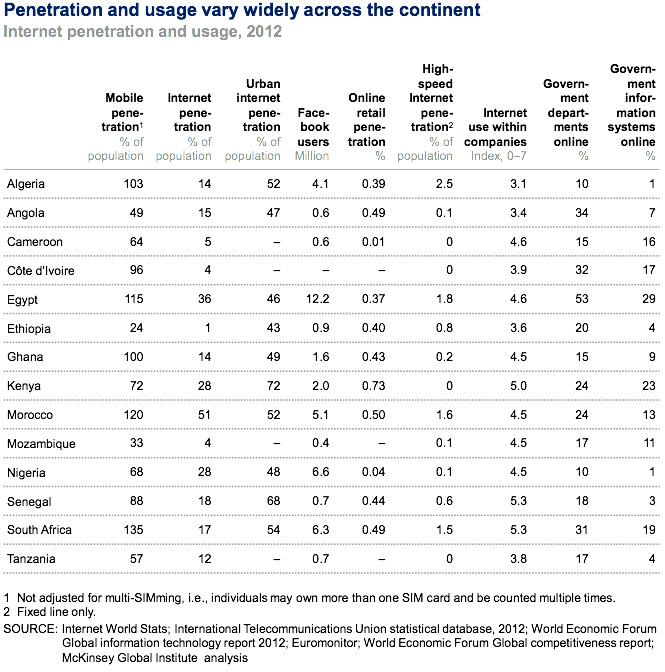
<?xml version="1.0" encoding="UTF-8"?>
<rss version="2.0"
	xmlns:content="http://purl.org/rss/1.0/modules/content/"
	xmlns:wfw="http://wellformedweb.org/CommentAPI/"
	xmlns:dc="http://purl.org/dc/elements/1.1/"
	xmlns:atom="http://www.w3.org/2005/Atom"
	xmlns:sy="http://purl.org/rss/1.0/modules/syndication/"
	xmlns:slash="http://purl.org/rss/1.0/modules/slash/"
	>

<channel>
	<title>WhiteAfrican &#187; Web Stuff</title>
	<atom:link href="http://whiteafrican.com/category/web-stuff/feed/" rel="self" type="application/rss+xml" />
	<link>http://whiteafrican.com</link>
	<description>Where Africa and Technology Collide!</description>
	<lastBuildDate>Wed, 23 May 2012 04:26:35 +0000</lastBuildDate>
	<language>en</language>
	<sy:updatePeriod>hourly</sy:updatePeriod>
	<sy:updateFrequency>1</sy:updateFrequency>
	<generator>http://wordpress.org/?v=3.3.2</generator>
		<item>
		<title>Quick Hits Around African Tech (May 2012)</title>
		<link>http://whiteafrican.com/2012/05/06/quick-hits-around-african-tech-may-2012/</link>
		<comments>http://whiteafrican.com/2012/05/06/quick-hits-around-african-tech-may-2012/#comments</comments>
		<pubDate>Sun, 06 May 2012 17:48:06 +0000</pubDate>
		<dc:creator>HASH</dc:creator>
				<category><![CDATA[Africa]]></category>
		<category><![CDATA[Mobile]]></category>
		<category><![CDATA[Web Stuff]]></category>
		<category><![CDATA[africa]]></category>
		<category><![CDATA[google]]></category>
		<category><![CDATA[kenya]]></category>
		<category><![CDATA[links]]></category>
		<category><![CDATA[mpesa]]></category>
		<category><![CDATA[nigeria]]></category>
		<category><![CDATA[pivoteast]]></category>
		<category><![CDATA[safaricom]]></category>
		<category><![CDATA[startup]]></category>
		<category><![CDATA[tech]]></category>

		<guid isPermaLink="false">http://whiteafrican.com/?p=4544</guid>
		<description><![CDATA[This last month has kept me too off-kilter to get a good blog post up. However, there have been some very interesting happenings around the continent, here are the ones that caught my attention: Pivot East East Africa&#8217;s mobile startup pitching competition is just a month away. We announced the top 50 a few weeks [...]]]></description>
			<content:encoded><![CDATA[<p><em>This last month has kept me too off-kilter to get a good blog post up.  However, there have been some very interesting happenings around the continent, here are the ones that caught my attention:<br />
</em></p>
<h3>Pivot East</h3>
<p>East Africa&#8217;s mobile startup pitching competition is just a month away.  We announced the <a href="http://pivoteast.com/blog/2012/04/pivot-east-2012-top-50-shortlisted-applications-explained/">top 50</a> a few weeks ago, and now the <a href="http://pivoteast.com/blog/2012/04/pivot-east-competition-finalists-announced/">25 Finalists</a> are named as well.  Don&#8217;t miss this event, June 5 &#038; 6th at the Ole Sereni hotel in Nairobi.</p>
<p><a href="http://pivoteast.com"><img src="http://whiteafrican.com/wp-content/uploads/2012/05/pivot_audience-500x195.jpg" alt="" title="PIVOT25 by Daudi Were" width="500" height="195" class="alignnone size-medium wp-image-4550" /></a></p>
<h3>Google Releases &#8220;Insights Africa&#8221;</h3>
<p>This truly deserves a blog post of its own&#8230; Google spent a lot of money and time gathering information from over 13,000 people across 6 African countries (Ghana, Kenya, Nigeria, Senegal, South Africa and Uganda) to determine why, and how, people use the internet.  This data is all openly available, with an outstanding visualization tool to see what the information really means, and compare it, at <a href="http://www.insightsafrica.com/">InsightsAfrica.com</a>.  My chart below is just one example, showing how people access the internet across these 6 countries:</p>
<p><a href="http://whiteafrican.com/wp-content/uploads/2012/05/0z.png"><img src="http://whiteafrican.com/wp-content/uploads/2012/05/0z-500x309.png" alt="" title="Internet point of access across 6 african countries" width="500" height="309" class="alignnone size-medium wp-image-4545" /></a></p>
<h3>Donors prioritized “industrial policy” in Asia, but “social sectors” in Africa. Why?</h3>
<p>Kariobangi writes a <a href="http://kariobangi.wordpress.com/2012/04/04/donors-prioritized-industrial-policy-in-asia-social-sectors-in-africa-why/">compelling blog post</a> on the difference between the aid that was prioritized for Asia versus that for Africa.  </p>
<h3>TeleRivet: An Android SMS gateway</h3>
<p>Similar what Ushahidi offers at <a href="http://smssync.ushahidi.com/">SMSsync</a>, <a href="https://telerivet.com/">TeleRivet</a> is a tool that allows you to use your Android phone as an SMS gateway. It&#8217;s more robust, offers an API, and makes it easy for people to get started on SMS and USSD apps.  Mbwana Alliy writes up a <a href="http://afrinnovator.com/blog/2012/04/06/disrupting-sms-apps-space-telerivets-distributed-mobile-sms-servive-using-android-phones/">blog post</a> on why this is important, and the business prospects involved in utilizing this type of service.</p>
<h3>WEF: The Global Information Technology Report 2012</h3>
<p>The World Economic Forum&#8217;s annual report on IT has some good information on emerging markets.  You can <a href="http://reports.weforum.org/global-information-technology-2012/">read  it online here</a>.  Here&#8217;s the video:</p>
<p><iframe width="500" height="254" src="http://www.youtube.com/embed/u0GJuH8PfAw" frameborder="0" allowfullscreen></iframe></p>
<h3>ForgetMeNot and the rise of Africa&#8217;s Smart(er) Phones</h3>
<p>BizCommunity has a <a href="http://www.bizcommunity.com/Article/410/78/73205.html">good article on ForgetMeNot&#8217;s Message Optimizer service&#8217;s growth</a> on the continent. This service delivers internet content to users who can only access that information via SMS.  Here&#8217;s how it works:</p>
<blockquote><p>&#8220;First, a mobile phone subscriber sends an SMS to a given short code. The message is received in the mobile company&#8217;s message centre, which then forwards to ForgetMeNot Africa&#8217;s internet servers. The servers process, route and deliver the message to the subscriber, who can then respond.&#8221;</p></blockquote>
<h3>Kenya study, impact of venture capital on small and medium sized enterprise</h3>
<p><a href="http://vc4africa.biz/blog/2012/04/17/kenya-study-impact-of-venture-capital-on-small-and-medium-sized-enterprise/">VC4Africa reviews a report</a> on VC&#8217;s in Kenya.  This isn&#8217;t just tech, but it is interesting and surfaces some great information.  [<a href="http://vc4africa.biz/wp-content/uploads/2012/04/VC-Kenya-Report.pdf">PDF Download</a>]</p>
<blockquote><p>&#8220;The minimum profit before use of venture capital was Ksh 34, 866. Upon use of venture capital, the minimum profit increased to Ksh 600, 000. This shows an increase in minimum profit of 94%. The maximum profit respondents reported before use of venture capital was Ksh 38, 567,951 which increased to Ksh 62, 864,152 an increase of 63%. The average profit also increased by 69% (from Ksh 7,204,653 to Ksh 12, 202,775)&#8221;</p></blockquote>
<h3>Mpesa, a 5 Year Infographic</h3>
<p>Just how big has Mpesa become?  Take a look [<a href="http://whiteafrican.com/wp-content/uploads/2012/05/mpesa-5-years.pdf">PDF version</a>].</p>
<p><a href="https://squaddigital.com/beta/safaricom/facebook/saftimelineiframe/pdf/infograph.pdf"><img src="http://whiteafrican.com/wp-content/uploads/2012/05/0--500x287.png" alt="" title="Infographic: 5 years of Safaricom Mpesa Mobile Money" width="500" height="287" class="alignnone size-medium wp-image-4547" /></a></p>
<h3>Jason Njoku, Funding and Nigerian Movies Online</h3>
<p>In Nigeria, Jason Njoku is at it again, raising $8m from Tiger Global Management, a US-based PE and hedge fund.  Here&#8217;s an <a href="http://www.forbes.com/sites/mfonobongnsehe/2012/04/04/tiger-global-backs-nigerian-internet-entepreneur-in-8-million-round/">interview with him on Forbes</a>.  Iroko Partners is the world’s largest digital distributor of Nigerian movies and African music. The firm is YouTube’s biggest partner in Africa, boasting over 152 million views in 2011.</p>
]]></content:encoded>
			<wfw:commentRss>http://whiteafrican.com/2012/05/06/quick-hits-around-african-tech-may-2012/feed/</wfw:commentRss>
		<slash:comments>0</slash:comments>
		</item>
		<item>
		<title>Our Voices Revolutionize the World</title>
		<link>http://whiteafrican.com/2011/12/08/our-voices-revolutionize-the-world/</link>
		<comments>http://whiteafrican.com/2011/12/08/our-voices-revolutionize-the-world/#comments</comments>
		<pubDate>Fri, 09 Dec 2011 01:02:24 +0000</pubDate>
		<dc:creator>HASH</dc:creator>
				<category><![CDATA[Conferences]]></category>
		<category><![CDATA[Mobile]]></category>
		<category><![CDATA[Web Stuff]]></category>
		<category><![CDATA[Web Tools]]></category>
		<category><![CDATA[change]]></category>
		<category><![CDATA[data]]></category>
		<category><![CDATA[information]]></category>
		<category><![CDATA[technology]]></category>
		<category><![CDATA[USA]]></category>
		<category><![CDATA[washington DC]]></category>

		<guid isPermaLink="false">http://whiteafrican.com/?p=4399</guid>
		<description><![CDATA[[The following is from my Institute of Medicine Talk on communications technologies for violence prevention in Washington DC today. A good background paper to get started on the context of tech in violence prevention is found in this PDF. ] Something has changed over the last decade. New technology is lowering barriers. For everyone, and [...]]]></description>
			<content:encoded><![CDATA[<p>[<em>The following is from my Institute of Medicine Talk on communications technologies for violence prevention in Washington DC today.  A good background paper to get started on the context of tech in violence prevention is found in this <a href="http://www.iom.edu/~/media/Files/Activity%20Files/Global/ViolenceForum/2011-DEC-8/BackgroundPaper-website.pdf">PDF</a>. </em>]</p>
<p>Something has changed over the last decade.</p>
<p>New technology is lowering barriers.  For everyone, and everything.  It is disruptive just by existing and by it&#8217;s penetration into every corner of the world.  We&#8217;re talking mobile phones, social media, open data, inexpensive mapping and of course the internet itself.</p>
<p>It can be used just as easily for good as for bad, like any other tool and medium before it.  However, the biggest difference in our new technology space, is that what before had at least some gatekeepers, now has few or none.</p>
<p>Inefficiencies in older industries or organizations are areas ripe to be disintermediated in our day of new tools and democratizing of information.  Think big media, government, the humanitarian field and even the medical and healthcare industries.  Many of these are centralized, top-down information systems which are being forced (or will be forced) to change, or become obsolete and die out in their current form.  Not because what they represent is bad, but because how they do it is no longer viable.</p>
<p>Legacy systems and processes were built for a use case that is often decades, if not centuries, old.  Internet and mobile phone technology bring new efficiencies and lower barriers.  At the very least we can expect new technology to augment what&#8217;s there, if it doesn&#8217;t displace it entirely.  </p>
<p>We&#8217;ve see this rippling through the <em>media</em> world for the past few years, large magazines and newspapers are going out of print, major TV networks are struggling.   <strong>New technology is changing the news paradigm</strong>.  </p>
<p>We see it in <em>government</em>, from fund raising to how wars are fought, and especially to how a faster moving populace interacts with a slower, archaic and sometimes rotten system that rules them.  <strong>New technology makes a nimble adversary out of the people that the government is sworn to serve</strong>. </p>
<p>We see this in the <em>humanitarian</em> space, where large, slow and ungainly organizations can&#8217;t seem to coordinate the resources to meet their mandate, yet raise enough money to keep themselves in business.  <strong>New technology allows the affected people to self-organize and solve their own problems, and leads us to question why some organizations exist at all</strong>.</p>
<p>Let me give you a finite example of this, from my own organization, <a href="http://ushahidi.com">Ushahidi</a>.  </p>
<p>Ushahidi was born out of the post-election violence in 2008.  In that first week, a number of us came together as an ad hoc group of volunteers and in 3 days created a website that allowed anyone in the country to send in text messages, emails or web reports on problems happening in their area and we mapped them and put them on a timeline.  It was simple, rudimentary even, but it worked.  </p>
<p>It worked because people were looking for an outlet, they wanted to let people know what was happening to them.  </p>
<p>What we&#8217;ve seen since that time is that Ushahidi has proliferated, not because of the technology, but because of the use cases that it makes possible.  It is a free and open source platform for gathering and visualizing information and it has been used for everything from disaster response to election monitoring, citizen journalism and community engagement.  </p>
<p>There are now over 20,000 deployments of the Ushahidi platform operating in 132 countries.  Our goals for Ushahidi are simple; to disrupt the way information flows in the world by providing the best tools for democratizing information with the least barriers to entry. </p>
<p>In the beginning this meant take what took us 3 days to build and make it available to others so they didn&#8217;t have to start from scratch.  Something that would take them only 3 hours to deploy.  Last year we dropped that to 3 minutes with the launch of <a href="http://crowdmap.com">Crowdmap</a>, our cloud-based version of Ushahidi. </p>
<p>We&#8217;ve also created many mobile tools, from an <a href="http://smssync.ushahidi.com/">Android-based SMS gateway</a> to customizable iPhone and Android apps. </p>
<p>3 lessons we learned early:</p>
<ul>
<li><strong>We didn&#8217;t have the credentials</strong>.  None of us were humanitarians, we just cared about our home and wanted to do something.
</li>
<li><strong>We had no funding.</strong> It wasn&#8217;t until 4 months later that we formed Ushahidi as an organization, and 4 months after that when we received funding.  That didn&#8217;t stop us from doing something.
</li>
<li><strong>We had no time</strong>.  If we had thought long and hard before we built our system, it probably would have been too complicated and wouldn&#8217;t have worked.  We also might have thought of a more sayable name&#8230;</li>
</ul>
<p>All of the lessons that we&#8217;ve learned through our journey are baked into our organizations culture.  We question assumptions and we treasure disruption.  We&#8217;re willing to take risks that leave us open to failure, in our effort to change the way information flows in the world.  </p>
<p>There&#8217;s a term that I came across last year called &#8220;<a href="http://en.wikipedia.org/wiki/White_Space_(management)">White Space</a>&#8220;, and it&#8217;s best definition is: </p>
<blockquote><p>&#8220;&#8230;where rules are vague, authority is fuzzy, budgets are nonexistent, and strategy is unclear…&#8221;</p></blockquote>
<p>The most innovative ideas come from this white space; internally within organizations, in the startup space and in society in general.  At the end of the day, much of the white space definition looks a lot like where I live and work in Africa.  And I think it&#8217;s why its sometimes easier to come up with innovative solutions there, and why we&#8217;re going to see an increasing number of solutions to the problems in the West coming from places that look a lot like Africa.</p>
<p>The best disruptive ideas come from the edge.  So, let&#8217;s look at the edge, cases from around the globe, for some examples of how technology is being used to make an impact on violence prevention.</p>
<p><a href="http://harassmap.org"><img src="http://whiteafrican.com/wp-content/uploads/2011/12/Hersman-IoM2011.025-500x375.png" alt="" title="HarassMap in Egypt" width="500" height="375" class="alignnone size-medium wp-image-4404" /></a></p>
<ul>
<li><a href="http://blog.harassmap.org/">HarassMap</a> (Ushahidi + FrontlineSMS) &#8211; Egypt
</li>
<li><a href="http://www.wiziq.com/tutorial/59681-FrontlineSMS-Bullyproof-Presentation-March-2010">BullyMapper</a> (FrontlineSMS + Ushahidi) &#8211; Australia
</li>
<li><a href="http://blog.ushahidi.com/index.php/2011/06/20/amnesty-crowd/">Human Rights</a> (Ushahidi) &#8211; Saudi Arabia by Amnesty Int&#8217;l
</li>
<li><a href="http://www.praekeltfoundation.org/young-africa-live.html">YoungAfrica Live</a> (Internet via mobile) &#8211; South Africa
</li>
<li><a href="http://planusa.blogspot.com/2011/06/vac-cameroon-ushahidi-what-and-why.html">YETAM</a> (FrontlineSMS + Ushahidi) &#8211; Benin by Plan
</li>
<li>Apartheid Watch (Ushahidi) &#8211; Israel and Palestine
</li>
<li><a href="http://www.ihollaback.org/">Hollaback</a> (Phone cameras and a website) &#8211; US, India, Mexico and Argentina
</li>
<li><a href="http://poptech.org/peacetxt">PeaceTXT</a> (SMS and trained people) &#8211; US
</li>
<li><a href="http://www.maps4aid.com/">Maps4Aid</a> (Ushahidi) &#8211; India</li>
<li><a href="https://www.apc.org/ushahidi/main">Take Back the Tech</a> (Ushahidi) &#8211; Global</li>
</ul>
<blockquote><p>&#8220;Across the globe—and without any organizing or mobilization by NGOs or watchdogs—people confronted with threats to their rights are communicating out those experiences, in effect reasserting agency over their own rights protection.&#8221; &#8211; Amnesty International
</p></blockquote>
<p>Those are all exciting examples, showing what can be done with new technology.  Suddenly there are no barriers to entry, anyone can take part, and it doesn&#8217;t require that someone have authority to begin.  It&#8217;s just a matter of figuring out what you want to do and galvanizing a community to take part.  </p>
<p>Is technology a panacea?  Not at all. </p>
<p>As my friend Clay Shirky says, &#8220;<em>The technology only becomes interesting when it is no longer interesting to technologists</em>.&#8221;</p>
<p>We use a graphic in Ushahidi to remind users of our tools that the technology is only a small part of any solution.  We say that 90% of the work is non-tech related, and can take the form of organizing, outreach, branding, translation, etc.   </p>
<p>It&#8217;s a reminder to us as well, that we need to focus on creating tools that augment human activity and get out of the way as much as possible.  That, in the end, is what makes the earlier examples so interesting; they worked because they used the simple tools available in people&#8217;s pockets to interact and bring attention to a much larger population, audience or intermediary.</p>
<p>Just this week a new site was launched, like it&#8217;s predecessor in Egypt it&#8217;s purpose is to draw attention to the harassment that women get, this time in Ramallah, Palestine.   Residents of Ramallah, as well as staff from Palestinian women&#8217;s organizations and civil society came together and did something, they built Streetwatch.  It was self-organized, it emerged from local needs and tools were found that could suit them.</p>
<p>&#8220;They have an opportunity to help themselves and other honest citizens of Ramallah to isolate the problem areas and say no to sexual harassment.&#8221;</p>
<p>This is the new story of our time, that:</p>
<blockquote><p>&#8220;Our voices revolutionize the world.&#8221; &#8211; David Kobia, Ushahidi
</p></blockquote>
<p>Those 5 words.  That simple statement.  </p>
<p>The revolution is here, you&#8217;ve watched it shake industries, rock countries and effect your own community &#8211; and what you&#8217;re seeing is only the beginning of the massive changes sweeping across the world.</p>
<p>It&#8217;s not complicated.  It&#8217;s the effect of technology democratizing information and changing the way it flows in the world.  </p>
<p>It&#8217;s simple solutions, by unqualified but driven people, like the communities in Ramallah, Egypt, India and even here in the US, that provide a foundation for the changes that we&#8217;re seeing.  It&#8217;s ordinary people, using simple technology to organize themselves and take care of their own problems.</p>
<p>Your task is to look closely, to understand the basics and then figure out how to use these new tools at your disposal to make a difference.  In your case, to specifically prevent violence and help those who have been hurt.</p>
]]></content:encoded>
			<wfw:commentRss>http://whiteafrican.com/2011/12/08/our-voices-revolutionize-the-world/feed/</wfw:commentRss>
		<slash:comments>4</slash:comments>
		</item>
		<item>
		<title>Thoughts on Africa&#8217;s Mobile Operators and Disruption</title>
		<link>http://whiteafrican.com/2011/11/13/thoughts-on-africas-mobile-operators-and-disruption/</link>
		<comments>http://whiteafrican.com/2011/11/13/thoughts-on-africas-mobile-operators-and-disruption/#comments</comments>
		<pubDate>Sun, 13 Nov 2011 19:04:27 +0000</pubDate>
		<dc:creator>HASH</dc:creator>
				<category><![CDATA[Africa]]></category>
		<category><![CDATA[Mobile]]></category>
		<category><![CDATA[Strategy]]></category>
		<category><![CDATA[Web Stuff]]></category>
		<category><![CDATA[africa]]></category>
		<category><![CDATA[cameroon]]></category>
		<category><![CDATA[innovation]]></category>
		<category><![CDATA[kenya]]></category>
		<category><![CDATA[mno]]></category>
		<category><![CDATA[mtn]]></category>
		<category><![CDATA[operator]]></category>
		<category><![CDATA[safaricom]]></category>
		<category><![CDATA[vodafone]]></category>

		<guid isPermaLink="false">http://whiteafrican.com/?p=4383</guid>
		<description><![CDATA[Generally speaking, mobile network operators (MNOs) were highly disruptive in the 90&#8242;s, but have continued to decrease in this over the last decade. Operators are no longer the offensive, attacking force of yesteryear, instead they&#8217;re putting up barriers and defensive walls trying to protect what they have and hide. Instead, the disruption comes from the [...]]]></description>
			<content:encoded><![CDATA[<p>Generally speaking, mobile network operators (MNOs) were highly disruptive in the 90&#8242;s, but have continued to decrease in this over the last decade.  Operators are no longer the offensive, attacking force of yesteryear, instead they&#8217;re putting up barriers and defensive walls trying to protect what they have and hide.</p>
<p>Instead, the disruption comes from the open web.  Whenever the operators put up a blocker to what users want, usually in the form of price or access to their infrastructure, the web finds a way of displacing them.  Examples abound in location based services, text messaging, video and photos.  </p>
<p>There&#8217;s a reason operator revenue is shifting away from voice and SMS towards data.  The products that got the operators here are receding in relative value.  The user wants what&#8217;s available in the open web, and that&#8217;s just not found, or being provided, by the operators.</p>
<h3>So, what is an MNO to do?</h3>
<p>Change.  Disrupt someone else.  Innovate.</p>
<p>One of the biggest disruptors, even in this decade of MNO mediocrity, has been Safaricom &#8211; the 800lbs gorilla in my own back yard.  They&#8217;ve invested in new technology, products and business models like few others, and are reaping the rewards of those strategic moves.  </p>
<p><a href="http://whiteafrican.com/wp-content/uploads/2011/11/Hersman-AfricaCom2011.034.png"><img src="http://whiteafrican.com/wp-content/uploads/2011/11/Hersman-AfricaCom2011.034-500x375.png" alt="" title="Safaricoms Mpesa" width="500" height="375" class="alignnone size-medium wp-image-4387" /></a></p>
<p>Do I like having a monopoly player in my market? No.<br />
Do I feel bad for the other MNOs (Orange, Airtel and Yu) who are crying now?  No, they did this to themselves.</p>
<p>Let&#8217;s dig into their golden-child, Mpesa, the mobile peer-to-peer payment system that&#8217;s did $3.15 billion in transaction <em>in just the last 6 months</em>(!). How do you know they succeeded in innovating?  Well, the easy answer is looking at their profitability and user tie-in that they get from Mpesa.  Look more closely and you&#8217;ll notice the other signal, all of the bank lobbies in other countries have put up huge walls, blockading an aberration like Mpesa from having sway in their country.  </p>
<p>[<em><strong>Sidebar</strong>: A warning to everyone who wants to see innovation in their country.  Over regulation of telecommunications and banking strangles it.  South Africa and Nigeria are cases in point.</em>]</p>
<p>So, Mpesa sounds to everyone like a huge success story.  It is, and it&#8217;s not.  What we think of as an amazing disruptive product is really only halfway up the mountain.  There are too many corks being popped while money lies sitting on the table.  This stems from 2 main things, which seem to be an issue of Vodafone primarily, since they own the IP for Mpesa and own a 40% stake in Safaricom:</p>
<ol>
<li>The lack of leadership by Vodafone to NOT open up an API that other businesses could build on and increase usage.  They&#8217;ve stifled innovation on their own product.
</li>
<li>Their lack of vision in the global payments space.  Their shortsideness in not spinning out Mpesa as its own company to take on Visa and Mastercard directly.  This was one of the few products and business models that could do that.
</li>
</ol>
<h3>More MNO Innovation</h3>
<p>So, Safaricom might be stifling its own product, but they&#8217;re still not short on disruptive features and products.  They do fall prey to bureaucracy and political infighting, but they&#8217;re also one of the most aggressive MNOs globally, always trying new things.  Three more examples:</p>
<ul>
<li>Creativity in 3g data pricing and accessibility down market.</li>
<li>First-movers in 3g and exceptional data coverage countrywide. </li>
<li>Okoa Jihazi, their product that gives a loan of credit from the operator to users who are tight on cash.</li>
</ul>
<p>Other examples of MNOs who are innovating in Africa are:</p>
<p>Airtel Madagascar working with <a href="www.movirtu.com">Movirtu</a> with their new <em>Cloud Phone</em>, a way for people to share a phone, but keep the SIM card in the cloud.</p>
<p><a href="http://whiteafrican.com/wp-content/uploads/2011/11/Hersman-AfricaCom2011.042.png"><img src="http://whiteafrican.com/wp-content/uploads/2011/11/Hersman-AfricaCom2011.042-500x375.png" alt="" title="Airtel Madagascar and Movirtu" width="500" height="375" class="alignnone size-medium wp-image-4385" /></a></p>
<p>MTN, testing <em>Mobile Phonebook</em> by <a href="http://www.feeperfect.com/">FeePerfect</a> out of Cameroon, a product that puts a phone book into everyone&#8217;s phone.</p>
<p><a href="http://whiteafrican.com/wp-content/uploads/2011/11/Hersman-AfricaCom2011.043.png"><img src="http://whiteafrican.com/wp-content/uploads/2011/11/Hersman-AfricaCom2011.043-500x375.png" alt="" title="MTN and Mobile Phonebook by FeePerfect" width="500" height="375" class="alignnone size-medium wp-image-4386" /></a></p>
<h3>Small + Big</h3>
<p>Clearly, innovative products can come to market through MNOs.  What&#8217;s the common denominator on these products though?  Most of them came from small companies and were then incorporated into the MNO.  </p>
<p>Ideas come from outside, they come from the edge.  Scale comes from inside, from the massive infrastructure provided by the MNO.  They have to work together to succeed. </p>
<p>I work with, and talk to, hundreds of entrepreneurs.  They have ideas, prototypes and products that just might be what the users want.  They lack the access to the infrastructure to roll it out.</p>
<p><strong>As an MNO, you boost your chances of success in this increasingly chaotic space by not walling everything off, but by opening it up. </strong></p>
]]></content:encoded>
			<wfw:commentRss>http://whiteafrican.com/2011/11/13/thoughts-on-africas-mobile-operators-and-disruption/feed/</wfw:commentRss>
		<slash:comments>0</slash:comments>
		</item>
		<item>
		<title>Infographic: Kenya Mobile Subscribers, Penetration &amp; Internet</title>
		<link>http://whiteafrican.com/2011/09/27/infographic-mobile-subscribers-penetration-internet/</link>
		<comments>http://whiteafrican.com/2011/09/27/infographic-mobile-subscribers-penetration-internet/#comments</comments>
		<pubDate>Tue, 27 Sep 2011 11:54:11 +0000</pubDate>
		<dc:creator>HASH</dc:creator>
				<category><![CDATA[Africa]]></category>
		<category><![CDATA[Mobile]]></category>
		<category><![CDATA[Web Stuff]]></category>
		<category><![CDATA[broadband]]></category>
		<category><![CDATA[kenya]]></category>
		<category><![CDATA[stats]]></category>
		<category><![CDATA[subscribers]]></category>

		<guid isPermaLink="false">http://whiteafrican.com/?p=4303</guid>
		<description><![CDATA[The research team at the iHub put together some stats on mobile numbers in Kenya. A special nod to Leo Mutuku for gathering it all from so many sources, and to Patrick Munyi for creating this cool visualization of it. Check out the iHub blog post to read the rest. Look for more infographics on [...]]]></description>
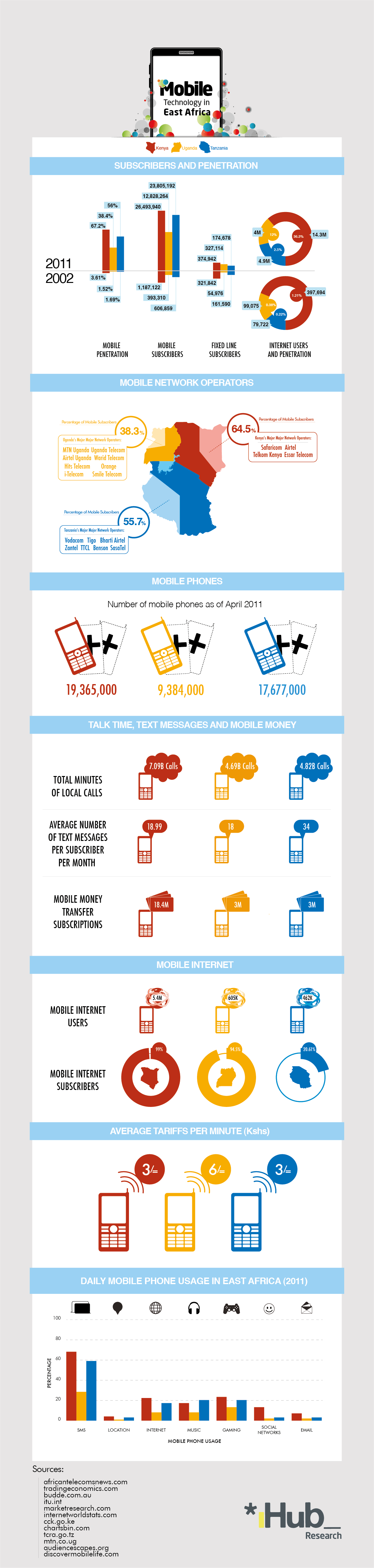
			<content:encoded><![CDATA[<p>The research team at the iHub put together some stats on mobile numbers in Kenya.  A special nod to Leo Mutuku for gathering it all from so many sources, and to Patrick Munyi for creating this cool visualization of it. Check out the <a href="http://www.ihub.co.ke/blog/2011/09/mobile-broadband-in-kenya/">iHub blog post</a> to read the rest.</p>
<p><a href="http://www.ihub.co.ke/blog/wp-content/uploads/2011/09/R@iHub-Infographic-Converted.png"><img src="http://whiteafrican.com/wp-content/uploads/2011/09/infographic-mobiles-in-kenya-500x354.png" alt="an infographic on mobile subscribers, penetration and internet in Kenya" title="an infographic on mobile subscribers, penetration and internet in Kenya" width="500" height="354" class="alignnone size-medium wp-image-4304" /></a></p>
<p>Look for more infographics on the other East African countries soon.</p>
]]></content:encoded>
			<wfw:commentRss>http://whiteafrican.com/2011/09/27/infographic-mobile-subscribers-penetration-internet/feed/</wfw:commentRss>
		<slash:comments>1</slash:comments>
		</item>
		<item>
		<title>MedAfrica Pitches at DEMO</title>
		<link>http://whiteafrican.com/2011/09/19/medafrica-pitches-at-demo/</link>
		<comments>http://whiteafrican.com/2011/09/19/medafrica-pitches-at-demo/#comments</comments>
		<pubDate>Mon, 19 Sep 2011 10:27:16 +0000</pubDate>
		<dc:creator>HASH</dc:creator>
				<category><![CDATA[Africa]]></category>
		<category><![CDATA[Conferences]]></category>
		<category><![CDATA[Mobile]]></category>
		<category><![CDATA[Web Stuff]]></category>
		<category><![CDATA[demo]]></category>
		<category><![CDATA[demo2011]]></category>
		<category><![CDATA[kenya]]></category>
		<category><![CDATA[medafrica]]></category>
		<category><![CDATA[pitch]]></category>
		<category><![CDATA[startups]]></category>
		<category><![CDATA[video]]></category>

		<guid isPermaLink="false">http://whiteafrican.com/?p=4280</guid>
		<description><![CDATA[Mbugua Njihia and Steve Mutinda were the overall winners at the Pivot 25 event earlier this year with their MedKenya app, which has since turned into MedAfrica. Their prize was a chance to pitch at DEMO, the big startup pitching event in Silicon Valley. Here&#8217;s their team last week giving the pitch. MedAfrica is just [...]]]></description>
			<content:encoded><![CDATA[<p>Mbugua Njihia and Steve Mutinda were the overall winners at the <a href="http://pivot25.com">Pivot 25</a> event earlier this year with their MedKenya app, which has since turned into <a href="http://www.medafrica.org/">MedAfrica</a>.  Their prize was a chance to pitch at <a href="http://demo.com">DEMO</a>, the big startup pitching event in Silicon Valley.  Here&#8217;s their team last week giving the pitch.</p>
<p><iframe width="500" height="284" src="http://www.youtube.com/embed/Ts6Gn-KQgnk" frameborder="0" allowfullscreen></iframe></p>
<p>MedAfrica is just the tip of the iceberg, as we see more startup spaces, pitching events and seed capital entering the continent.  </p>
]]></content:encoded>
			<wfw:commentRss>http://whiteafrican.com/2011/09/19/medafrica-pitches-at-demo/feed/</wfw:commentRss>
		<slash:comments>1</slash:comments>
		</item>
		<item>
		<title>IPO48 Nairobi Startup Finalists 2011</title>
		<link>http://whiteafrican.com/2011/08/14/ipo48-nairobi-startup-finalists-2011/</link>
		<comments>http://whiteafrican.com/2011/08/14/ipo48-nairobi-startup-finalists-2011/#comments</comments>
		<pubDate>Sun, 14 Aug 2011 17:13:48 +0000</pubDate>
		<dc:creator>HASH</dc:creator>
				<category><![CDATA[Conferences]]></category>
		<category><![CDATA[Mobile]]></category>
		<category><![CDATA[Web Stuff]]></category>
		<category><![CDATA[africa]]></category>
		<category><![CDATA[ihub]]></category>
		<category><![CDATA[ihubnairobi]]></category>
		<category><![CDATA[ip048 nairobi]]></category>
		<category><![CDATA[ipo48]]></category>
		<category><![CDATA[kenya]]></category>
		<category><![CDATA[startups]]></category>

		<guid isPermaLink="false">http://whiteafrican.com/?p=4217</guid>
		<description><![CDATA[I&#8217;m at the final pitches for the 2011 Nairobi IPO48 event that&#8217;s been happening non-stop over the last 2 days. This year it&#8217;s being held at the iHub, with 12 companies working through ideas, prototypes, business plans and finally an investment for the winner. In total, they&#8217;re offering: 25.000€ (3.3m Ksh) in funding after 48 [...]]]></description>
			<content:encoded><![CDATA[<p><a href="http://nairobi2011.ipo48.com/startups"><img src="http://whiteafrican.com/wp-content/uploads/2011/08/ipo48-2011-finalists-500x168.jpg" alt="" title="ipo48-2011-finalists" width="500" height="168" class="aligncenter size-medium wp-image-4218" /></a></p>
<p>I&#8217;m at the final pitches for the <a href="http://nairobi2011.ipo48.com/">2011 Nairobi IPO48</a> event that&#8217;s been happening non-stop over the last 2 days.  This year it&#8217;s being held at the iHub, with 12 companies working through ideas, prototypes, business plans and finally an investment for the winner.  In total, they&#8217;re offering:</p>
<ul>
<li>    25.000€ (3.3m Ksh) in funding after 48 hours</li>
<li>    Mentorship from serial entrepreneurs and professionals</li>
<li>    Great media exposure for your startup</li>
<li>    Find talented people that want to join your startup</li>
</ul>
<p>If you want a quick rundown of <a href="http://afrinnovator.com/blog/2011/08/14/ipo48-nairobi-update-12-startups-25000-at-stake-your-7400-to-invest-online/">who the 12 finalists are, and what their apps do</a>, check out Afrinnovator&#8217;s writeup.  You can also watch quick <a href="http://www.youtube.com/user/humanipo">1-minute videos</a> on each of them on YouTube.</p>
<p><strong>The 2011 Winner</strong>: <a href="http://www.tusqee.com/">Tusquee Systems</a> with their SchoolSMS app (which also won their category at Pivot25)!  </p>
<p>Runners Up <a href="http://lyrics.ghafla.co.ke/">Ghafla!</a> and 6ix Degrees will win an additional 15k Euro investment (more on <a href="http://afrinnovator.com/blog/2011/08/14/breaking-tusqee-systems-wins-e25000-at-ipo48-nairobi-runners-up-ghafla-and-6ix-degrees-win-investment/">Afrinnovator</a>).</p>
<h3>Kenya Startup Events</h3>
<p><a href="http://whiteafrican.com/wp-content/uploads/2011/08/tandaa-kenya-infographic.jpg"><img src="http://whiteafrican.com/wp-content/uploads/2011/08/tandaa-kenya-infographic-286x600.jpg" alt="" title="tandaa-kenya-infographic" width="286" height="600" class="alignright size-medium wp-image-4220" /></a><br />
It&#8217;s only 2 months since <a href="http://pivot25.com/">Pivot25</a> and now we&#8217;re on another startup event with Human IPO back in Nairobi for the second year.  The <a href="https://sites.google.com/a/ict.go.ke/tandaa/">Tandaa</a> $690k startup grants for techies have gone out to 15 companies. We didn&#8217;t have any of these events going on.  None. </p>
<p>This is important for a number of reasons:</p>
<ul>
<li>Kenyan entrepreneurs are getting experience in pitching their ideas.  </li>
<li>Techies are finding out the hard truths about themselves as business people, and that technology alone doesn&#8217;t make a business.</li>
<li>Local and international mentors are giving the entrepreneurs much needed insights and wisdom.</li>
<li>Investors and international media are being catered to, they&#8217;re getting a chance to see the Nairobi startup scene up close and personal.</li>
<li>Design is being taken a little more seriously (though a lot more needs to be done).</li>
<li>It brings an angel and early-stage investment mentality to Nairobi that hasn&#8217;t really existed before.</li>
</ul>
<p>In short, we need to continue with local startup competitions.  The more people who learn how to think through, build and pitch their ideas, the more likely we are to continue our upward growth in mobile and web innovation.  It&#8217;s only by a lot of practice, lessons learned and hard knocks that we&#8217;ll see more success stories.  </p>
<p>The finalists in these competitions represent a small percentage of the people who apply, but don&#8217;t make it.  It&#8217;s a pure numbers game, where we&#8217;ll see the 10-15% succeed and most fail.  Again, that&#8217;s okay, it&#8217;s how the startup game works.</p>
<p>We&#8217;re only half way up the mountain, and startup competitions are only part of the equation. There&#8217;s a lot more work to do if we want to see more success stories. Thus we need the whole technology community in East Africa to continue supporting the events and the people behind them, but also get involved in the startups themselves, whether for mentoring, business or investment.</p>
]]></content:encoded>
			<wfw:commentRss>http://whiteafrican.com/2011/08/14/ipo48-nairobi-startup-finalists-2011/feed/</wfw:commentRss>
		<slash:comments>5</slash:comments>
		</item>
		<item>
		<title>Africa&#8217;s First National Open Data Initiative: Kenya</title>
		<link>http://whiteafrican.com/2011/07/07/africas-first-national-open-data-initiative-kenya/</link>
		<comments>http://whiteafrican.com/2011/07/07/africas-first-national-open-data-initiative-kenya/#comments</comments>
		<pubDate>Thu, 07 Jul 2011 19:16:10 +0000</pubDate>
		<dc:creator>HASH</dc:creator>
				<category><![CDATA[Africa]]></category>
		<category><![CDATA[Strategy]]></category>
		<category><![CDATA[Web Stuff]]></category>
		<category><![CDATA[Web Tools]]></category>
		<category><![CDATA[africa]]></category>
		<category><![CDATA[information]]></category>
		<category><![CDATA[kenya]]></category>
		<category><![CDATA[open data]]></category>
		<category><![CDATA[public]]></category>

		<guid isPermaLink="false">http://whiteafrican.com/?p=4169</guid>
		<description><![CDATA[Today Kenya becomes the first country in Africa to launch a national open data initiative. There have been many people pushing for this, over many months, and it&#8217;s been an exciting process to watch unfold. Foremost amongst the drivers on this has been Dr. Bitange Ndemo, the Permanent Secretary of Information and Communications. This is [...]]]></description>
			<content:encoded><![CDATA[<p><a href="https://opendata.go.ke"><img src="http://whiteafrican.com/wp-content/uploads/2011/07/b.png" alt="" title="The Kenya Open Data Initiative" width="261" height="148" class="alignright size-full wp-image-4170" /></a>Today <a href="https://opendata.go.ke">Kenya</a> becomes the first country in Africa to launch a national open data initiative.  There have been many people pushing for this, over many months, and it&#8217;s been an exciting process to watch unfold.  Foremost amongst the drivers on this has been <a href="http://twitter.com/bantigito">Dr. Bitange Ndemo</a>, the Permanent Secretary of Information and Communications.  This is indeed a very proud moment for Kenya, and a leading position to take on the continent.</p>
<p>The Kenya Open Data Initiative (KODI) goes live this morning in a big event that includes President Kibaki, as well as many politicians, government officials and local technologists.  The World Bank, who has been instrumental in organizing and helping publish the data is here as well, along with Google, Ushahidi, the iHub community and a large selection of youth.</p>
<h3>Data Sets</h3>
<p>The data is available online through the <a href="http://www.socrata.com/">Socrata</a> platform, which allows users to view different data at national, county and constituency levels.  They can compare different data sets, create maps and other visualizations.</p>
<p>Data sets are categorized into 6 main categories: Education, Energy, Health, Population, Poverty and Water &#038; Sanitation.  It includes data from the national census, the ministry of education, ministry of health, CDF projects and many more.  </p>
<p>Here&#8217;s an example of that data, &#8220;county expenditures by administration&#8221;:</p>
<p><img src="http://whiteafrican.com/wp-content/uploads/2011/07/County-Expenditures-by-Administration-2002-3-to-2008-9-Open-Kenya-Transparent-Africa_1310029975706-500x258.png" alt="" title="County Expenditures by Administration 2002-3 to 2008-9 | Open Kenya | Transparent Africa_1310029975706" width="500" height="258" class="alignnone size-medium wp-image-4172" /></p>
<h3>Mashing up the Data</h3>
<p>This all came together rather quickly, starting about 3 weeks ago.  The tech community was immediately reached out to, and as the data sets have come online over the last week, we&#8217;ve had access to them early in order to show what can be done.  Here&#8217;s a few samples of that.</p>
<p>The Ushahidi team is taking the census data and overlaying healthcare institution data on top of it into our <a href="http://huduma.ushahidi.com/index.php/opendata">Huduma</a> site.  It&#8217;s still very beta, but it shows what can be done in just a few days.</p>
<p><a href="http://huduma.ushahidi.com/index.php/opendata"><img src="http://whiteafrican.com/wp-content/uploads/2011/07/Huduma_health-centre-heatmap-374x600.png" alt="" title="Huduma_health-centre-heatmap" width="374" height="600" class="alignnone size-medium wp-image-4173" /></a></p>
<p>We&#8217;ve also built a simple SMS query tool.  If you&#8217;re in Kenya, send an <strong>SMS to 3018</strong> with the name of your county or constituency and you&#8217;ll get back an SMS with the demographics and MP of that location. </p>
<p>The Virtual Kenya team has built an app that shows which MPs refuse to pay taxes.</p>
<p><a href="http://virtualkenya.org/community-blog/459-interesting-mashups-kenyan-mps-taxes"><img src="http://whiteafrican.com/wp-content/uploads/2011/07/c-500x518.png" alt="" title="MPs in Kenya who will and won't pay taxes on a map" width="500" height="518" class="alignnone size-medium wp-image-4174" /></a></p>
<p>The iHub community has done some things around tracking CDF fund usage in the constituencies.  There&#8217;s a mobile app called &#8220;Msema Kweli&#8221; that allows you to find CDF projects near you, and for you to add pictures of them.</p>
<p><a href="http://whiteafrican.com/wp-content/uploads/2011/07/20110707-101417.jpg"><img src="http://whiteafrican.com/wp-content/uploads/2011/07/20110707-101417.jpg" alt="20110707-101417.jpg" class="alignnone size-full" /></a></p>
<p><a href="http://whiteafrican.com/wp-content/uploads/2011/07/20110707-102136.jpg"><img src="http://whiteafrican.com/wp-content/uploads/2011/07/20110707-102136.jpg" alt="20110707-102136.jpg" class="alignnone size-full" /></a></p>
]]></content:encoded>
			<wfw:commentRss>http://whiteafrican.com/2011/07/07/africas-first-national-open-data-initiative-kenya/feed/</wfw:commentRss>
		<slash:comments>51</slash:comments>
		</item>
		<item>
		<title>Mobile Web Content in East Africa [Report]</title>
		<link>http://whiteafrican.com/2011/05/22/mobile-web-content-in-east-africa-report/</link>
		<comments>http://whiteafrican.com/2011/05/22/mobile-web-content-in-east-africa-report/#comments</comments>
		<pubDate>Sun, 22 May 2011 10:26:34 +0000</pubDate>
		<dc:creator>HASH</dc:creator>
				<category><![CDATA[Africa]]></category>
		<category><![CDATA[Business]]></category>
		<category><![CDATA[Mobile]]></category>
		<category><![CDATA[Web Stuff]]></category>
		<category><![CDATA[broadband]]></category>
		<category><![CDATA[east africa]]></category>
		<category><![CDATA[kenya]]></category>
		<category><![CDATA[mobile web]]></category>
		<category><![CDATA[paper]]></category>
		<category><![CDATA[report]]></category>
		<category><![CDATA[tanzania]]></category>
		<category><![CDATA[uganda]]></category>
		<category><![CDATA[vodafone]]></category>
		<category><![CDATA[web]]></category>

		<guid isPermaLink="false">http://whiteafrican.com/?p=4105</guid>
		<description><![CDATA[Vodafone recently concluded a policy paper on &#8220;Broadband in Emerging Markets&#8221;, also titled &#8220;Making Broadband Accessible for All&#8220;. The position and reason for this paper is best summarized below. &#8220;The success story of mobiles in the developing world is well known. Yet in the case of extending data services in emerging markets, there is a [...]]]></description>
			<content:encoded><![CDATA[<p>Vodafone recently concluded a policy paper on &#8220;Broadband in Emerging Markets&#8221;, also titled &#8220;<a href="http://www.vodafone.com/content/index/about/about_us/policy/policy_papers/simreport_broadband.html">Making Broadband Accessible for All</a>&#8220;.  </p>
<p><a href="http://whiteafrican.com/wp-content/uploads/2011/05/5.png"><img src="http://whiteafrican.com/wp-content/uploads/2011/05/5-500x248.png" alt="" title="Internet Subscriptions in Sub Saharan Africa by access network" width="500" height="248" class="alignnone size-medium wp-image-4110" /></a></p>
<p>The position and reason for this paper is best summarized below.</p>
<blockquote><p>&#8220;The success story of mobiles in the developing world is well known. Yet in the case of extending data services in emerging markets, there is a real danger of some serious policy mistakes.  As in developed markets, broadband strategies in developing countries have tended to focus on investment in fibre. This is too simplistic.  This focus on fibre may miss an opportunity for a transformational change built on the capabilities and in particular accessibility of mobile broadband. The early evidence suggests that mobile internet is spreading as quickly, in some developing countries, as mobile telephony did originally.&#8221;</p></blockquote>
<p>Traditional definitions of broadband have a narrow focus on bandwidth and speed. This paper uses a wider definition, as broadband policy needs to consider the entire ‘eco-system’ of internet and data services from both a <strong>demand</strong> and <strong>supply-side</strong> perspective. </p>
<h3>Content Sections</h3>
<ul>
<li>Mobile Internet usage and demand in Kenya: The experience of early adopters (David Souter)</li>
<li>The potential of mobile web content in East Africa (Erik Hersman)</li>
<li>Spectrum policy and competition in mobile services	(Thomas W. Hazlett)</li>
<li>Rethinking mobile regulation for the data age (Martin Cave &#038; Windfred Mfuh)</li>
<li>Building next generation bradband networks in emerging markets (Luk van Hooft)</li>
</ul>
<h3>The Diffusion of the Mobile Web Across East Africa</h3>
<p>Mobile web content is growing at an astounding rate.   It rose 2.6-fold in 2010, nearly tripling for the third year in a row. Official Kenyan industry statistics show that mobile internet subscribers will grow by approximately 843% for the 12 months to September 2011.  </p>
<p>What I like about papers like this is that I get to use words that normal people don&#8217;t use.  I make a case for international content and platforms as &#8220;drivers of diffusion&#8221; of data across East Africa.  That simply means that these platforms and content are helping to spread the use of data more deeply into the region, and allowing local players to get in at lower costs.</p>
<p><img src="http://whiteafrican.com/wp-content/uploads/2011/05/8.png" alt="" title="Top 10 Websites from Safaricom Kenya" width="328" height="324" class="alignright size-full wp-image-4109" />International web content is by far the most widely available and used in East Africa. This is in large part due to the ease of finding and disseminating this content, as well as its normalized licensing schemes and reliability. International platforms also carry a majority of the content that is currently being viewed on mobile phones. The following are the types of content that are most important to consumers in East Africa, according to our interviewees:</p>
<ol>
<li>International entertainment news (sports, gossip, lifestyle) </li>
<li>Local news </li>
<li>Breaking news </li>
<li>Facebook (and to a lesser extent other social network tools such as Mig33, Mxit and Twitter) </li>
<li>Jobs</li>
<li>Dating (chat and relationships) </li>
<li>Religion </li>
<li>Local video/media</li>
</ol>
<p>The reasons are that international platforms, such as Facebook, Yahoo!, BBC, CNN, Google and Wikipedia, have already been tailored to work on the most widely used data- enabled handsets. This contrasts with local content providers, many of whom have yet to tailor their websites for mobile access. In addition, local content less available at present, not as easy to license, and often cannot be reliably guaranteed as a long-term source.</p>
<h3>Local Content</h3>
<p>I interviewed a number of executives from Kenya, Uganda and Tanzania.  There was a clear belief that while international content, increasingly localized for the market, is currently king, local content has the greatest growth potential because it is more highly valued by consumers.</p>
<p>While local content developers lack scale they have advantages that the global platforms do not. For one, they understand the local tastes and culture so customers value their content more. The consumer benefits of truly local content and platforms could be large. </p>
<h3>The Government Role</h3>
<p>There is still a lack of concrete government policies for government services or content to be made available or accessible via the mobile in any country in East Africa, even though this is the primary channel by which citizens could access services online.  There is a solid case to be made for mGovernment, instead of just eGovernment.</p>
<p>To underline this, the most popular Kenyan Government website (Kenyan Revenue Authority) is shown as seen on a PC screen, a smartphone (HTC Desire) and a typical 2G internet enabled handset (Vodafone 350).  The website is most clear and easily accessible via a PC interface (and consumer interaction primarily is through downloadable pdf files). There are no browsing problems when accessing through a PC-based browser. The KRA website is also accessible via the native Android browser in the HTC Desire Smartphone. The HTC Desire also allows downloading and viewing of pdf files. However, the native browser on the Vodafone 350 (a basic 2G EDGE handset) does not present the KRA website in a usable format. As can be seen, the website is badly rendered and quite impossible to navigate.</p>
<p><img src="http://whiteafrican.com/wp-content/uploads/2011/05/6.png" alt="" title="KRA website on mobile phones" width="420" height="578" class="aligncenter size-full wp-image-4108" /></p>
<p>Possible government services to be made available via mobile web:</p>
<ul>
<li>Paying bills </li>
<li>Service delivery questions and concerns </li>
<li>Taxes – access, information and filing </li>
<li>Health – access or appointments, information </li>
<li>Public job search</li>
</ul>
<p>An argument can be made that m-government services would have a greater impact if the focus were on supplying tools for small businesses to interact with government, rather than only making services available for citizens in general. By removing the barriers to entry for small businesses, the government would be providing a service that increased usage, decreased business costs and had a potential tax revenue increasing effect due to filing and paying on time.</p>
<h3>Summary</h3>
<p>East Africans are accessing the web primarily through their mobile phones. The new medium is enticing them online with the new services and content provided through a new medium. Broadband penetration rates are low enough in this region that we are not yet seeing the displacement of newspapers, radio and TV seen in other, more connected regions of the world. However, as with all network technologies, there is the potential for reaching a tipping point. This will depend on the provision of enough mobile web content that is valued by East African consumers.</p>
<p>The content driving East African users online is currently largely provided by international news and content sources, such as Yahoo! and the BBC, and also by global internet platforms, such as Facebook and Google’s Gmail. Even taking into account the decreasing data costs, falling data-enabled handset costs, and the increased availability of broadband, there would not be enough traction locally to get to the critical point if the content were not available.</p>
<p>These international content sources and global web platforms generate demand, and therefore allow the mobile network operators to decrease costs as more users come online. International content is thus providing a pathway for local content creators. While local content is in high demand and there is a rapidly increasing user base, the mobile web content space in East Africa is in its early stages, and there are no<br />
clear leading content providers. At present the key trend is the provision of increasingly localized content by the leading global companies.</p>
<p>This paper has identified two important barriers to the further diffusion of mobile internet usage across East Africa: lack of m-government policies; and, more important, an absence of charging mechanisms which share the cost of mobile internet access between end-users and content providers. If governments embraced mobile-based provision of services and provided access free of usage charges to end-users (sharing the efficiency gains through payments to network operators), the potential impact on internet access could be dramatic. The challenge for governments and local developers of mobile web content is to utilize their local cultural understanding and ability to maneuver quickly to make their content more relevant and affordable to end-users.</p>
<p>(<strong>Note</strong>: This is summary of my section. <a href="http://www.vodafone.com/content/index/about/about_us/policy/policy_papers/simreport_broadband.html">Download the full 2Mb PDF report</a> to read the section in its entirety, and to read the other 4 sections of the paper.)</p>
]]></content:encoded>
			<wfw:commentRss>http://whiteafrican.com/2011/05/22/mobile-web-content-in-east-africa-report/feed/</wfw:commentRss>
		<slash:comments>9</slash:comments>
		</item>
		<item>
		<title>The Google Global Cache hits Kenya</title>
		<link>http://whiteafrican.com/2011/04/13/the-google-global-cache-hits-kenya/</link>
		<comments>http://whiteafrican.com/2011/04/13/the-google-global-cache-hits-kenya/#comments</comments>
		<pubDate>Wed, 13 Apr 2011 07:51:15 +0000</pubDate>
		<dc:creator>HASH</dc:creator>
				<category><![CDATA[Africa]]></category>
		<category><![CDATA[Business]]></category>
		<category><![CDATA[Web Stuff]]></category>
		<category><![CDATA[africa online]]></category>
		<category><![CDATA[ggc]]></category>
		<category><![CDATA[google global cache]]></category>
		<category><![CDATA[internet]]></category>
		<category><![CDATA[internet solutions]]></category>
		<category><![CDATA[isps]]></category>
		<category><![CDATA[kdn]]></category>
		<category><![CDATA[kenya]]></category>
		<category><![CDATA[kixp]]></category>
		<category><![CDATA[wananchi]]></category>

		<guid isPermaLink="false">http://whiteafrican.com/?p=4073</guid>
		<description><![CDATA[In January I wrote about the way the Google Global Cache is affecting Uganda &#8211; how local web caching is completely changing the internet user experience for that country. We&#8217;ve known for a couple weeks that this was underway in Kenya too. Well, here are some numbers on that. Here&#8217;s the aggregate month: We&#8217;re seeing [...]]]></description>
			<content:encoded><![CDATA[<p>In January I wrote about the way the <a href="http://whiteafrican.com/2011/01/17/local-web-cache-lessons-uganda/">Google Global Cache is affecting Uganda</a> &#8211; how local web caching is completely changing the internet user experience for that country.  We&#8217;ve known for a couple weeks that this was underway in Kenya too.  Well, here are some numbers on that.</p>
<p><strong>Here&#8217;s the aggregate month:</strong><br />
<img src="http://whiteafrican.com/wp-content/uploads/2011/04/aggregate-month1.png" alt="" title="Google Global Cache Kenya - first month aggregate graph" width="500" height="135" class="alignnone size-full wp-image-4079" /></p>
<p>We&#8217;re seeing the overall traffic increase 300% from around 100Mbs to around 400Mbs.  Those are some pretty impressive numbers, no matter how you look at them.  Why is KIXP/TESPOK not making some noise about this significant achievement?</p>
<p>How does it look across the ISPs that are using it?</p>
<p>KDN hosts the cache:<br />
<img src="http://whiteafrican.com/wp-content/uploads/2011/04/kdn.png" alt="" title="KDN Kenya - Google Global Cache" width="500" height="135" class="alignnone size-full wp-image-4077" /></p>
<p>Wananchi:<br />
<img src="http://whiteafrican.com/wp-content/uploads/2011/04/wananchi.png" alt="" title="wananchi - Google Global Cache" width="500" height="135" class="alignnone size-full wp-image-4078" /></p>
<p>Internet Solutions:<br />
<img src="http://whiteafrican.com/wp-content/uploads/2011/04/IS.png" alt="" title="IS - Google Global Cache" width="500" height="135" class="alignnone size-full wp-image-4076" /></p>
<p>Africa Online:<br />
<img src="http://whiteafrican.com/wp-content/uploads/2011/04/africa-online.png" alt="" title="Africa Online - Google Global Cache" width="500" height="135" class="alignnone size-full wp-image-4074" /></p>
]]></content:encoded>
			<wfw:commentRss>http://whiteafrican.com/2011/04/13/the-google-global-cache-hits-kenya/feed/</wfw:commentRss>
		<slash:comments>4</slash:comments>
		</item>
		<item>
		<title>At the Best of Blogs as a Jury Member</title>
		<link>http://whiteafrican.com/2011/04/12/at-the-best-of-blogs-as-a-jury-member/</link>
		<comments>http://whiteafrican.com/2011/04/12/at-the-best-of-blogs-as-a-jury-member/#comments</comments>
		<pubDate>Tue, 12 Apr 2011 13:44:45 +0000</pubDate>
		<dc:creator>HASH</dc:creator>
				<category><![CDATA[Conferences]]></category>
		<category><![CDATA[Web Stuff]]></category>
		<category><![CDATA[africa]]></category>
		<category><![CDATA[african]]></category>
		<category><![CDATA[best blog]]></category>
		<category><![CDATA[bloggers]]></category>
		<category><![CDATA[blogs]]></category>
		<category><![CDATA[deutsche welle]]></category>
		<category><![CDATA[Egypt]]></category>
		<category><![CDATA[germany]]></category>
		<category><![CDATA[the bobs]]></category>
		<category><![CDATA[TheBoBs]]></category>
		<category><![CDATA[tunisia]]></category>

		<guid isPermaLink="false">http://whiteafrican.com/?p=4068</guid>
		<description><![CDATA[I&#8217;m in Bonn, Germany as the English speaking judge for Deutsche Welle&#8217;s &#8220;Best of Blogs&#8221; awards (aka The BoBs). There are 11 judges, each representing different languages, and we each get to present one blog for each main category and each get one vote for the winner. Being the English judge is actually quite challenging, [...]]]></description>
			<content:encoded><![CDATA[<p>I&#8217;m in Bonn, Germany as the English speaking judge for Deutsche Welle&#8217;s &#8220;<a href="http://thebobs.com">Best of Blogs</a>&#8221; awards (aka The BoBs).  There are <a href="http://thebobs.dw-world.de/en/2011/02/19/jury-2011-2/">11 judges</a>, each representing different languages, and we each get to present one blog for each main category and each get one vote for the winner.  Being the English judge is actually quite challenging, where many of the language judges need only focus on a single region, I have to contend with the fact that there are English blogs all over the world, so many that I can&#8217;t know all of them.  </p>
<h3>House Help and Human Rights</h3>
<p>Blogs give voice &#8211; they lower the barriers, allowing stories to surface that would otherwise not be seen or heard.  </p>
<p>The first vote today is for a Special Award on Human Rights.  It&#8217;s a sobering start to the morning, going through blogs where people are doing courageous writing, shining a light on atrocities from Mexico to Germany to China.  My nomination was for the blog <a href="http://www.migrant-rights.org/">Migrant Rights in the Middle East</a>. It&#8217;s a blog put together by Mideast Youth, led by <a href="http://eburnietoday.mondoblog.org/">Senior TED Fellow Esra&#8217;a al Shafei</a> out of Bahrain &#8211; a true grassroots effort.</p>
<p><a href="http://www.migrant-rights.org/"><img src="http://whiteafrican.com/wp-content/uploads/2011/04/Migrant-Rights-header-500x127.png" alt="" title="Migrant-Rights-header" width="500" height="127" class="alignnone size-medium wp-image-4067" /></a></p>
<p>One of the top contenders in this category is the Chinese blogger <a href="http://tengbiao2.blog.163.com/">Teng Biao&#8217;s blog</a>,  a prominent human rights lawyer, writer and professor from Beijing.  He was arrested this February dung the first day of China&#8217;s Jasmine Protests.  </p>
<p>Migrant Rights won the award.  I think this is largely due to the fact that what the team at Mideast Youth is doing hits on a subject that is so rarely spoken of.   There are millions of house help and casual laborers that work in homes throughout the middle east, they come from all over the world and they lack a voice.  Their stories get picked up from time-to-time in mainstream media, but there&#8217;s a need to follow this all the time (with resources and a database of activities), across the whole region and that&#8217;s where Migrant Rights fits in.</p>
<blockquote><p>
Expatriate workers are a crucial part of the fabric of Gulf society and economy, where they make up to 80% of the population in some states…  </p>
<p>Whether we are a Qatari citizen who has grown up with a team of domestic staff at home, a Saudi woman who relies on her Pakistani driver to go to visit her girlfriends, or a western expat who benefits from a Filipino cleaning lady and works in a smart, modern office tower that was build from the back-breaking work of Nepalis, Indian, Pakistanis and Bangladeshis, we all owe these individuals a debt of gratitude. Yet instead these individuals are undervalued, ignored, exploited and denied their most basic human rights. This is modern day slavery.
</p></blockquote>
<p>Congratulations to Esra&#8217;a and her team for providing a voice to the often voiceless.</p>
<h3>Other Jury Winners</h3>
<ul>
<li><a href="http://atunisiangirl.blogspot.com">A Tunisian Girl</a> (French language) for <strong>Best Blog</strong></li>
<li><a href="http://youtube.com/user/standswithfist60">Stands with Fist</a> (Persian language) for <strong>Best Video Channel</strong></li>
<li><a href="http://rospil.info">Rospil</a> (Russian language) for <strong>Best Use of Technology for Social Good</strong></li>
<li><a href="http://www.facebook.com/ElShaheeed">We Are Khaled Said</a> (Arabic language) for <strong>Best Social Activism Campaign</strong> &#8211; the first time a Facebook group has won</li>
<li><a href="http://juarezenlasombra.blogspot.com">Ciudad Juarez, en la sombra del narcotrafico</a> (Spanish language) for the <strong>Reporters Without Borders Award</strong></li>
</ul>
<p>I was also in charge of the <a href="http://thebobs.dw-world.de/en/nominations/?cat=16">Best Blogs in English</a> category, and I&#8217;m very happy to announce that the winner is <a href="http://www.sandmonkey.org/">Sandmonkey</a>!</p>
<p>(Note: For those counting, 3 of the 6 jury winners are from North <strong>Africa</strong> and the English winner is also from the continent.  All for good reasons of course, the activity in this space has been amazing since just January.  Now it&#8217;s time for sub-Saharan African bloggers to up their game.  Part of that means nominating the really amazing bloggers who are doing incredible work in your region. )   </p>
]]></content:encoded>
			<wfw:commentRss>http://whiteafrican.com/2011/04/12/at-the-best-of-blogs-as-a-jury-member/feed/</wfw:commentRss>
		<slash:comments>0</slash:comments>
		</item>
	</channel>
</rss>