From the category archives:

Web Stuff

Microblogging, Location and Emergencies

by HASH on December 23, 2008

I’ve been using Twitter for a while now, and have thought quite a bit about it in Africa. More, I’ve thought about what the ramifications of Twitter pulling out of the global market means, and then thought quite a bit about Jaiku, Laconica and Mxit and various other chat/microblogging applications. There is, without a doubt, a move towards short-form updating via mobile and web, and it needs to be federated.

There’s something missing in this new mobile + web microblogging movement, and I think it’s location.

Thoughts on location and microblogging...

Why Location Matters

Most of us use these services for updating, and being updated, by our friends and interesting people. That’s the main use, and it will remain so. The truth is, you and I don’t really care to hear what any random stranger is doing, even if they are nearby. However, we do care what is happening on a very hyper-local level in the case of emergency or “big event”.

It’s somewhat like the “pothole theory” that I talked about earlier: you wouldn’t normally care about the pothole on a steet, unless it’s yours. It helps explain why we care about certain things.

If you use Twitter and have an iPhone, you’ll probably be aware of Twinkle - it’s an application that enriches your Twitter experience. In Twinkle, you can set your location and then a certain radius from which to receive twitter updates, even if they’re from perfect strangers. I think that’s the beginning of what we’re talking about.

However, again… I don’t want to just get updates from random strangers in my locale. I want to only receive the ones that are “important” to me. I want to be notified when there is an emergency, major traffic jam or something else pertinent to me.

The “What if…”

What if we created a way that a greater federated system of microblogging applications could also use location as an alert point?

Of course, my current world is colored by Ushahidi, crisis and emergency news coverage. I think of the ability to anonymously send in reports to a system like Ushahidi running in any country, and those who are part of this greater, extended and federated network would be updated - even if that person was unknown and anonymous.

Federated Microblogging, SMS and Location

Here’s a use case:

John is a Twitter user in Accra, Ghana. Anne has setup a local Laconica server with 5000 users in the greater Accra area. Eddie is not part of any of these networks, just an average guy with a mobile phone. Ushahidi is running in Ghana.

Users from the Laconica group can setup an “alert” for a specific radius from their location using Ushahidi, linked to their Laconica account.

An earthquake happens and Twitter and the Laconica server are ablaze with dialogue about what is happening. Eddie (our normal guy), sends an alert into the Ushahidi number, along with hundreds of other Ghanians who are not part of Laconica or Twitter. Anne, and the other Laconica users are receiving alerts (web and mobile) from within their set alert radius automatically, from completely anonymous people. Alerts on where people are trapped, who is missing, who is found, where not to go, and where help is needed most.

John, our Twitter user is updating Twitter, but it has no little local implications due to not being able to be used in Ghana (except via web). Local mobile users aren’t receiving his updates, and he isn’t receiving theirs.

I recognize that there are a lot of things going on in this scenario, and it’s imperfect, but it serves as a good setting to discuss some of the shortcomings of the current situation and the possible growth areas for them. It also talks to even bigger ideas and the greater impact in Africa of a real social mobile network that can connect people using only mobile phones and do it as needed.

There are some interesting things to learn and apply from location-specific alternatives to global SMS gateways (like FrontlineSMS), and I wonder where tools such as InSTEDD’s SMS GeoChat can be used here too.

More to come on “getting updates that matter” later, this is just some initial thinking on it. I’d love to hear your thoughts too.

{ 13 comments }

Aiming at an African Classifieds Marketplace

by HASH on December 13, 2008

There have been a number of plays on the free classifieds space in Africa over the years. Most seem to fizzle out, either due to not having enough revenue to continue, or their owners losing interest before the site grows. It seems like a play in the same space as Craigslist and Kijiji (Gumtree in SA) should work well. After all, you don’t need to digitally handle the transaction, that takes place offline.

I’ve been keeping my eye on one that might have some potential though: Kerawa. They explain it as, “an online tool promoting offline transactions.”

Kerawa homepage

Kerawa started just this year, from a small team of guys in Cameroun. They report having listings in 42 countries, but some are limited to just a couple. What’s more impressive is seeing how lively it is in Cameroun, Morocco, Ghana and South Africa, their top 4 countries. What a spread! That means they’re doing decently well in all but East Africa.

Some thoughts on Kerawa

Mobile Phones
I remain convinced that services like Kerawa will not become mainstream in Africa until they build the application in such a way as to allow mobile users to really take part. This seems obvious to me, so I’m not sure why they haven’t created a downloadable J2ME application for this at the least. Maybe they could create a way for people to access it via SMS, or at least pay for alerts on certain items (like jobs).

Growth
Kerawa posted their analytics for the year thus far. It is trending up, which is a good sign. What’s more important is numbers on classified listings, as once you get a decent amount of both buyers and sellers, then you’ve achieved critical mass and become “the” place to go. No one wants to go to the 2nd best market in town (just ask eBay’s and Craigslist’s competitors).

Kerawa Statistics

{ 11 comments }

Rugged, solar powered VSAT broadband in rural communities

by HASH on December 6, 2008

I just sat down next to Raphael Marambii, who happens to be the innovations and knowledge management specialist for a small local NGO called ALIN (arid lands information network), at a cyber cafe in Nairobi. As happens in Africa, you get into conversations, and I found out that they have been connecting rural communities via community knowledge centers (sort of rural cybercafes cum libraries / training centers) running solar powered VSAT dishes.

Solar powered VSAT broadband for communities in Kenya

They have deployed a unique prototype solar powered VSAT base station terminal at two of ALIN’s Community knowledge centers, at Marigat and Nguruman, Kenya. The base station is self contained and toughened for remote African rural conditions and requires little expertise to deploy. It’s part of the University of Michigan’s Imagine Africa project.

The question is, “why is this NGO plunking down remote satellite connections in rural Africa?” I asked Raphael just that question, and he tells me that it’s because they strongly believe that information and access to knowledge is what is needed most in these communities. They are trying to get the youth within these rural communities to embrace some of the new social media tools too, like blogging and podcasting.

From what I understand this is a pilot, testing out what happens when a new form of information is freely available within marginalized or disconnected rural communities. Raphael and team have ideas on seeing this become embedded in the community - ranging from helping with eCommerce, to creating new local content, to live video language services available over the connection.

There are two reasons I like this project. First, because it’s being driven by a local NGO, so it has some hopes of making it after the big donors leave. Second, the team is truly trying to think different - they make no bones about how their ways to connect the community to the rest of the world in mutually beneficial ways isn’t “normal”.

The true test however will be found after their 6 months of funding is gone. It costs about 26,000 Shillings ($320) to run one of these each month. Let’s see where this project, and more importantly, the communities are in one year.

{ 8 comments }

ZuQka: Social Networking and News in Kenya

by HASH on December 5, 2008

zuQka in the newspaper

My first day back in Nairobi after a couple months, and I see some new website being heavily promoted in my Daily Nation newspaper. In fact, it’s got a full 16-page mini newspaper all about it. It’s called zuQka, and it tells me that I’ll “be famous” if only I register. I pop over to the site, but I’ve got 1hr 15min 11sec before it goes live.

Wondering what this is all about, I start to dig around trying to find out who is behind it. Low and behold, after a quick Whois search, I find out it’s none other than Kahenya Kamunyu. A local tech VC and entrepreneur, head of Virn.net and who I interviewed at Barcamp Nairobi this summer. He’s an outspoken advocate for African-born and built technology developments, and it looks like he’s putting his money where his mouth is. Now I know what he’s been hinting at on Twitter for the past couple weeks…

So, what is zuQka?

From what I can tell, it’s a portal site for weekend entertainment around Nairobi, but with a social networking component as well (video, audio and blogs). It’s a cross-medium service too, marrying newspaper with the web. Honestly, I learned more in those 16 pages about stars like Angela Angwenyi, Amani and Daniel Ndambuki than I would have thought. Besides entertainment stars, it has coverage of auto, gadgets, pubs and the weekend calendar.

I kind of wonder what I’ll find once the site opens up. I also wonder what Kahenya has to say about it…

[Update: I was able to talk to Kahenya and they've had some server issues, making the launch a little sketchy. Like any new big website, this is understandable, check back in 2 weeks would be my suggestion.]

Site is live

(as you might be able to tell, I’m blogging this in a stream over a couple hours).

I haven’t been able to get in touch with Kahenya yet, likely because he’s busy trying to get this site live and all the kinks worked out. The site is live now though, with a couple minor errors. Like any newly hatched web service, things are a little slow and since it’s a user-generated content site, there’s not much content yet. This should change with time.

The zuQka dashboard

Overall I like the dashboard. The techie in me really likes that they used the Simile timeline for the calendar, makes a lot of sense. The profile page is extensive and there seems to be a lot of options to add content on the site. My plan is to come back later when it loads faster and I can see it with more users.

{ 33 comments }

Wikiforêts: Knowledge Base for African Forests

by HASH on December 2, 2008

Just this week I came across a great example of using technology to harness and save local African knowledge and content. It’s called Wikiforêts, and it’s a living dictionary and encyclopedia, bringing together French speaking Africans who can share their knowledge of the indigenous forests in West and Central Africa.

Wikiforêts: Knowledge Base for African Forests

The homepage looks promising, especially after I run it through a translator, since I don’t speak French. It looks like there is information on everything from tree species, to pygmies to animals found in the Congo Basin. That could be a great wealth of knowledge, especially if it’s coming from the locals.

However, I’ve found the site has a lot of dead links, with areas that need someone to fill in some (any) information. That’s too bad really, as this is a really good example of how we can use technology to keep some of Africa’s indigenous knowledge alive.

What I’d love to see is sites like this getting even more traction and contributors.

Another lesson… there is an invisible language curtain that splits Francophone, Anglophone and Arabic-speaking Africa. What other types of work are being duplicated, or where are they not being contributed to, because of this barrier?

{ 4 comments }

10 Great Reads Around Africa

by HASH on November 24, 2008

Nigerian Banking Survey

Jeremy has a quick rundown of some numbers, such as:

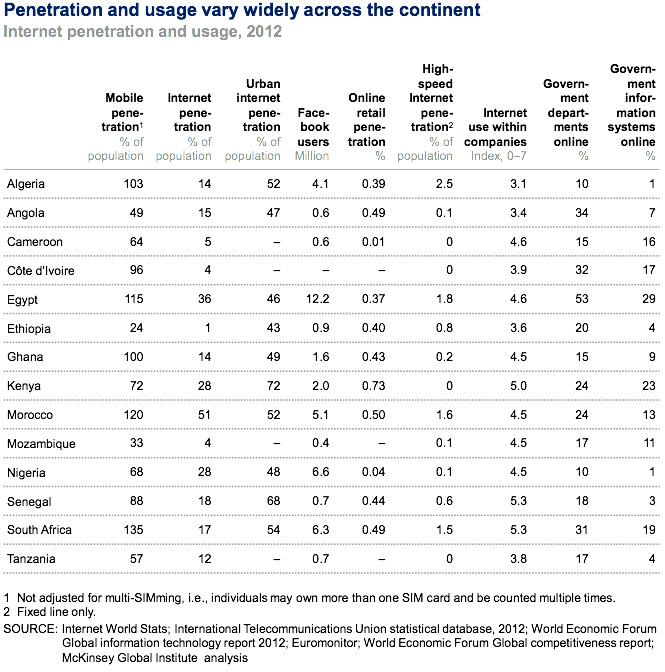
“53% of Nigerian adults have access to a mobile phone, yet 74% of the adult population has never been banked”

(Full report: 7.3Mb PDF)

Vodacom South Africa’s Mobikasi

Vincent breaks out with his first new tech release since moving to Vodacom, it’s a location-based mobile phone accessible documentary on Soweto in South Africa.

“The location-based documentary looks at people, music, fashion, social issues and places of interest. Instead of showing the twenty-five minute documentary in a linear fashion from start to finish, Mobikasi splits the content up into twenty-five inserts of one minute each.”

Nominating Peace Heroes in Kenya

Unsung Peace Heroes in Kenya

The Ushahidi Engine is being used to run a new non-disaster related site called Peace Heroes, which hopes to highlight ordinary Kenyans who did extraordinary things to promote peace during and after the post-election crisis earlier this year.

Thoughts on a web cloud for Africa

“While all the pieces had been floating around in my head for a while I am just now understanding that we really need to drag very little out to Africa for them to have incredibly powerful technology in the palm of their hand (and that such thinking is inherently poisonous) and that we are better off attempting to facilitate the connection of their handsets to The Cloud in order to assist with effecting positive social change.”

O3b’s first internet package

The O3b Network is offering it’s first bundle. “Quick Start Africa” is a, Carrier Managed Service designed for Telcos and ISPs on the African continent who need a high capacity, ultra low latency, carrier class IP trunking solution.

“Life is Hard”

Niti Bhan talked about this at the Better World by Design conference. Breaking down why life is so difficult for the poorest people in the world and what can be done when trying to address these issues.

Facebook Garage in Uganda

Jon Gosier of Appfrica.net is heading up a Facebook Garage in Kampala on December 13. It’s a great chance for programmers to get out and get comfortable with the Facebook platform, and also to meet some of the devs. Get more info at the Facebook event page, and the Appfrica wiki.

Mobile finance - indigenous, ingenious, or both?

A must-read post by Ken Banks. “It’s not that people don’t understand banking concepts, it’s just that for them things go by a different name.”

A GPS in every SIM card

Talk about a game changer:

“…a highly accurate GPS receiver and an antenna into the SIM card, enabling network providers to deploy both legally-mandated and commercial applications for all mobile phones, with no need for software or hardware changes.”

Uganda-Congo border images


Congo-Uganda border picture by Glenna Gordon

Glenna Gordon writes a blog out of Uganda called Scarlett Lion, besides great insights, she also has some of the most amazing photography I’ve seen from there in a while. Check out here professional website to see more.

{ 1 comment }

Broadband in Africa Report

by HASH on November 13, 2008

Russell Southwood’s Balancing-Act newsletter is one of the best sources for internet and mobile statistics and reports in Africa. If you don’t read it, you should. If you run any type of mobile, web, or ISP-type company in Africa and you can afford it, then you should be buying the reports. Here are some excerpts from the recent one on Broadband Markets in Africa with some opinions thrown in by me.

Every country needs a price wiki

“Confusing range of pricing structures: Different pricing structures are applied to different delivery technologies (DSL, CDMA, WiMax, GPRS, EDGE, 3G, etc) and this makes “like-for-like” comparisons across all African countries an almost impossible task.”

No matter where you go in Africa there is no easy way to find out what types of broadband connections are available. There would be nothing more useful than a wiki-like tool that people could add to and compare against. A place where people who use these tools can put up their experiences and let others know about the “true” bandwidth provided by companies. This is especially true for residential customers.

Geographic broadband penetration

In the world’s most developed OECD countries, 61% of subscribers got their broadband through DSL services by 2007, 29% through Cable TV (CATV), and 8% through Fibre LAN connections. Just 2% of subscribers – some 3.455 million – subscribed to broadband through ‘other’ fixed wireless broadband services. In Africa, some 59% of broadband subscribers use DSL, just 1% use CATV, and the remaining 40% use wireless broadband.

Broadband to OECD countries in Africa by type

By December 2007 terrestrial broadband networks were now available in every capital city in Africa, some 50% of main cities, 10% of secondary cities and 2% of towns.

Traditional media is still king

Users in the more developed broadband markets make the Internet a modest supplement to a diet composed mainly of radio and television. As South African media owner Prakash Desai, CEO, Johnnic has pointed out in October 2007:”99.9% of revenues are offline. The Internet doesn’t feature.”

As elsewhere, the Internet in Africa has a symbiotic relationship with other media, particularly television. After a controversial scene in the second series of Big Brother, there were five million downloads of that scene. Ninety per cent of those downloads came from within Africa and of those 33% were from South Africa and 37% from Nigeria and Uganda. Similar response rates on SMS voting and competitions shows that this will be fertile ground for broadband content development as the subscriber numbers increases.

Mobile providers hold the high ground

On a continent that has a wide variation in the amount of internet access available when moving from urban to rural settings, the hand tips to those that have lower costs in rolling out infrastructure. Land lines, cable and fibre all cost a great deal to deploy. Mobile phone carriers have the ability to do so at a lower cost through towers. It’s a node vs line problem.

The key battle ground in the next five years will be between 3G services (or higher) offered by GSM and CDMA operators and fixed wireless broadband services. The outcome of this battle will shape the broadband experience in Africa, whether customers use mobiles as Internet access devices. …Mobile operators launching 3G networks are offering access speeds which compete with the broadband wireless services.

When that access is just as fast as land lines, then there’s no reason at all to stick with an internet solution that forces you to stay in one place.

{ 20 comments }

Adgator: An African Blogger’s Ad Network

by HASH on November 11, 2008

Justin Hartman and the guys at Afrigator are at it again. I’ve wondered for a very long time why no one had created an ad network for African bloggers, thinking that there surely must be someone out there who wanted to advertise on some African blogs.

adgator

Adgator is here to ask that same question, and prove it out. Make sure you read Justin’s post on the new platform.

Afrigator recently had a sizeable stake acquired by MIH Print Africa, a division of Naspers Limited. This gives them more money to work with, and more credibility. This also means that they have a sizable sales team at their disposal, which is one of the biggest issues when doing an ad network.

Before you run off to Adgator and sign up, here are a couple things you should know:

  • It’s a 50% revenue split with Adgator.
  • You get paid on a CPM basis, so you had better have a good deal of traffic to make money.

Questions

I had a couple questions for Justin regarding Adgator, and he was kind enough to reply with some answers. Here is our dialogue:

How do bloggers outside of South Africa get paid?

At this stage we’re only piloting the program in South Africa. We need to test the viability of the program in the country where Afrigator’s largest base lies and if we can make it work here then we’ll take what we’ve learned into other African countries. When we do, we’ll most likely setup our own bank accounts in those countries so that we can facilitate the payment process from within those regions. One of the core issues we’ve always struggled with in the Adgator idea is the payment one and we realise that paying people from SA simply won’t work.

Are you mainly focused on South Africa right now?

Yes - we’re only SA for now. I’m hoping to roll this out to Kenya and Nigeria by March 2009.

I know you have a sales team, how much of those sales are done outside of South Africa?

None at this stage and herein lies the problem. Because we have little resources in other African countries it makes Adgator even more difficult to implement outside of SA. However, through our efforts with Afrigator we are working on overcoming this issue and establishing ourselves in our larger African countries.

How many advertiser are already lined up?

This is without doubt the most difficult aspect of the job as advertisers need to be educated in this process. That said it looks like we’ve got between two and four advertisers depending on how the final negotiations go.

{ 8 comments }

Maneno: A Blogging Platform Made for Africa

by HASH on November 8, 2008

Maneno means “words” in Swahili. An apt name for a new blogging platform being created right now by Miquel Hudin Balsa. It’s all new. There is nothing in there that’s part of some pre-packaged system.

Maneno.org - blog platform for Africa

Do we need another blogging platform?

When I first heard about Maneno, the first question that came to my mind was… “what about WordPress.com and Blogger.com?” Don’t those serve the same purpose? Realizing that my knowledge in this might be lacking, I contacted Miquel to answer a few answers. Here is his response:

“We travel quite a bit and I found that anything hosted in the US gets slower and slower the further you get from the US, so I worked to create a CMS/blog platform that was very stripped down, yet fully functional. Don’t get me wrong, Wordpress is a beautiful, fantastic system that I admire and also use, but when you’re on a satellite connection in Bukavu or very slow DSL in Sarajevo, it’s mighty slow to use, which is the same problem with GMail and other web based applications that were developed in North America and Europe. So, I realized that what I was doing for our personal blogs would translate very well in to a system that would meet a great many of the needs for a new blogging system for Sub-Saharan Africa.”

That makes sense. Any hosted web platform based in the US and Europe is going to have lag issues Africa. Every byte counts, so a system that has been custom built to work in this scenario can be useful.

Primary African Languages

Currently, the Maneno website interface is available in English, Spanish, French, Portuguese, and Kiswahili. Most of the translation work is being built on feedback from translators who work on multi-lingual sites and have problems with the interface - as most are built for just writing and not for translating.

“For the time being, since we are still in Beta, we want to incorporate about 3-4 more non-colonial languages in the next 2-3 months, perhaps Akan, Hausa, Lingala, or Zulu. For now, we’re trying to include languages that have a large amount of speakers. The system is quite open for translations, and we’re in fact looking for new volunteer translators.”

Maneno side-by-side translation UI

For translating individual articles, it’s a instantaneous system where if someone is reading an article, they just click on the dropdown next to it and go to a translation page that allows them to work on their version side by side with the old one.

Final thoughts

The site absolutely flies. It’s a lot faster than most other blogging platforms. I’m interested in hearing from others around the African continent on how fast the site loads for them.

Besides the standard text and images, Maneno allows you to add up to 10Mb audio files as a post. This is a great idea, and shows just how much they’re thinking about things differently, as many normal users of blogging platforms can’t figure out how to host podcasts or audio files to get them out in the public.

What Maneno is trying to build could be a really effective hosted blogging tool for Africa. Besides language and page-load speed, on their blog they state that they’re also thinking about using mobile phones as a way to blog.

The software is in it’s Beta stage, which means it’s time to try it out and see how well it actually works in the field. If you’d like to help in local dialect translations, make sure you visit the Maneno Languages page.

{ 14 comments }

Ushahidi in the Congo (DRC)

by HASH on November 7, 2008

When we pushed the first version of Ushahidi live in Kenya, I was trying to juggle that as I spoke at a conference in New York. Today, we’re deploying the new Ushahidi Engine (v0.1) into the Democratic Republic of the Congo (DRC), and I’m in Rhode Island speaking at another conference. I’m starting to see a pattern emerge…

Reporting Incidents from the Congo

The DRC deployment can be found at http://DRC.ushahidi.com, and the mobile number to send SMS reports to is +243992592111.

Ushahidi Deployed to the Congo (DRC)

Note: This is the alpha software for Ushahidi. If you find any problems, please submit them to bugs.ushahidi.com.

How you can help

Get the word out. Let people know the mobile number (+243992592111) and website (drc.ushahidi.com). Help get word to the Congolese on the ground in the DRC of this tool, that’s who needs to know about it.

Things are serious in the Congo… They are bad, very bad. As Sean Jacobs states:

“Since August this year at least 250,000 people have been left homeless in Eastern Congo in the latest outbreak of a civil war described here as between government troups and a rebel group claiming to protect ethnic Tutsis. At least 2 million people are refugees from that war which dates back to 1996.”

It’s a difficult situation, with a swirling mixture of militia and armed forces, compounded by particularly brutal and confusing activities. External military forces, years of displacement and a misinformation mar the landscape.

A new Ushahidi, a new test

To be quite honest, we’re a little nervous, just as we were the first time. The new engine still has a few bugs, and there are some process flow issues that we’re still trying to get figured out. This time we’re backed up by a group of competent developers who are working to get things straightened out. Want to help us make it better? It’s an open community, and we’re looking for your input.

We are VERY interested in hearing from you on how we can make the system better. If you have ideas, thoughts, comments - tell us. Leave them in the comments here, on the Ushahidi blog, or on the Ushahidi contact form.

This is a test of the system, albeit a very difficult one, but it will affect the way the software is changed, modified and upgraded in the next version. What we get right here, we can make work for you in your area when you need it.

How SMS messages route through Ushahidi

This simplified graphic was created to show how SMS messaging moves through the Ushahidi system - it’s a 2-way communication cycle.


SMS Reporting Through Ushahidi, originally uploaded by whiteafrican.
  1. An SMS gets sent to a local number
  2. It passes through FrontlineSMS
  3. This syncs with Ushahidi
  4. The message shows up on Ushahidi
  5. Admins can decide to send a message back to the original sender

We use FrontlineSMS so that we can provide local numbers in areas where the larger SMS gateways don’t operate. For instance, if you were to try to run this in Zambia, you’d probably get a UK phone number if you went through Clickatell. However, we do use Clickatell for the messages that we route back to the original sender due to cost savings. They also have a very nice, easy to use API.

{ 9 comments }

Web and Mobile Tech Used in Election Monitoring

by HASH on November 3, 2008

With the big US election cycle culminating in tomorrow’s election day there has been a lot of talk about monitoring of elections. Usually I see this type of debate taking place in other parts of the world - like Zimbabwe, Kenya and Nigeria. However, this time it’s at home, and while all the focus of the world is here, it makes an interesting time and case-study for the use of technology in monitoring of everything from election fraud, to fairness and accessibility.

This new generation of read/write technology using the web and mobile phones creates a situation where ordinary citizen have both awareness and opportunity to take part in an way that wasn’t possible in such great numbers only a few decades ago.

There are really two components; gathering information and then distributing that information in a way that is useful for two types of users. First, the general public. Second, the officials and/or media who can cause something to happen when a bad situation arises.

Our Vote Live

A list of web and mobile tools to monitor the US elections:

  • MyFairElection - Report your polling station’s
    condition on Election Day. (in partnership with ABC News)
  • TwitterVoteReport - Use twitter, SMS, audio call or an iPhone and Android applications to send in reports on Election Day. (in partnership with NPR)
  • Video Your Vote - Encourages people to video themselves voting and to upload those to YouTube. (in partnership with PBS)
  • VoterSuppression.net - A wiki where users can learn about and enter in reports of voter suppression.
  • Our Vote Live - A site documenting the voter assistance work of the Election Protection Coalition that uses a phone call-in system (866-OUR-VOTE).

(if you have more that I haven’t heard of, add the link to the comments below)

Twitter Vote Report

Cultural shifts and technology norms aren’t global

Ethan Zuckerman is wondering whether Twitter, or even mobile phones and the web, are the right tools for monitoring an election. He brings up the fact that using old-school technology like radio and TV can be even more useful in places like Ghana, and how that differs with the experience in the USA.

I think there are two things going on here.

First, the cultural use of technology is changing. We’re in that strange twilight zone between mediums where the population is split between overlapping islands of web usage, mobile phones, radio, TV and print.

Second, this cultural usage shift is compounded by having a two-tiered pattern of usage in different parts of the world. Ethan is absolutely right that one of the best tools in Africa is still the radio. However, that doesn’t translate to the US, where the country is too large for any one radio station to really hold sway. Many in the US tune into “national” radio personalities and shows, who have no “local” footprint. Calling in with your voting precinct’s flaws from Kooskia, Idaho wouldn’t make sense.

Thus the use of the internet, and mobile phone. We’re at a point where we’re trying to raise awareness, interactivity and reach. What happens when we get mass public awareness of a tool, married with an efficient and useful way to get aggregate data in local communities?

Final Thoughts

One item that isn’t up for debate is this. At this time you need to marry up the coverage and awareness power of traditional media (radio, TV and print) with the simple tools and platforms that use the web and mobile phones correctly to gather and disseminate information. What I find most encouraging is that most of the initiatives listed above are using the new tools and they are partnered with major media organizations that can muscle this out to a national audience.

(Side note: We were asked by a number of people if Ushahidi could be used for this. In short, yes - but the new alpha release of the software wasn’t ready until last week. Too late to play with here.)

Also read the PBS Mediashift article covering these services in greater depth.

{ 5 comments }

“Made in Africa” my talk from Pop!Tech

by HASH on October 29, 2008

Here is my 5-minute talk that I did at Pop!Tech this Saturday. It touches on Ushahidi, AfriGadget and why I’m optimistic about Africa.


The best part for me is that in a recording I can make sure I don’t forget any lines and I can add more images into the slideshow. I know I had to cut out a section of the talk in the live event as I was running out of time. Either way, I hope you enjoy it, as it’s a mixture of my history that explains a little of my present occupation.

{ 13 comments }

Ushahidi “Eldoret” (v0.1) is Released!

by HASH on October 28, 2008

I’m very excited to take a moment to give a big thanks to some very special people who have taken a lot of their time to make Ushahidi’s first release of the new engine come together. Each release is named after an African city or town which has seen a large crisis or disaster overtake it. The “Eldoret” release is in recognition of the problems that were centered around that town in Kenya earlier this year.

Ushahidi Alpha

A special round of thanks goes out to the following people for going the extra mile and getting this done:

It’s really looking good too, in no small thanks to Caleb and Jared. Check out the demo for yourself. More on it at the Ushahidi blog.

Bugs

Of course, there are bugs that need to be found and squashed. Many bugs, legions of them I’m sure, as this is just the alpha. Send all of your errors, bugs and failures to bugs.ushahidi.com - Thanks!

v0.2

The partying isn’t even done, but it’s time to finalize features and start building in the new ones. Check out the task list at http://wiki.ushahididev.com/doku.php?id=october_tasklist_2 if you want to get started.

{ 2 comments }

Kelele - the African Bloggers Conference

by HASH on October 12, 2008

Kelele - the African Bloggers Conference

Kelele, the African Bloggers Conference, was announced today at Barcamp Africa. That event has an incredible amount of energy and enthusiasm behind it, and it makes the perfect segue to the next big African community event: Kelele! This event was born out of connections made at TED Global in Tanzania last year, when 25+ bloggers from around Africa were brought face-to-face for the first time.

The specific theme of Kelele ‘09 Nairobi is “Beat Your Drum” – which connects the traditional African method of getting your message across vast distances – the talking drums – to the 21st century and the tools we use today, blogs and the Internet. We anticipate that this conference will continue to be called Kelele wherever it is held.

Daudi Were is producing the event, along with an organizing committee of bloggers from all over Africa. This includes Ndesanjo Macha, Dave Duarte, Nii Simmonds, Mshairi, Sami Ben Gharbia, and myself.

Bloggers Representing: Nigeria, Kenya and Madagascar

Why Kelele?

From Daudi:

“Kelele is the Kiswahili word for noise. We are organising a gathering of African bloggers in the tradition of historical African societies where everyone has a voice. With too many voices marginalized, or simply ignored in Africa society today for a variety of reasons, we believe that the internet in general and grassroots media tools such as blogs in particular represent the most powerful way in which to give Africans back their voice. We are gathering to make a powerful, positive, inspirational noise that will be heard across the continent and beyond. KELELE!”

I think we’re at a place saying, if Africans want to do something, then do it. So, let’s do it! Let’s celebrate the cultures we have in Africa and let the conference be a reflection of that. Let’s make it truly African, where the people involved are coming from all 52 countries on the continent and the diaspora. Let’s seed the next generation of bloggers and advocates of open dialogue in Africa - which is why one day will be focused on having the top 100 bloggers around Africa training new bloggers in whichever host country it’s in.

This is a pivotal kind of event that I think will grow each year. The goals are big - REALLY big - and I think we’ll reach them.

Sponsorships and a big Thanks!

Sponsors - We have only begun canvassing for sponsors for Kelele this week. Already, the Berkman Institute at Harvard is on board. If you’d like to join us and be a part of making some real noise in Africa, please get in touch with Daudi, or at main@kelele.org.

A very special thanks goes out to Foxinni and David Kobia for the logo and WordPress design work.

As my friend and fellow organizer, Ndesanjo, puts it: Peace and kelele!

[follow along on Twitter @kelele]

{ 14 comments }

Re-framing Brand Africa (Tech)

by HASH on October 6, 2008

I’ve had some recurring thoughts over the last couple weeks, mostly pertaining to how technologists in Africa present ourselves, and how those outside Africa see us. How does “Brand Africa” - from the technology angle - play out, and why? What is unique that we offer to the world, and why should African technology matter in the global context?

It’s about “Brand Africa”

We need to re-frame the way we think about technology in Africa before we can expect others outside of Africa to do the same. Our challenge is to get people to realize that there is a real competitive advantage to developing and testing software in Africa. After all, if it works in Africa, it will work anywhere.

The development conditions are unreliable and the environment is harsh. It isn’t fun to work off slow internet connections or deal with expensive and poor mobile phone networks. All of these things, and more, make just the technological side of developing in Africa a challenge, which is why it’s also a particularly good place to try new things.

If we embrace those handicaps, we might find that there’s a silver-lining inside.

African technology exported to the world

Fring and Ubuntu are two popular products coming out of South Africa that have gone global. There are more though. When Ken Banks built FrontlineSMS, he first tested and developed it within the African context. Ushahidi is being developed in Africa because these are the conditions that will make it work anywhere in the world.

In the enterprise solutions space there are a couple companies that do some good work. Two examples of this are Herman Chinery-Hesse’s Softtribe in Ghana, and Microhouse in Kenya. Some of their solutions are for the local markets, and some are used in bidding on international projects.

Africa as a testing grounds for new applications

There’s a really neat application called Qik, which allows you to stream video live from your phone to a website. It has amazing potential for live video reporting, especially in a war zone. So, that’s just what David Axe did - and it failed miserably. Why? Because Qik designed their application not thinking of the unreliable and poor data connections found in much of the developing world.

David gives a couple suggestions:

First, there should be a “store” function, whereby you can shoot a video in some austere location, save it to your phone’s memory, then stream it later once you’ve got a solid network.

Second, Qik needs some way to buffer videos so that, if the software briefly loses its wireless network connection, it doesn’t also lose the whole video.

Granted, Qik is probably not aiming at a global market, just the US and Europe. However, it’s a good example of how creating or testing software to work in harsh settings can make your product more robust and help you think of simple solutions (like David’s) that can make your product better for everyone.

Final Thoughts

Most people outside of Africa don’t align any type of technological edge to what we do here on the continent. In fact, most are surprised when a developer from Africa pops up on the international stage at all. Though there are fewer software developers in Africa per capita relative to their Western counterparts, what most don’t realize is that those few are really quite talented.

This means the South Africans as well as their counter parts in Ghana, Uganda and Senegal. We’re all in this together, whether we like it or not. Remember, to outsiders we’re one homogeneous landmass. What we each do reflects on everyone, whether we’re creating for local or global markets.

Finally, let’s first realize that the challenges we face also provide excellent opportunities and a competitive advantage. Then, let’s start creating world-class software here, and start exporting it to the world.

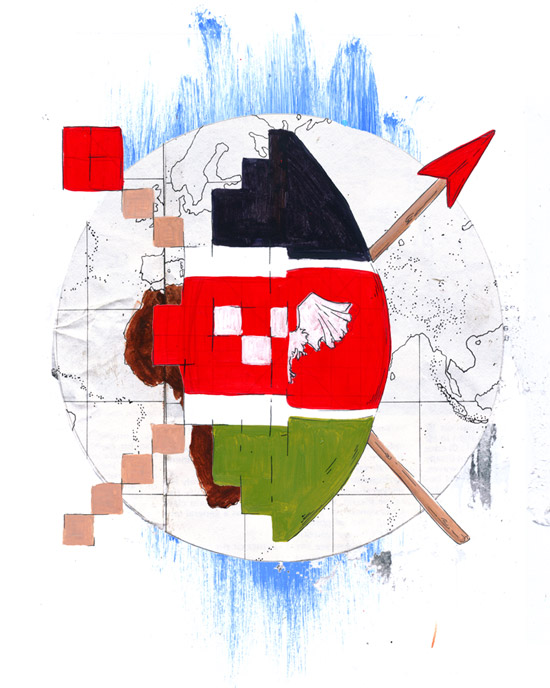
(Brand Africa image via Brand Africa Project)

{ 10 comments }


Warning: Unknown(): open(/tmp/sess_8ce3d2e86abfea1b72f4d3e26ab61690, O_RDWR) failed: No space left on device (28) in Unknown on line 0

Warning: Unknown(): Failed to write session data (files). Please verify that the current setting of session.save_path is correct (/tmp) in Unknown on line 0